
In my quest to scrutinse the complete IBM journey in creating successful portable computers, we have this strange curiosity - the IBM On-Line Note model 5499-002. I find the name of this machine titilating because it alludes to two seperate naming conventions which grew into bigger things. The 5499 model number is something which obviously immediately preceeds the PS/55 range which are all model number 55xx. This is branded as almost the 'last' of the 54's right before the PS/55 range became a big deal.
It also is the first use by IBM of a machine branded as a 'note' - alluding to 'notebook' and indeed the first machine IBM built in the conventional 'notebook' design. It's somewhat strange they had this design nailed down and yet 2 years later still felt they needed to release the massive L40SX as their mobile solution. I realise that may be driven about their desire to incorporate a 'proper' keyboard, but does seem if they have more joined-up R&D between the late 1980s and early 1990s, their pre-Thinkpad 700 mobile computers would have been far more noticable.
Anyhoo, this machine is IBM's their first notebook-format computer WITH a battery. There was an earlier portable form factor machine called the 5535M (which was also developed by Ricoh but was completely different, bigger and looked a bit like an evolution of the IBM Convertible) - but that definitely wasn't notebook-sized and it didn't have a battery.
| Model | IBM On-Line note 5499 |
| Machine Types | 5499 |
| Release Timeframe | Sold from some time in 1989 |
| Preceded by | Maybe a Multistation? |
| Superceded by | The PS/55 note was IBM's next notebook, but for a completely different market. |
| Motherboard Specs | 80186 |
| Display Specs | 640x400 greyscale (non-backlit) |
This model appeared in October, 1989 putting it 2 years ahead of the 5523 note.
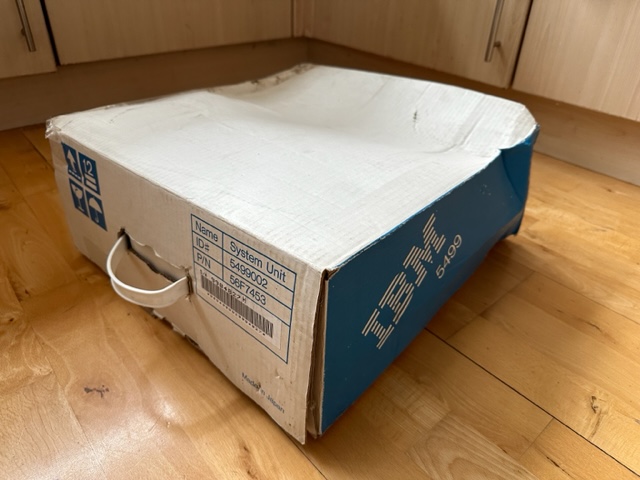
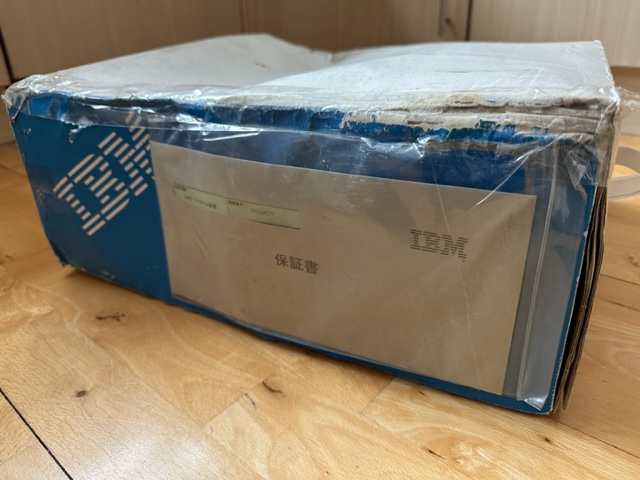
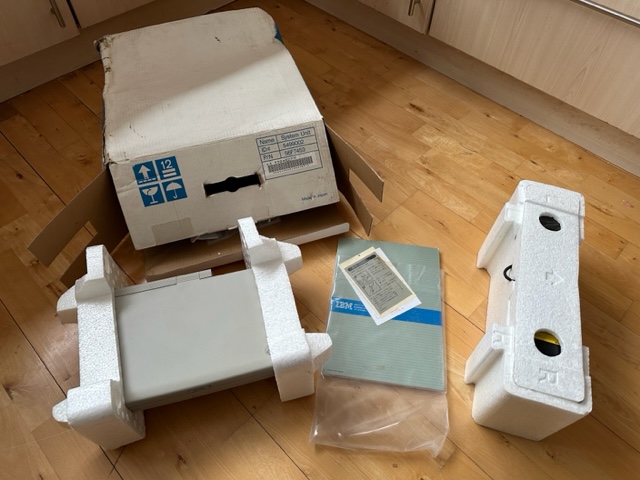
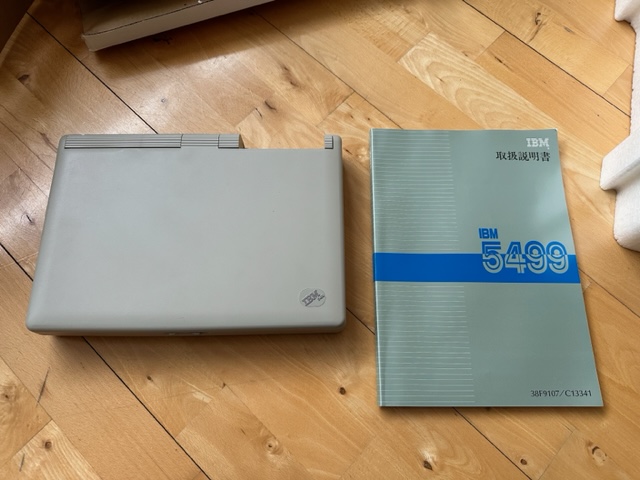
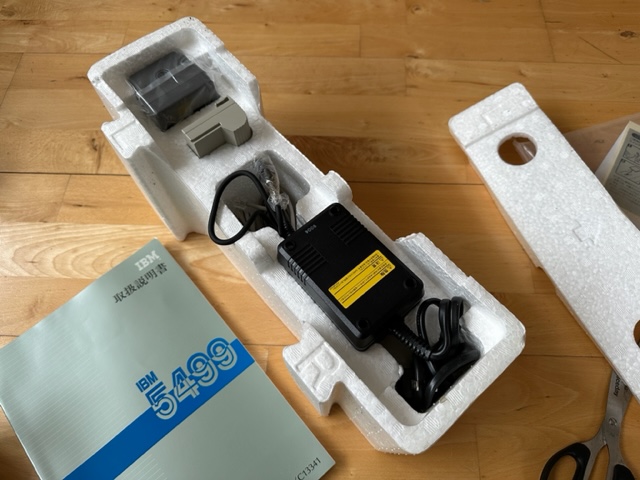
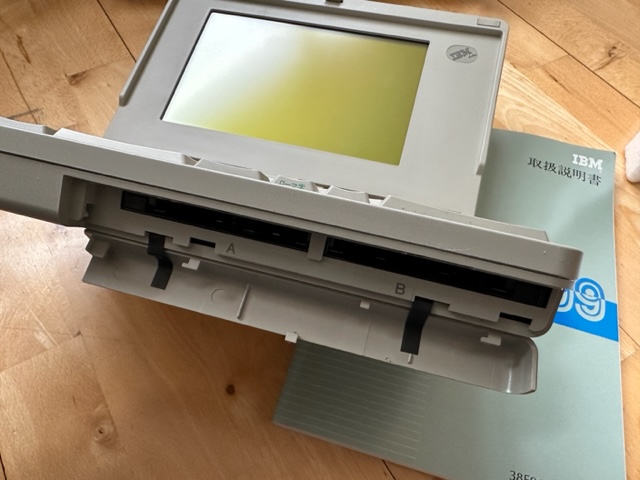
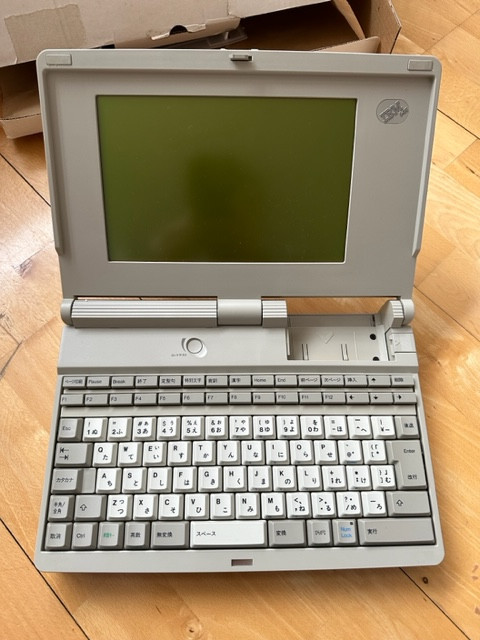
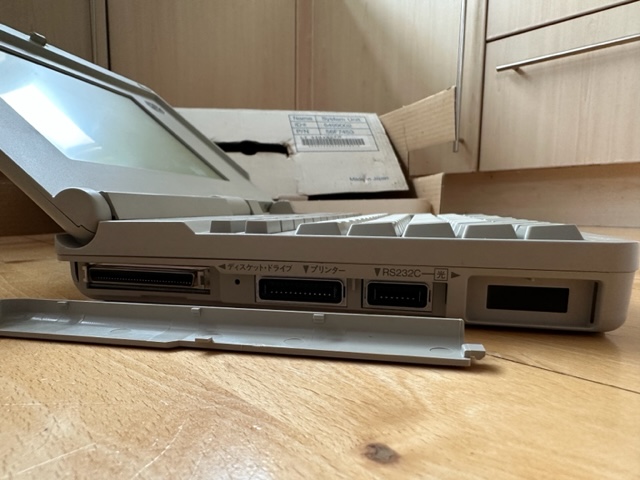
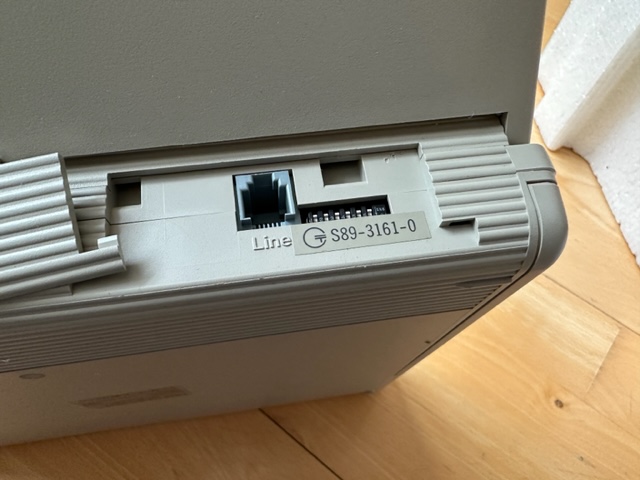
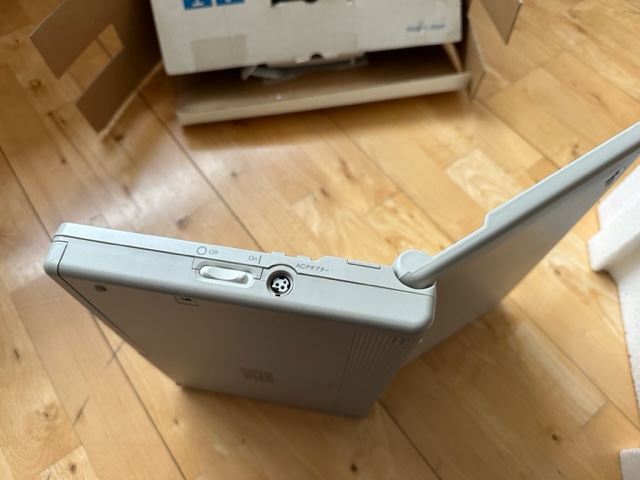
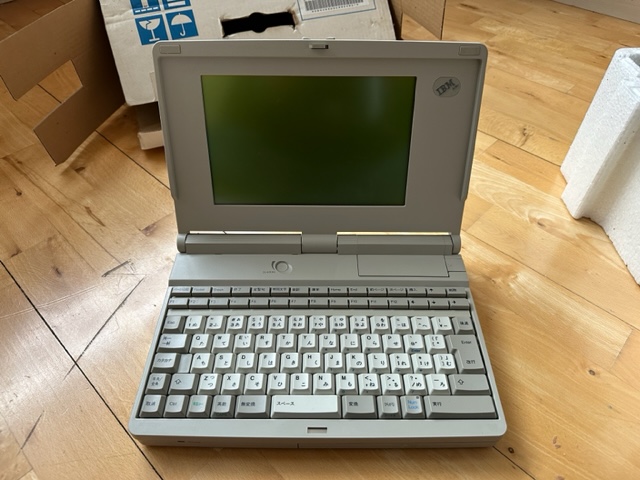
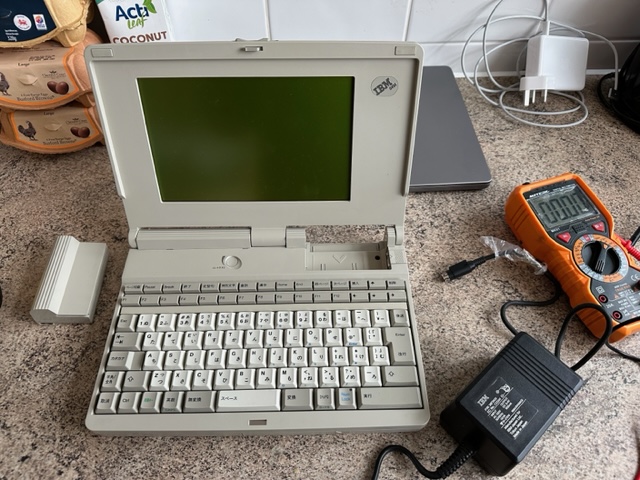
The 5499 is actually is a pretty 'dumb' piece of hardware as it simply has an 80186 CPU, ROM, RAM and no real storage whatsoever (besides what's stored in ROM and volatile RAM) - it is expected to be hooked up to a mainframe such as an AS/400 either via it's 1,200bps modem, it's infra-red port or via it's com port. The machine ran MS DOS V3.22 with enhanced fonts to support kana-kanjii text for Japan, all in ROM.
An internal battery-backed RAM disk of 128KB or 256KB provided basic file storage. The two slots are indeed for ROM or RAM cards - you could get applications on ROM cards, and RAM cards (a very simple productivity programmes including a word processor and spreadsheet) which had up to 512KB for additional storage, meaning that possibly this machine was vaguely useful as a standlone machine.
There were two models of this machine. With the 001 you got 1,200/128k and with the 002 you could 'upgrade' to 2,400bps modem and double the RAM for $1780. It seems its purpose is really like that of a modern day chromebook - where, without network connectivity, it can be fairly useless. Also in the fact it has no real software as everything was provided by the mainframe you were connected to.
The machine was developed externally by Ricoh and it has a mono LCD screen and can display 640 x 400 and the battery could last for up to 3 hours. Needless to say, as far as I know, hardly anyone bought one.
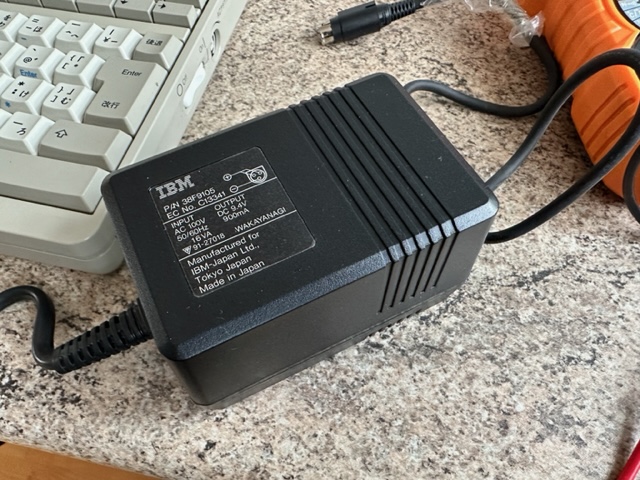
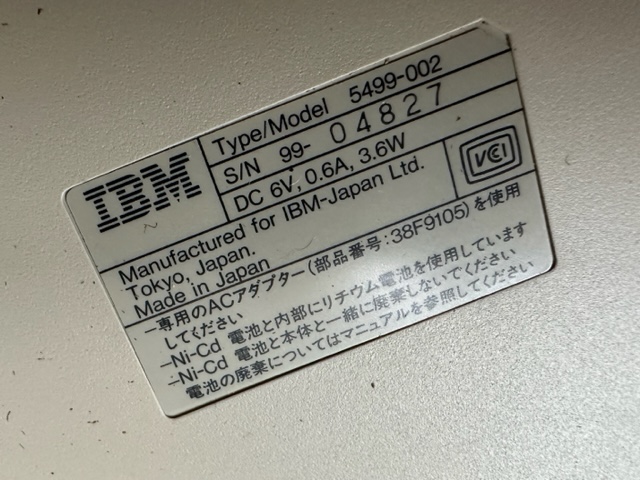
This is the 'upgraded' model with the 2,400bps modem and 256kb of memory - however there are no IC cards in this unit. It's in fabulous condition - I don't think it's ever been used, but when you power it up, it beeps and flashes light and dark. I couldn't get my head around the PSU, which is definitely original. It says it's supposed to output 9.4VDC but actually kicks out exactly 16VDC. But also on the PSU label under the AC input voltages it does say 16VA. Then the base of the notebook itself says 6v! So I took my chances and powered it up for just a few seconds only.
It's a shame the PSU connector is completely unique because otherwise I could easily test it with a pure 6VDC. Not sure what I could do with it even if it did power up....
In some respects, it's vaguely similar to the also-weird PCradio which was a similar-but-different machine for remotely working in the field.