The 'note' was a series of around 11 machines over around 3/4 years, and this timeline sits inbetween IBM's first Laptop - the PS/2 L40SX and the release of the Thinkpad 700C alongside IBM's decision to outsource their 'Value System' notebooks. They were mostly developed in Japan. This was also a point in time where 'standout feature' acronyms were being thrown around all over the place in model naming convention.

At first, the notes were just notes. Then they adopted the 'N' for 'note' followed by the last two digits of the model type (such as 23 from Type 5523 or 33 from Type 8533). Then they replaced N with a C or M for Colour or Monochrome (as they were all 'N'otes). Then we had a T for tablet and CL for Color Laptop. And often a model might recieve a suggestion of what CPU it was rocking as a suffix. For example SX is for 386SX, SL is for 386SL and SLC is for 486SLC.
Note: The 5499 On-Line note isn't really part of the brand note family. Whilst it's certainly a notebook, it's a weird dead end portable terminal which has very little use unless it's connected to a maintrame.
PS/55 note (5523)
The PS/55 was a range of Type-55xx computers for only Japan. They're based on the PS/2 but ISA bus and with special Japanese localisations supporting the more technically difficult languge to display on screen and type on a keyboard.
The 'note' branding was devised for the Notebook versions and within Japan all had to be in the 5523 model range (as opposed to 5535 for laptops).
The original (or 1st Generation) 12Mhz PS/55 Note was the 386 5523-S0x model with sandwiched planars and room for either a FDD or HDD. The case badge was simply a blue (for monochrome) IBM oval with PS/55 note labelling.
Here is a rather cool 10-page brochure which shows off it's notebook-size along with all it's accessories:

And a couple more brochures here and here.
PS/55 Note N23 SX (5523)
The slightly later (2nd Generation) 16Mhz 386 PS/55 Note N23 SX had a single motherboard and room for both FDD and HDD. Also ISA bus. The blue IBM oval badge was branded as PS/55 Note N23 SX.

PS/2 Note N33 SX (8533)
The Japanese first two releases of the Japanese PS/55 notes were so successful, they evolved into the international release of the 12Mhz and 16Mhz PS/2 Note N33 SX which recieved a change in Type to 8533 and was a a model range consisting of both the 1st and 2nd Generation PS/55 Notes, but both of them released with no internal floppy drive and a Western keyboard. Obviously these are ISA bus. Both of these notes, whilst based on different internal designs were simply branded as a blue IBM oval with PS/2 note written underneath.

At this point there are deviations from the bloodline of the N23 and N33 which where other Japanese PS/55 notes which includes the T22sx (1992), N27sx (02/1992) (Japanese-only release similar to the PS/2 CL57SX model), C23V (10/1992) along with the PS/Note series included models like the PS/note 182 (A PS/1, 386SL-based machine) and then the PS/Note 425 and 425C (486-based), which were essentially the same as the ThinkPad 350/350C.
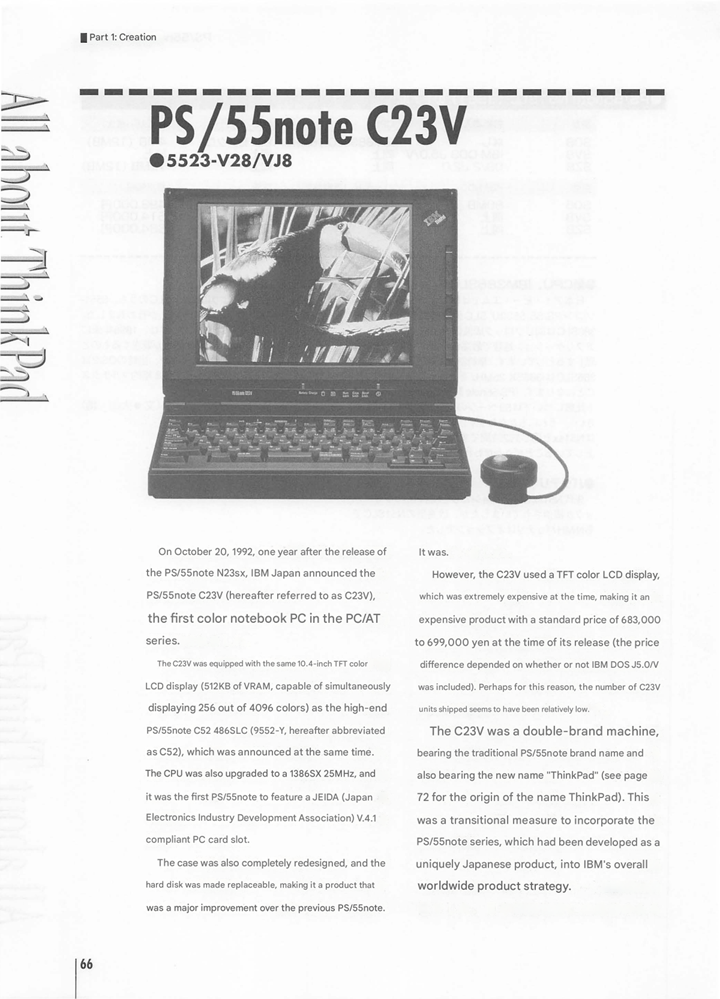
PS/55 note M/C23V
We've speculated this iteration of the 5523 models took the N23's model name and adopted the C(olour) or M(onochrome) letter replacing the N for Note. This machine is a curious beast because it's a real bridge between the Notes and the C52/700C. The chassis is the same as a C52, the hard drive is now on an externally-accessible tray, everything is re-arranged BUT…. No trackpoint and the keyboard looks like a PS/note keyboard, not the 700C style.
Everything suggests that the C-version of this machine has a 10.4” colour TFT display but due to the fact it would be extremely expensive (the only maker of these screen was Toshiba and IBM were paying through the nose for them) and it would really take the shine off the *new* IBM Thinkpad 700C, I suspect this machine was canned almost before anyone was able to buy one. I’ve never seen one in the wild. There was also a 9.5" 16-grey mono display model with 'M' for 'mono' in the title, rather than C for 'color'.
It’s weird that the machine appears to have the note labelling ("PS/55 note C23V") in white along the front of the LED indicator bezel, but it badged as a ‘racetrack’ IBM Thinkpad.
It’s kinda odd that the RAM is above the keyboard when apart from the Zenith/Sanyo machines, none of the Thinkpad’s really have RAM on the top side.
Here's a link to the (Japanese) brochure:

And helpfully @thinkdan provided this translated extract:
PS/2 Note N51 SX & SLC
Following from the international success of the N33 SX, the machine evolved into the N51 which eventually would become the N52 Thinkpad 700C but with the N replaced with C for Colour and M for Mono. The bus switched from ISA to MCA in line with IBM's 95xx series of machines including the 700 and 720. These were branded with a blue IBM oval badge as PS/2 note N51 SX or SLC.

Other notes which were individual offshoots were:
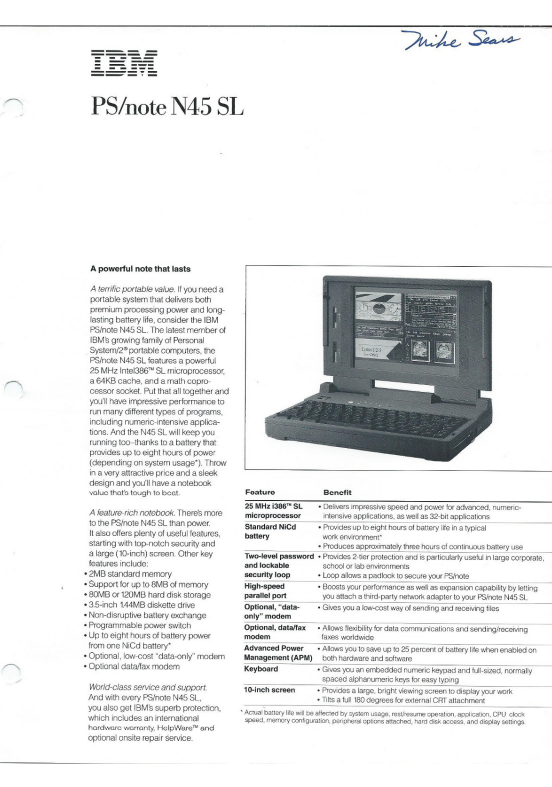
PS/2 Note N45 SX and SL were manufactured by Sanyo for Zenith and it shows. This was at the point where IBM decided to focus on the premier hardware and outsource Value portables. They're closely related to other Zenith-branded machines, much like the Thinkpad 300.
N27 SX / (CL57 SX)
This the first iteration of the very large colour laptop which was released as the CL57 (Color Laptop) in the west, but most likely produced in Fujisawa. Due to it's size, it really shouldn't have the N model name, as there is no way it's size resembles a notebook. It should be considered a 'Destop Replacement' or a 'laptop' at a push. If you're getting really nerdy, the N(otebook)27 SX, which became the C(olor) L(aptop)57 should be called the C27SX or the CL54 (Type 8854). At this point, IBM product naming was anyone's call. I've covered this machine (well, the CL57) extensively here. Here's a cool brochure:

PS/55 T22 SX (5522)
This was a strange combination a notebook sized tablet with a detachable keyboard. T for Tablet? It won an 'award'. Seeing as it's release date seems to be Q3 1992 and the Thinkpad 700T came out in 1993, perhaps it was a precursor to the Thinkpad 700T?
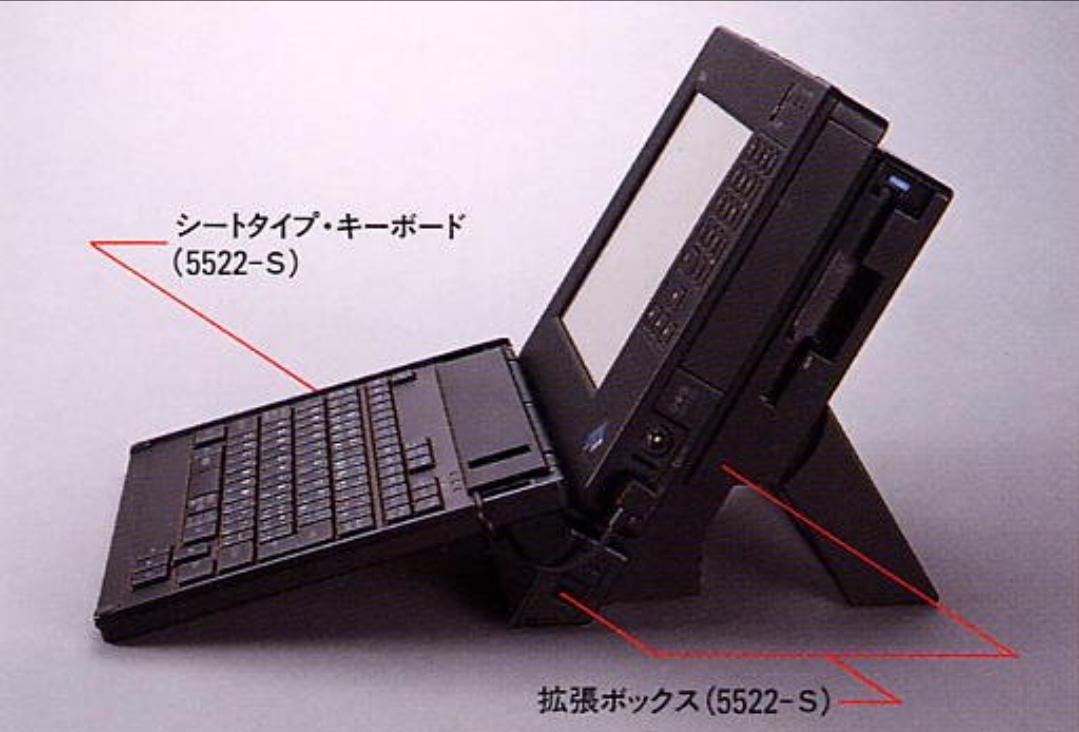
The PS/55 T22sx, announced in October 1992, at the same time as the PS/55note C52 486SLC and PS/55note C23V, was IBM Japan's first tablet PC. It was a tablet PC equipped with a numeric keypad and cursor keys to the right of a 7.6-inch monochrome semi-transparent LCD with touch panel, and input was possible by touching the LCD with a pen or finger. Rumours have it that Coca-Cola trialled them for a time.
The PS/55 T22sx did not have a built-in hard disk drive, and the system booted from the built-in flash ROM (model 5522-SV2) or from an optional ThinkPad File (TPF) card. The TPF card was a flash memory card inserted into what is now called a PC card slot, and came in three sizes: 2.5MB, 5MB, and 10MB. The standard prices for TPF cards at the time were quite expensive: 105,000 yen for the 2.5MB (with DOS J5.0/V pre-installed), 140,000 yen for the 5MB (with DOS J5.0/V pre-installed), and 205,000 yen for the 10MB (with DOS J5.0/V pre-installed).
The PS/55 T22sx could also be used as a normal PC with a keyboard by attaching an optional expansion box (equipped with a built-in FDD, keyboard, mouse, parallel and serial ports) and keyboard. In this respect, the design is very similar to today's pure tablet-type Tablet PCs. A dedicated sheet-type keyboard was also available as an option. The case was made of the same magnesium alloy as the ThinkPad 220, achieving both lightness and strength. It weighed only 1.2kg.
Here is a press photo which roughly aligns the Japanese release timeframe of the T22sx, Thinkpad 700T and the Thinkpad 220 roughly all in the same timeframe of late 1992 to late 1993:

PS/note Type 2141-182
This was equipped with 80386SL CPU and the PS/note 2141-N82 was equipped with 80386SX and released in 1992. This line has a 7-row keyboard layout. The case badge uniquely resembled the style of the PS/1. Interestingly the PS/1 Model range had 2141-182, 2141-E82, 2141-S82, 2141-M82, 2141-N82 and 2141-W82 types. and this is the only IBM notebook with that PS/1 type number. In addition the notebook shares striking similarities with the Lexmark Lexbook AR-10 and has the same keyboard. At the time, it's possible the PS/1 Team were in the same building as Lexmark people, and perhaps this was a collaboration. This machine was succeeded by the 2618 425.
I can't find any kind of marketing brochure for this machine, so here's a pic of one I restored!
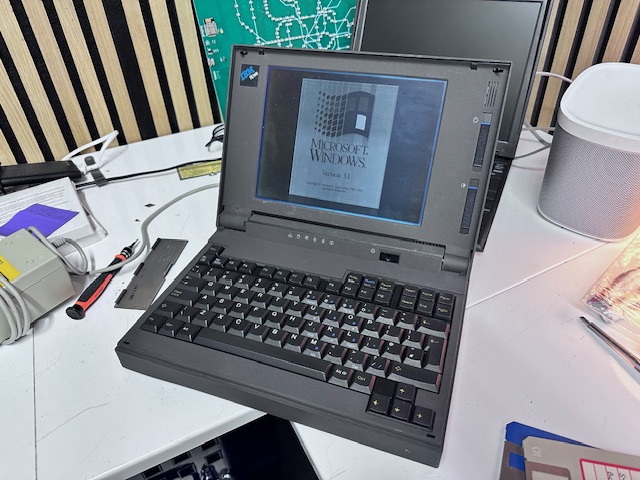
Model 425/425C was almost identical to the the Thinkpad 350/350C except the machine lacked a PCMCIA port....
Accessories
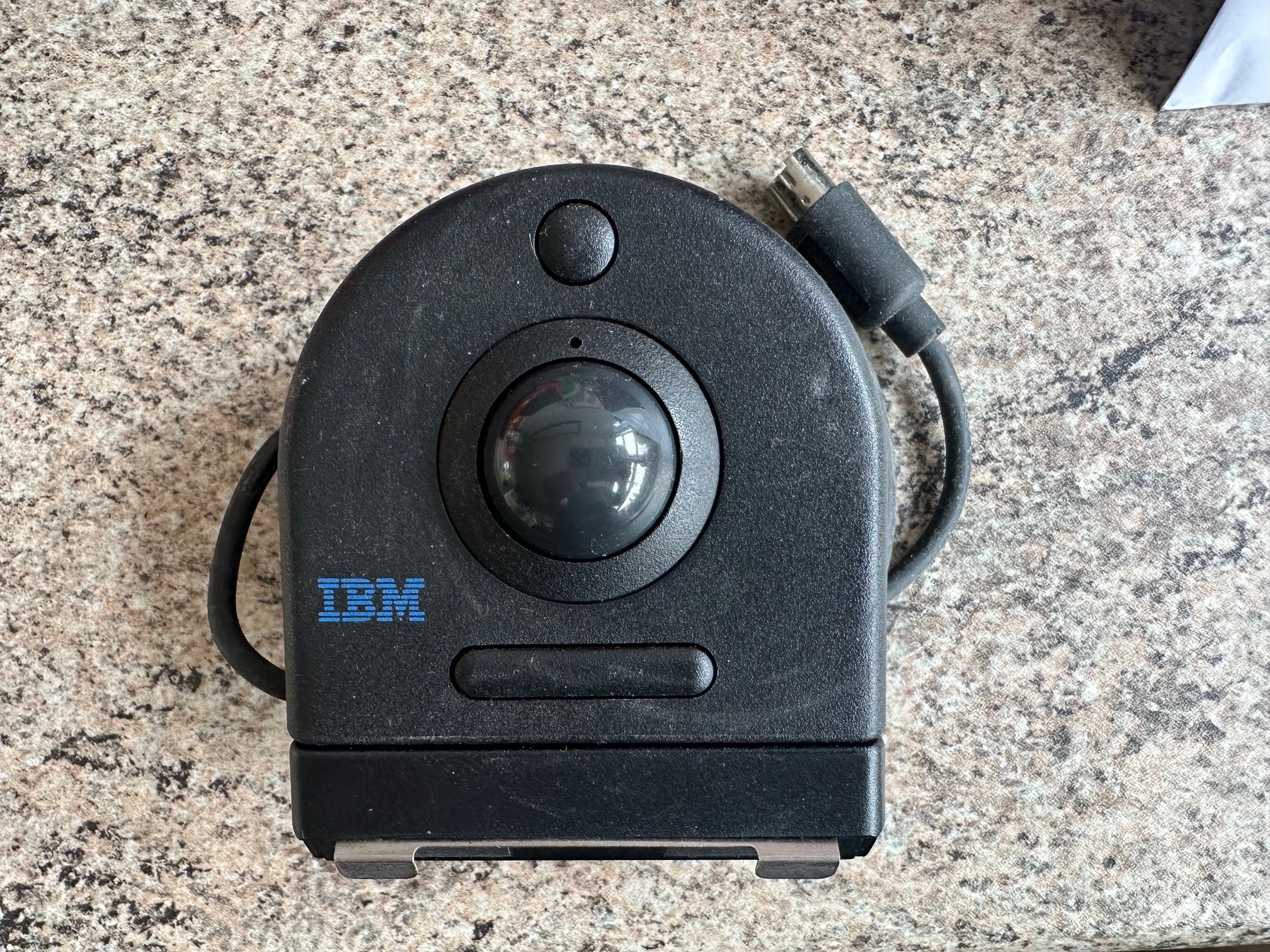
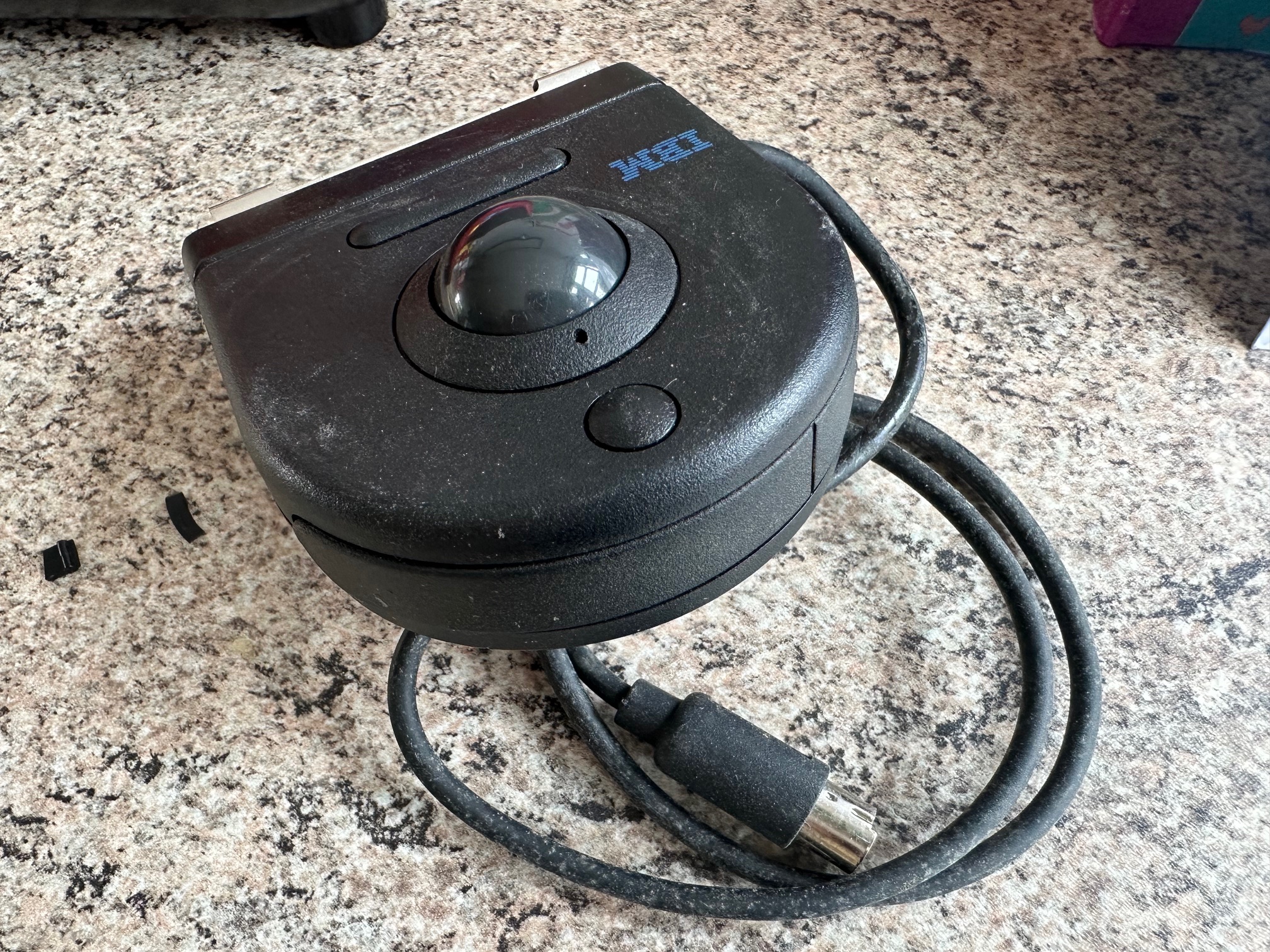
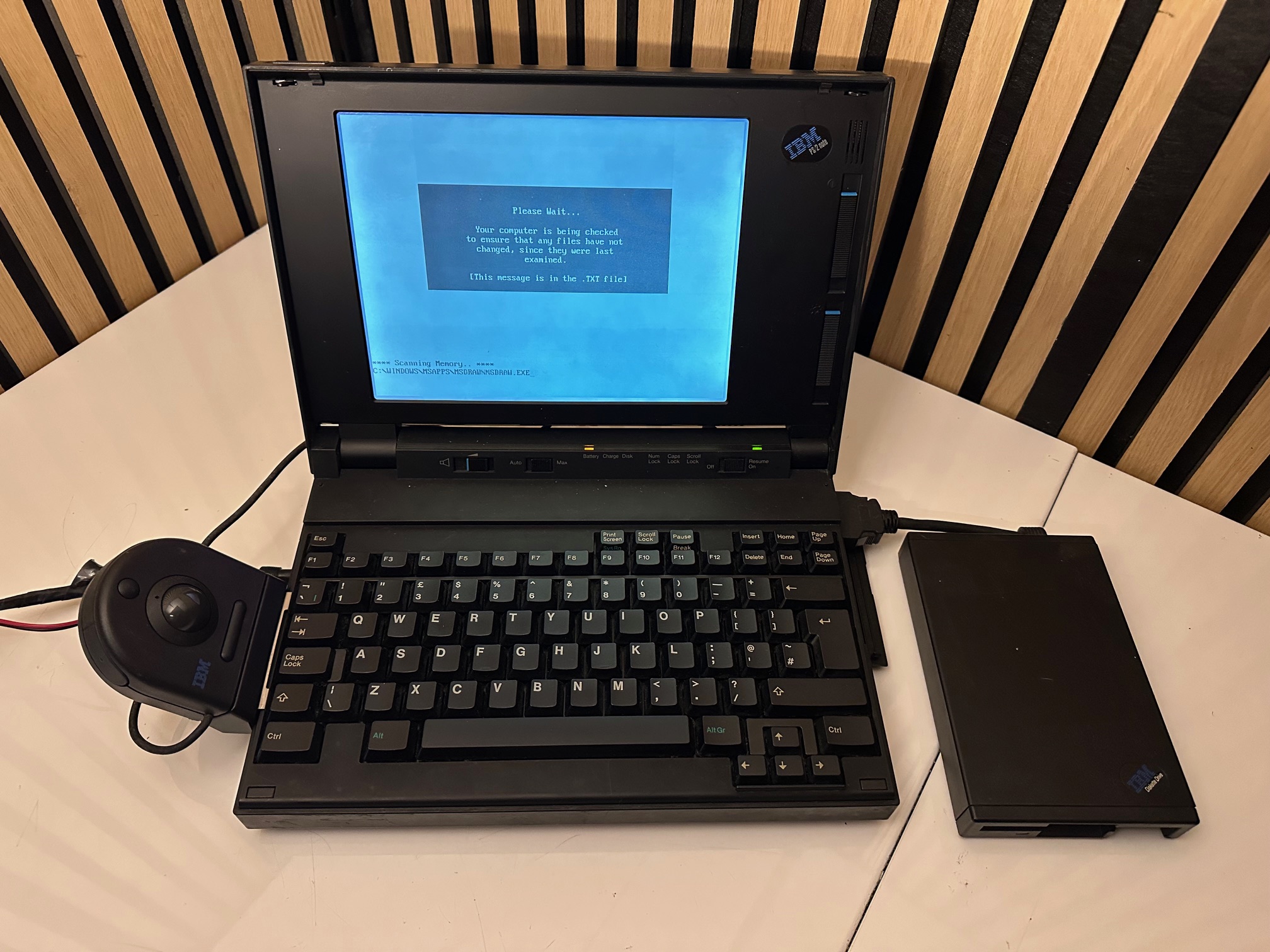
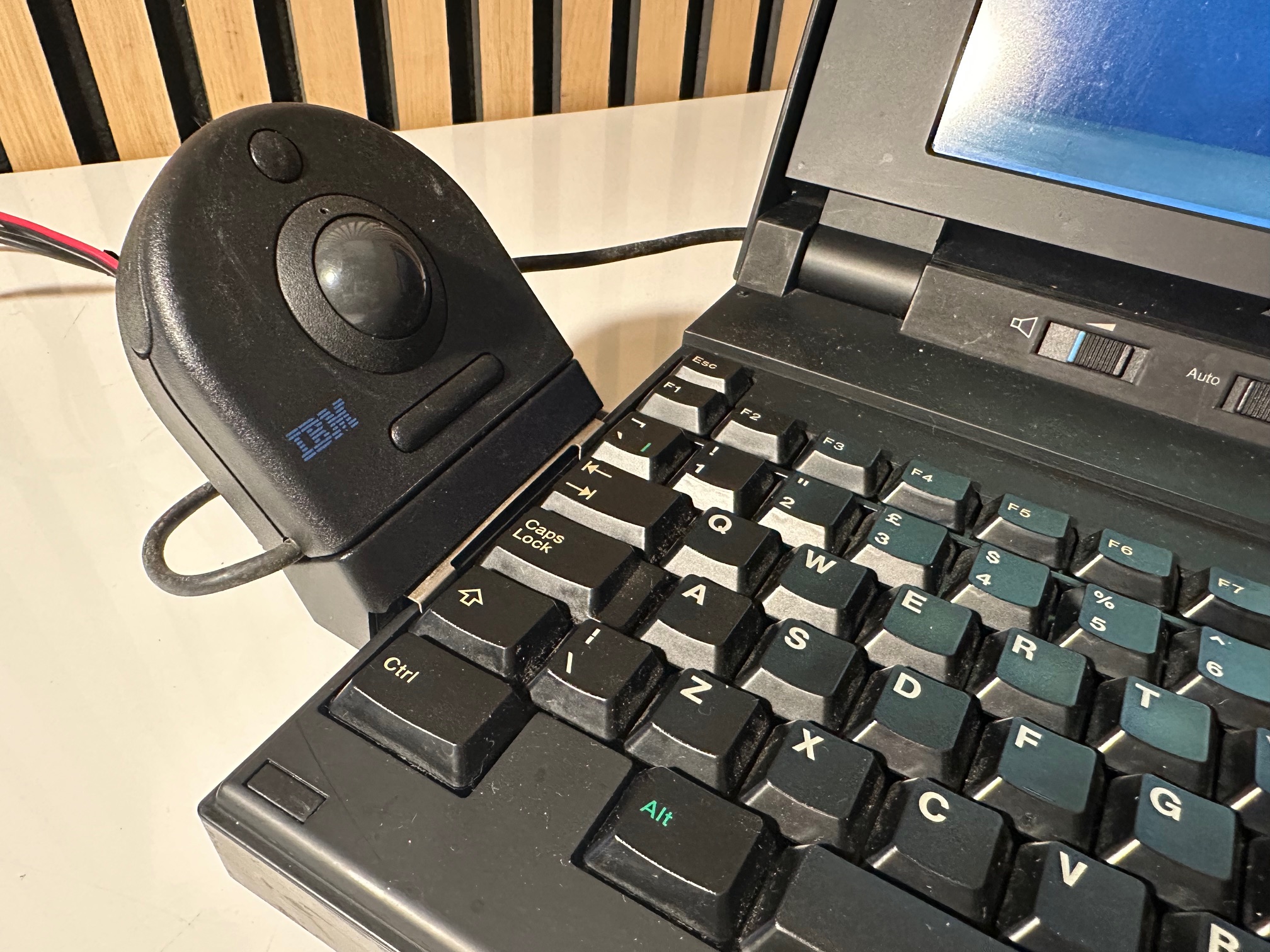
There were some cool accessories for the PS/notes - the most obvious ones being the external floppy drives for models without built-in floppy drives and mice or trackballs to use as pointing devices whilst on the move.
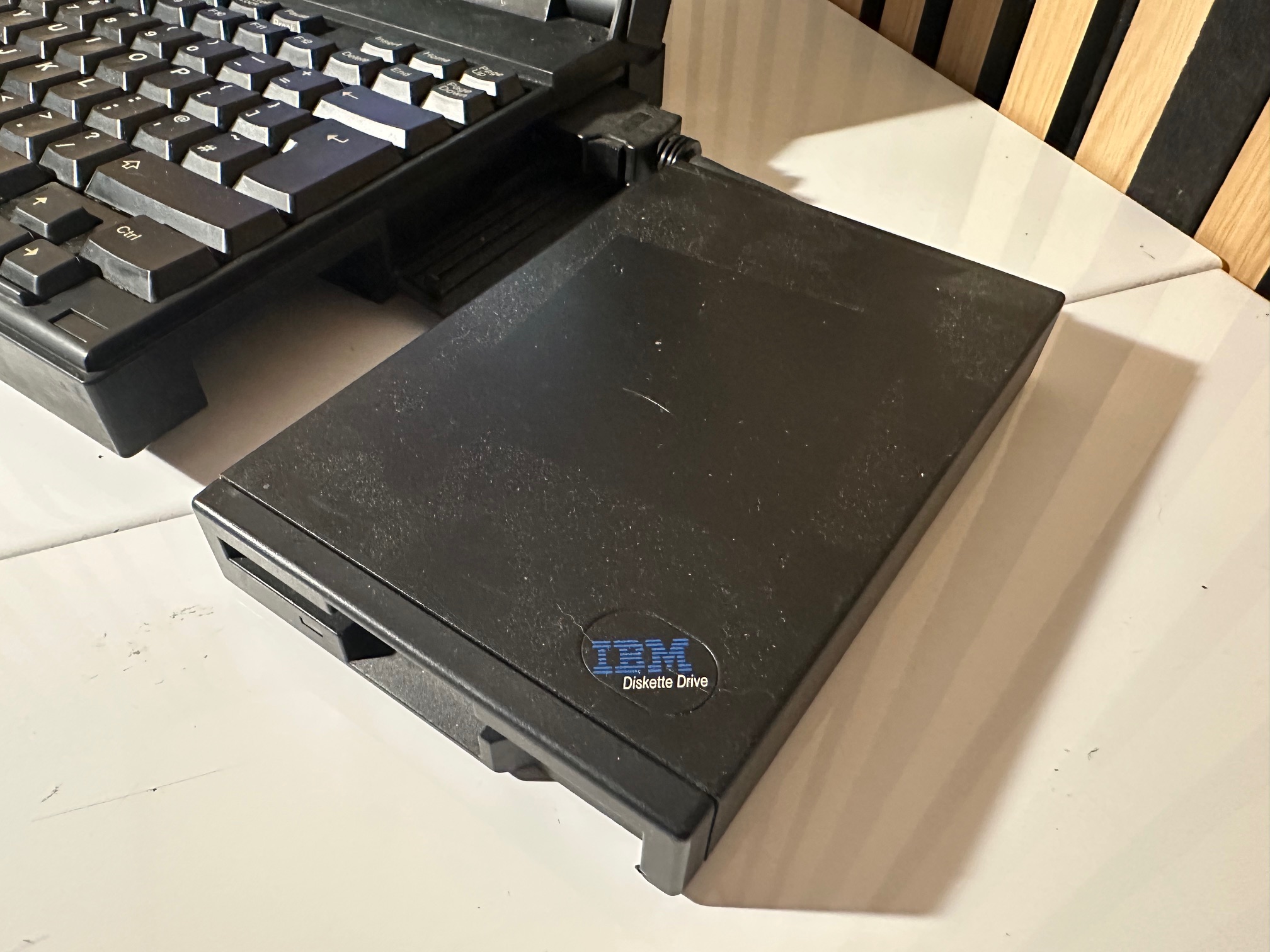
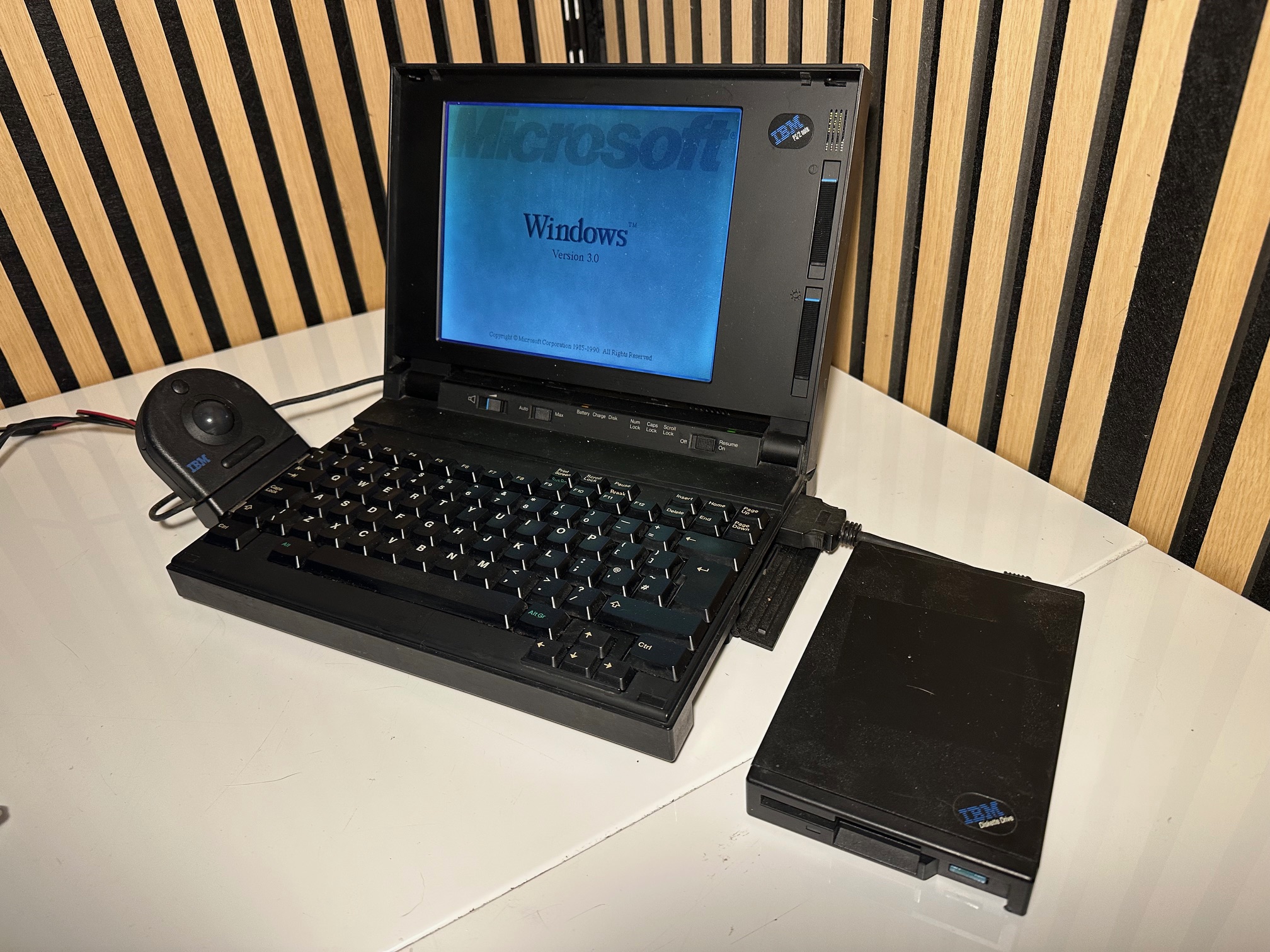
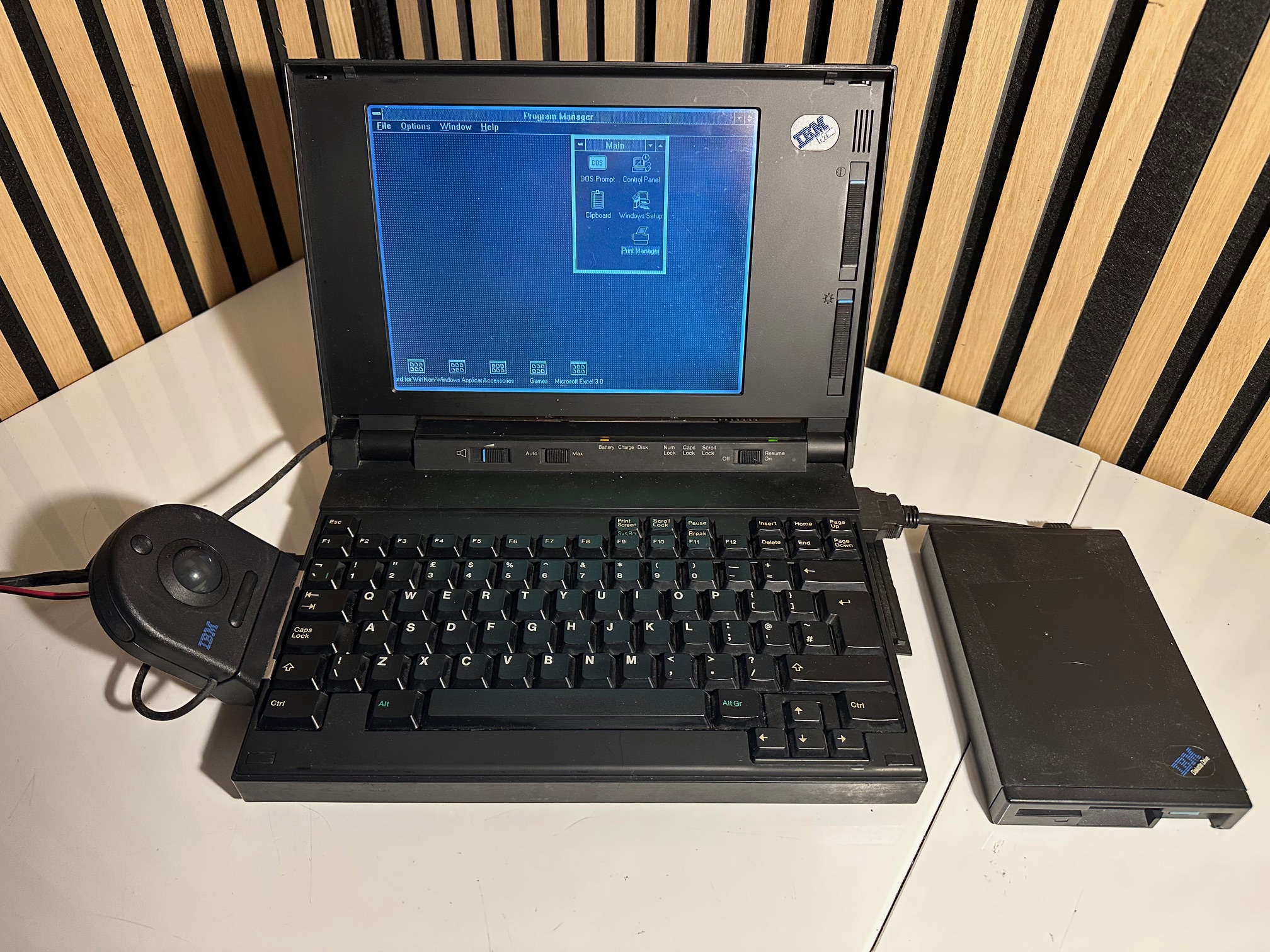
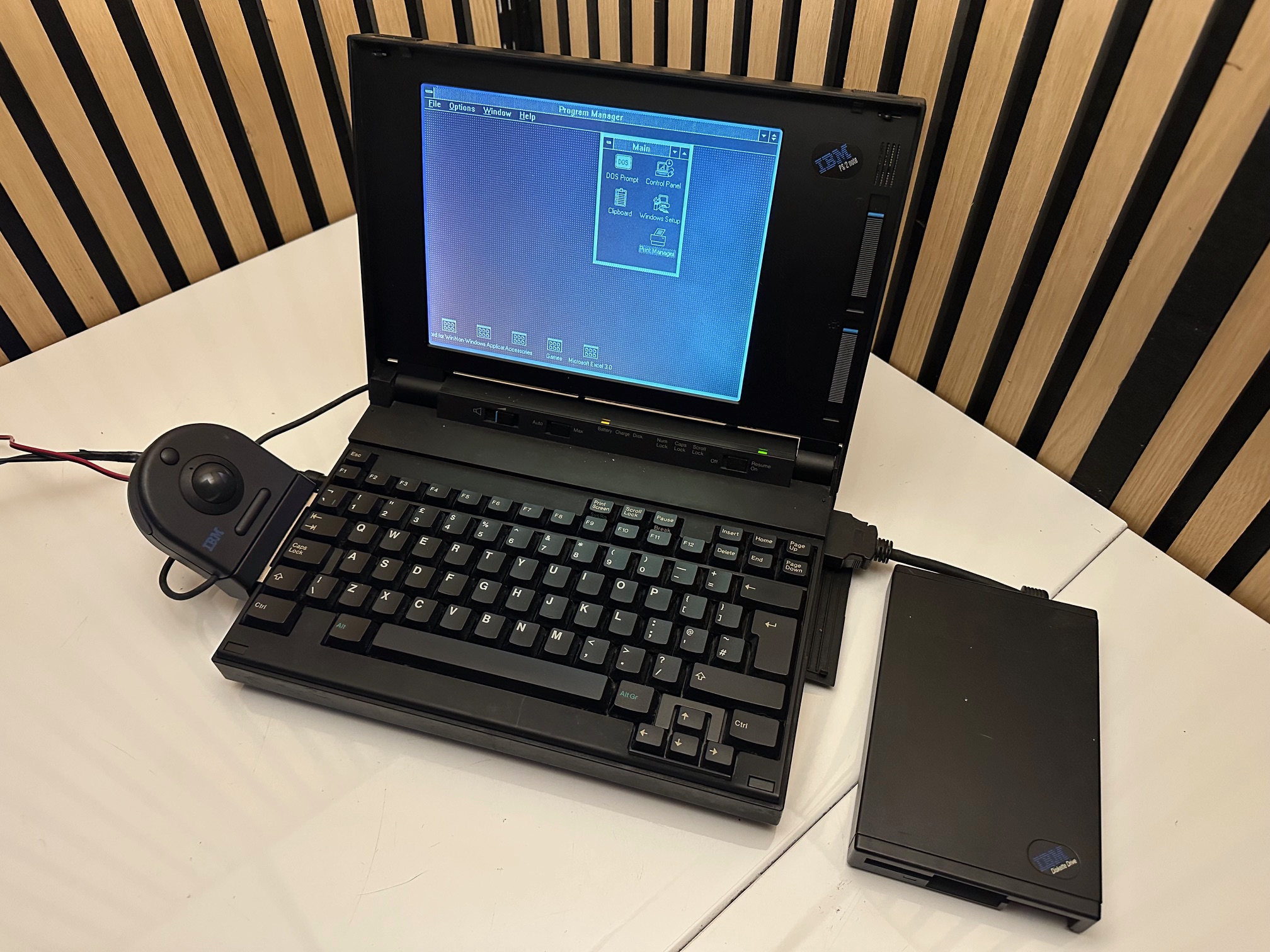
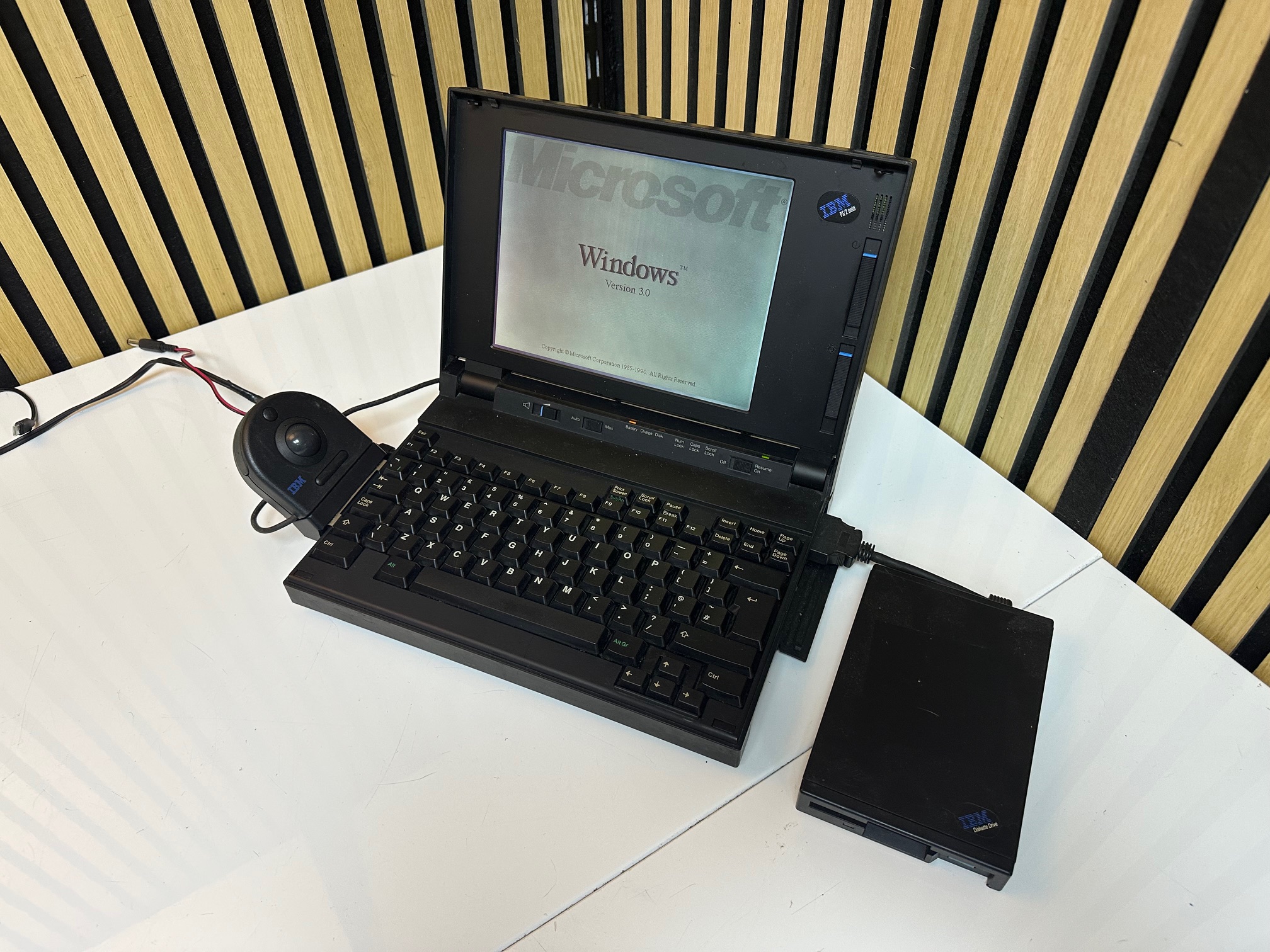
Here we have an N23 SX with two of it's original heavyweight accessories; the Diskette Drive which can also be used to disable household intruders, it's so heavy, and an IBM branded PS/2 trackball which clips to the side of the note's keyboard.