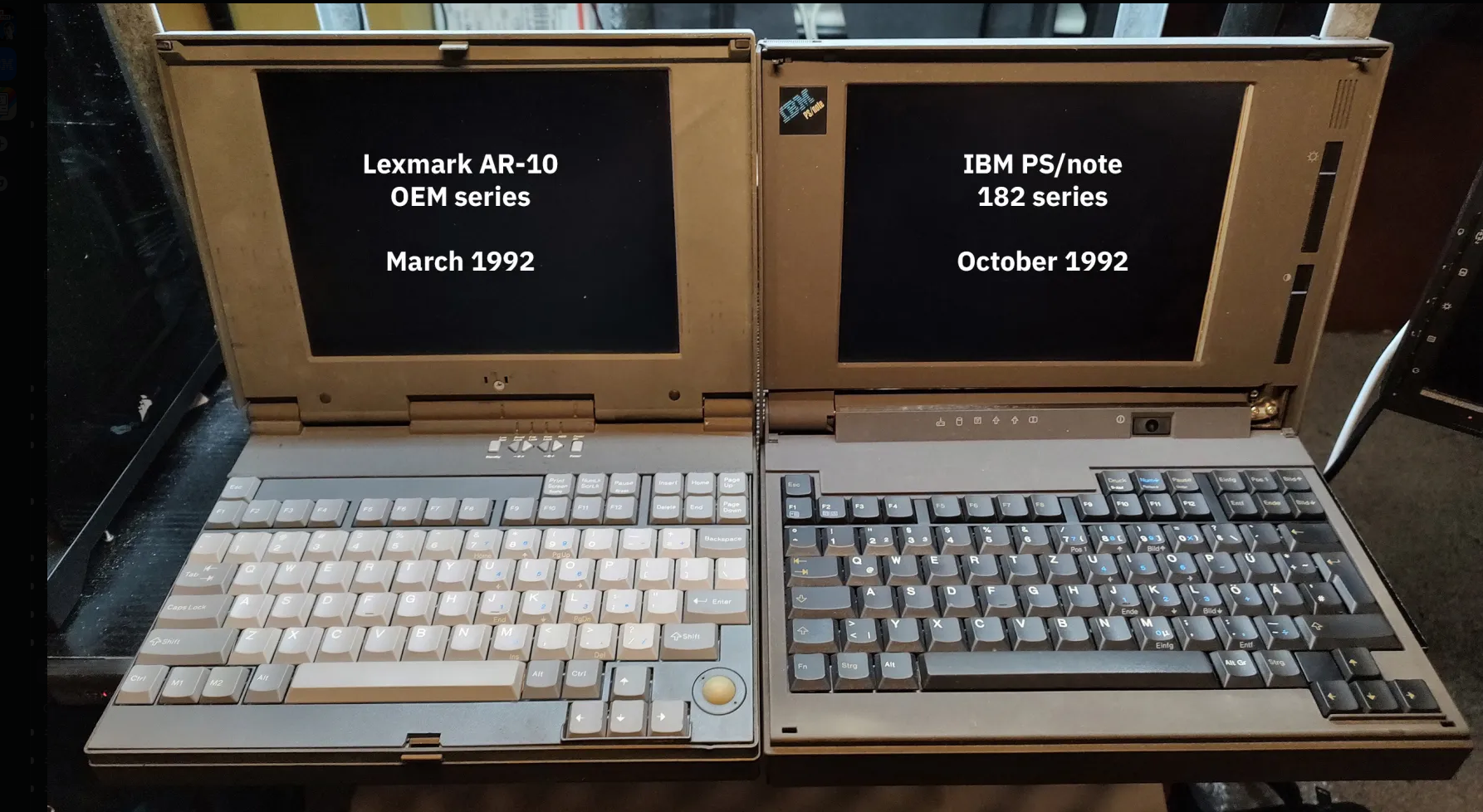
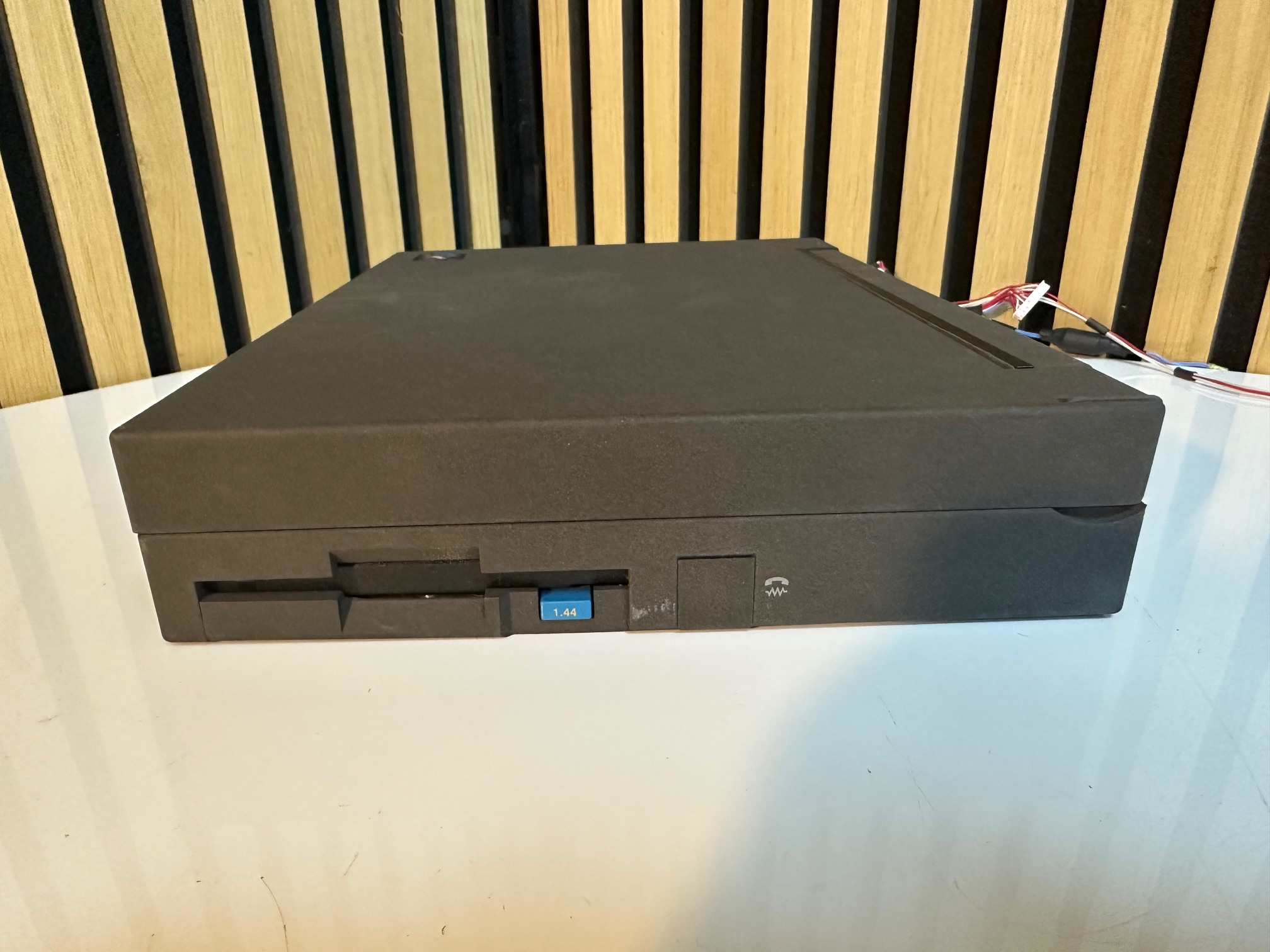
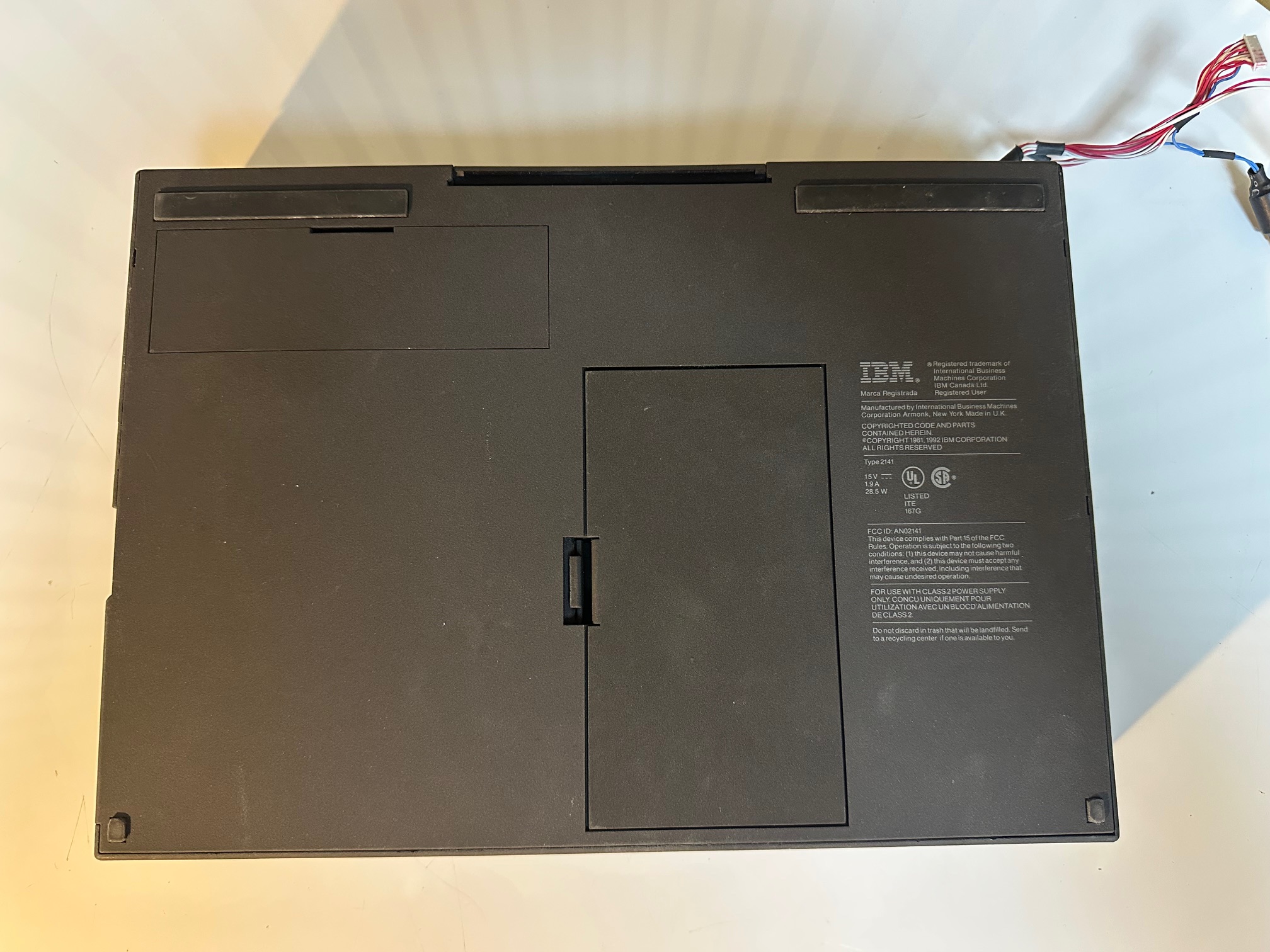
This rather unusual Lexington-designed PS/note feels like an experiment in case and PCB design. It has it's own unique design flairs, badge, internals and case. This was in a world where the various labs within IBM were each releasing their own value range of notebooks which were entirely distinct from the high-end business Thinkpad 700-series. This was an era within IBM where no department or person managed a brand - therefore any lab could develop and release a note or a Thinkpad despite it's overlap, it's end-to-end design or whatever.
Lexington (where the name Lexmark comes from) had developed the PS/1 range, so it made sense they had their own PS/1 notebook to go with it, right?
Most of these models were 25Mhz 386SL machines although there was a 386SX variant too. They came with 2Mb RAM, upgradable to 10Mb, and 85Mb 2.5" IDE hard drive and a 640x480 64-Greyscale passice LCD.
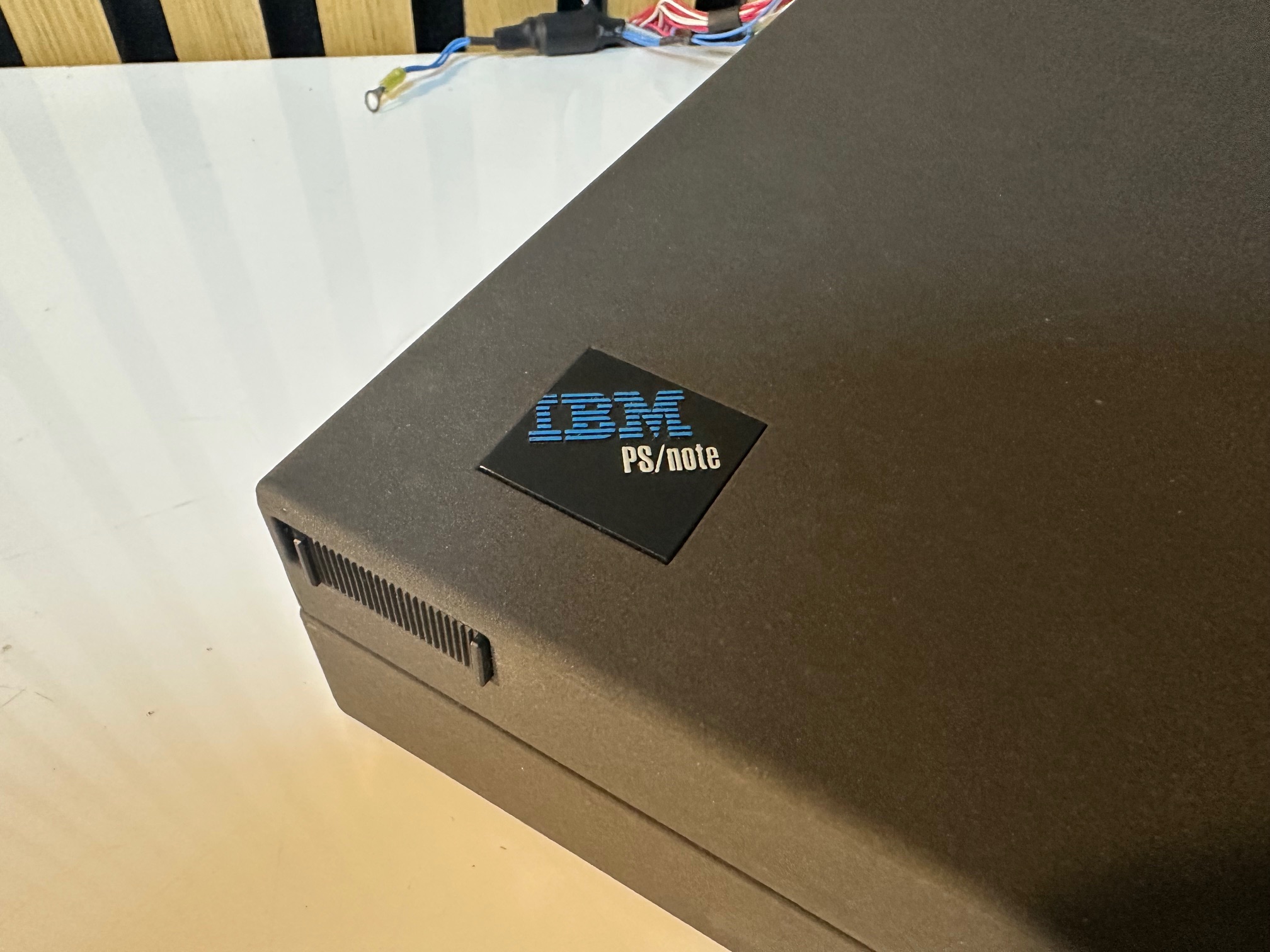
Spot the (almost) entirely unique square case badge, which some have attributed the style to alignment with IBM's PS/1 value desktop range. It's somewhat confusing because the original Japanese PS/55 note shares a similar name (and badged as simply a note) and indeed a lot of machines are also PS/notes with a suffix of it's specific model to provide easy referencing (in the West alone you had the PS/2 note N33sx, N51sx/slc, PS/note 425, a PS/note 45SL).
If one was to be cynical, you could argue that perhaps different labs were being played off against each other (particularly Yamoto, Japan with it's PS/55 notes, Zenith with it's Thinkpad 300 and Raleigh with it's 350 and Lexington were trying to 'own' the note brand name by just calling the machine a 'note'. The lack of more definition means many just refer to this as the note 182.
This advert of the time, despite making a massive deal about pointing devices and showing the trackpoint, it goes on to mention the specifications of the PS/Note - which I believe is this 2141-182 model, which ironically had no built-in pointing device!!

This type of case badge was only seen also in the probably unrelated PS/note N45SL design by Zenith, which became the Thinkpad 300.
In retrospect, the marketing of IBM's value portables was a bit of a minefield. At the time, IBM's own proposed upgrade path if you had a 350 was to get a 360. If you had a 425 you should get a 340 and if you had a 425C you should get a 355. If you can get your head around the nuances between these model variations, one aspect which is noticable is that the 350, 425 and 425C were the same speed and offered with virtually the same options. To all intents and purposes they were all the same machine (just one has a color display) and there was a color 340. So why is the upgrade path different for the 425 or the 425C?
Also, from what I can remember, the only real difference between a 360 and a 355 is that the 355 has a modem and neither have audio.
This really was part of the problem - it was confusing enough for a distributor or shop, let alone for a customer.
You can tell the distributors were confused as this advert shows two PS/1 notebooks with prices, however the one on the left has a picture of a PS/2 L40 SX and the one on the right has a picture of a note 425:

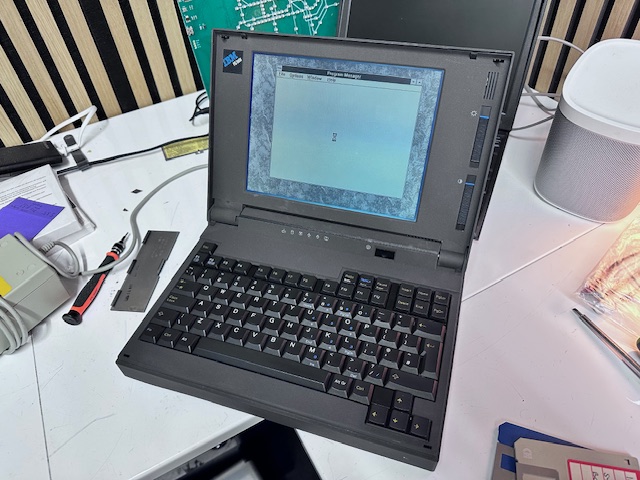
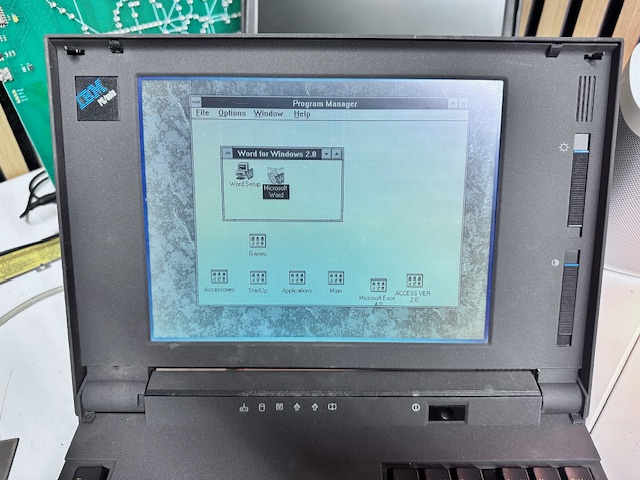
A Friend's 2141-182 PS/Note
Here we have an example I was asked to restore. It was booting but the LCD would not display anything. The display is a slightly simpler design of the LCD from the earlier PS/2 and PS/55 notes, so it's relatively easy to repair through replacing the capacitors.
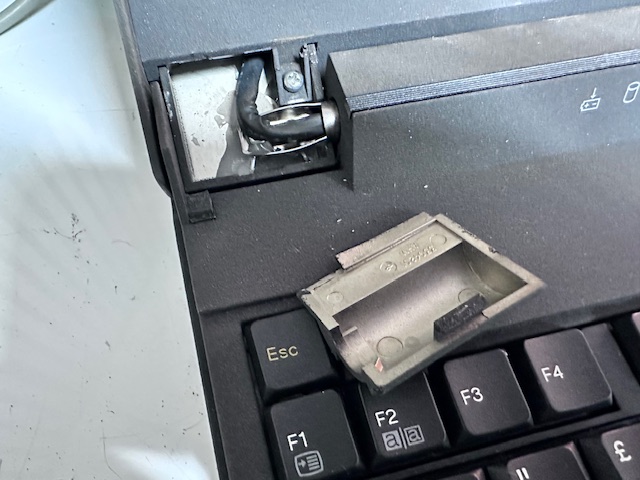
To access the LCD, you need to remove the plastic clips on either side, over the hinges. They're pretty easy to snap:
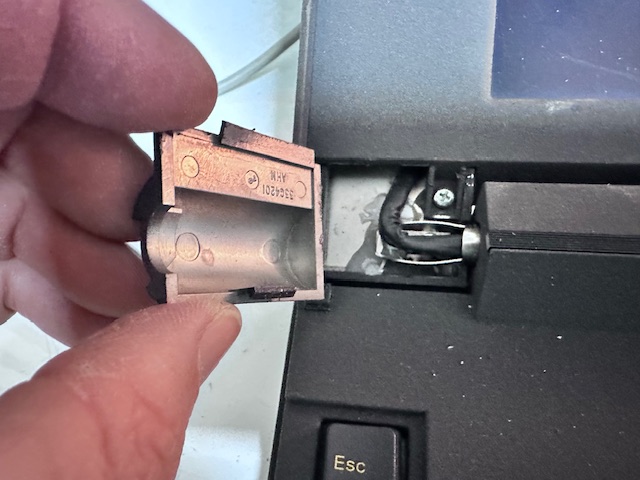
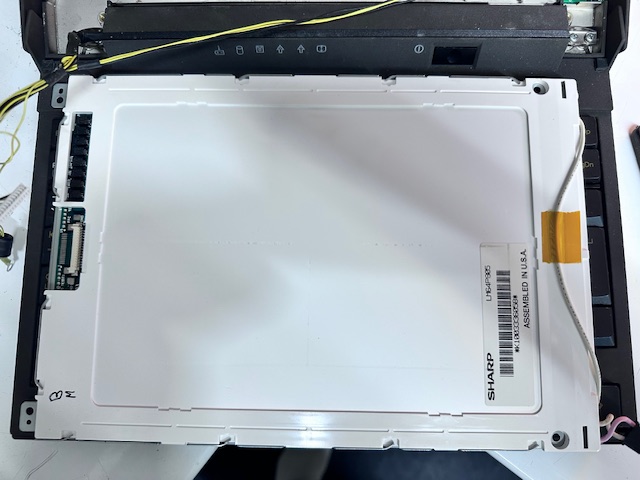
This is the LCD once you remove the bezel:
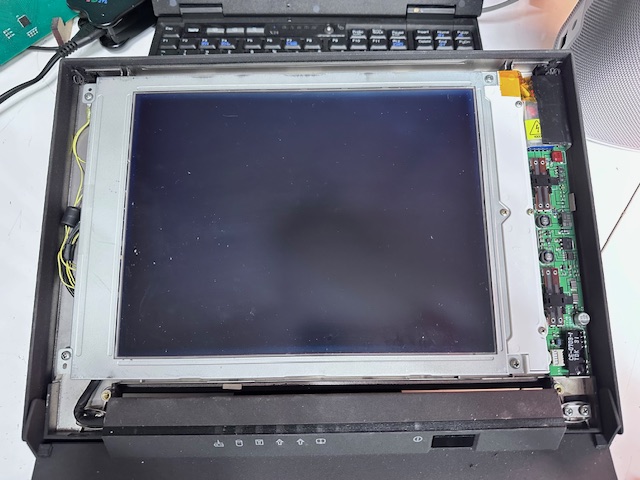
And the rear of the LCD:
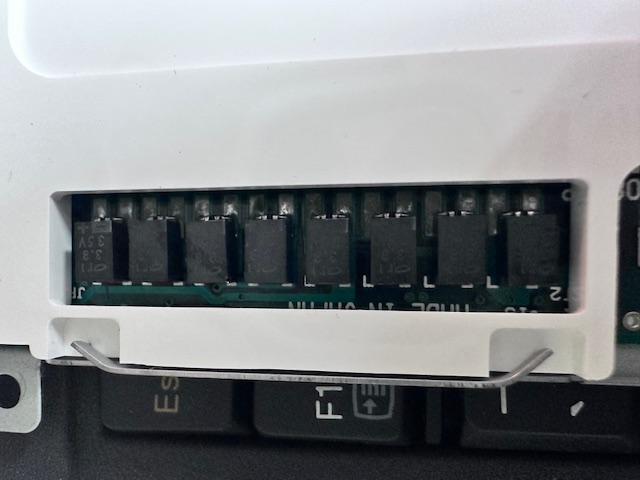
And the 8 fishy capacitors (3.3pf/35v) which need replacing on the LCD:
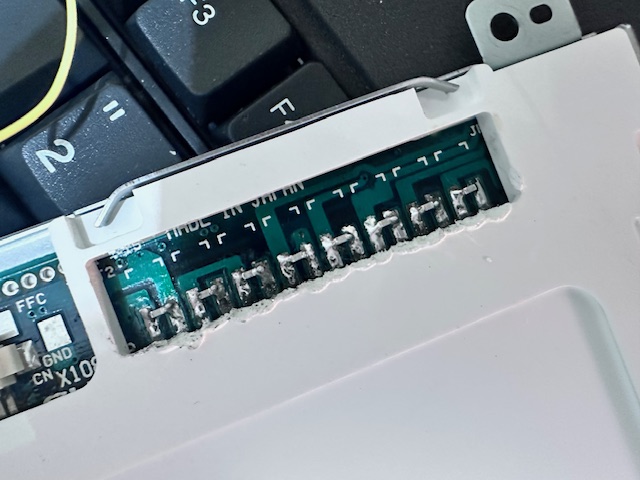
I replace with tiny solid state ones:
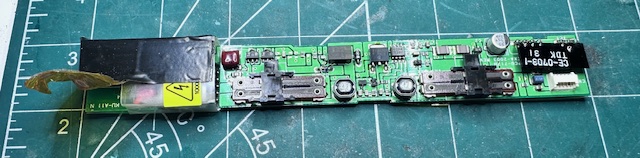
And onto the inverter, which just has one fishy surface mounted capacitor:
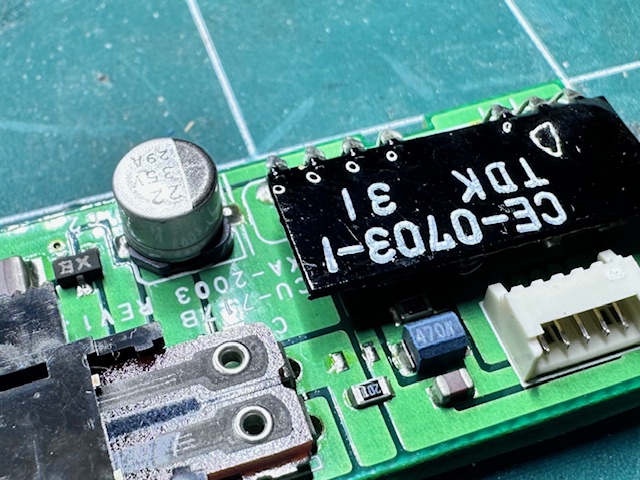
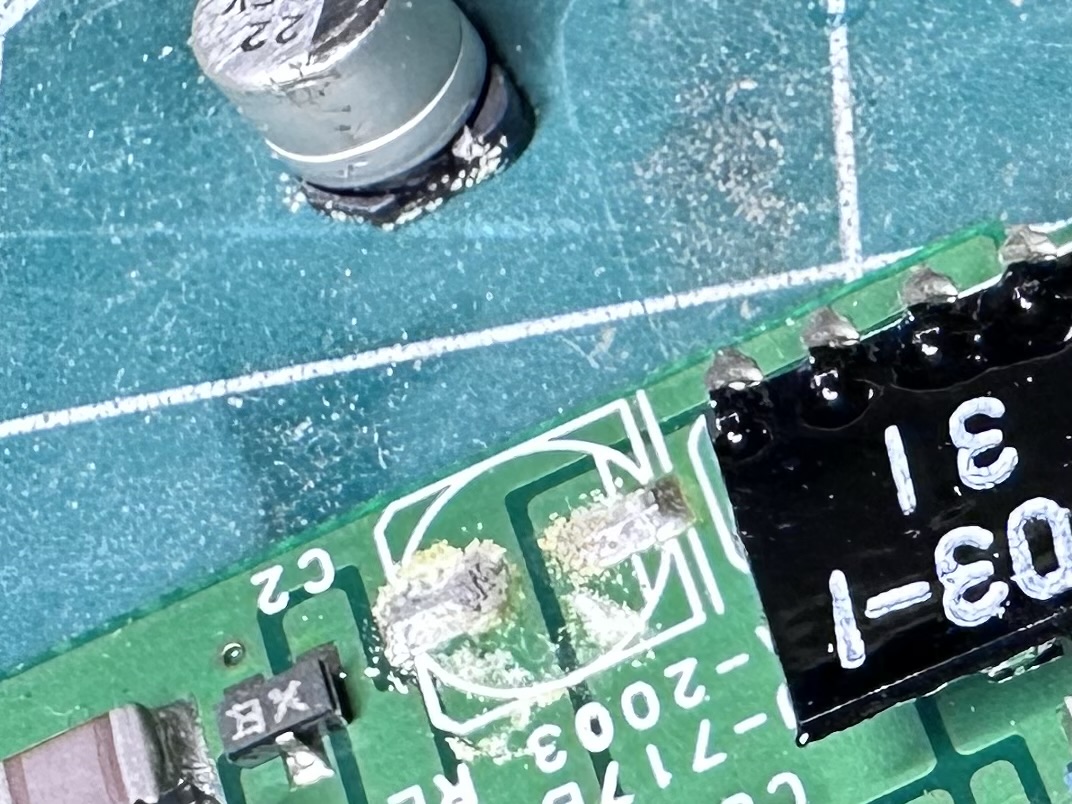
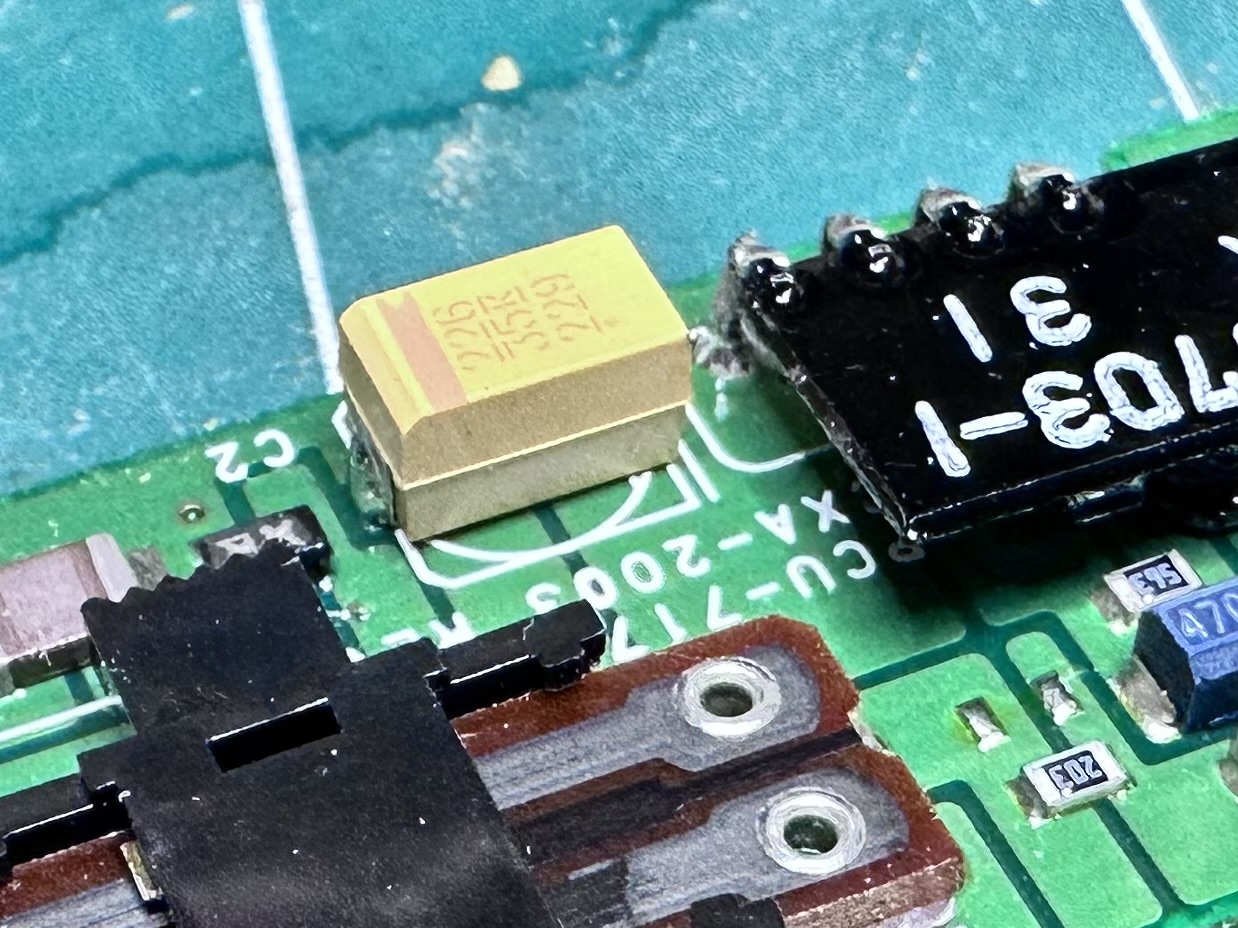
And....voila!
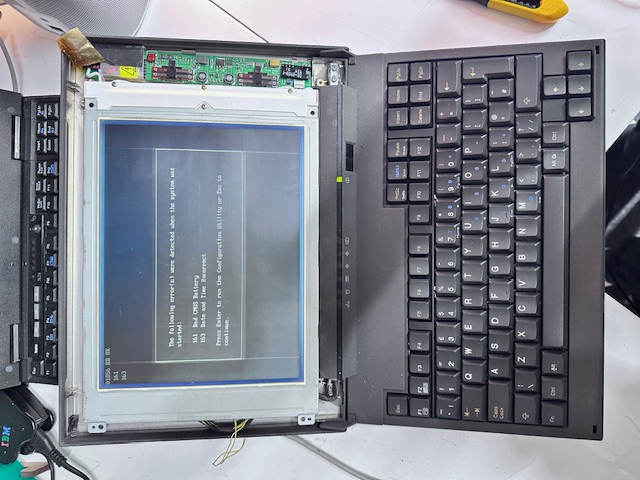
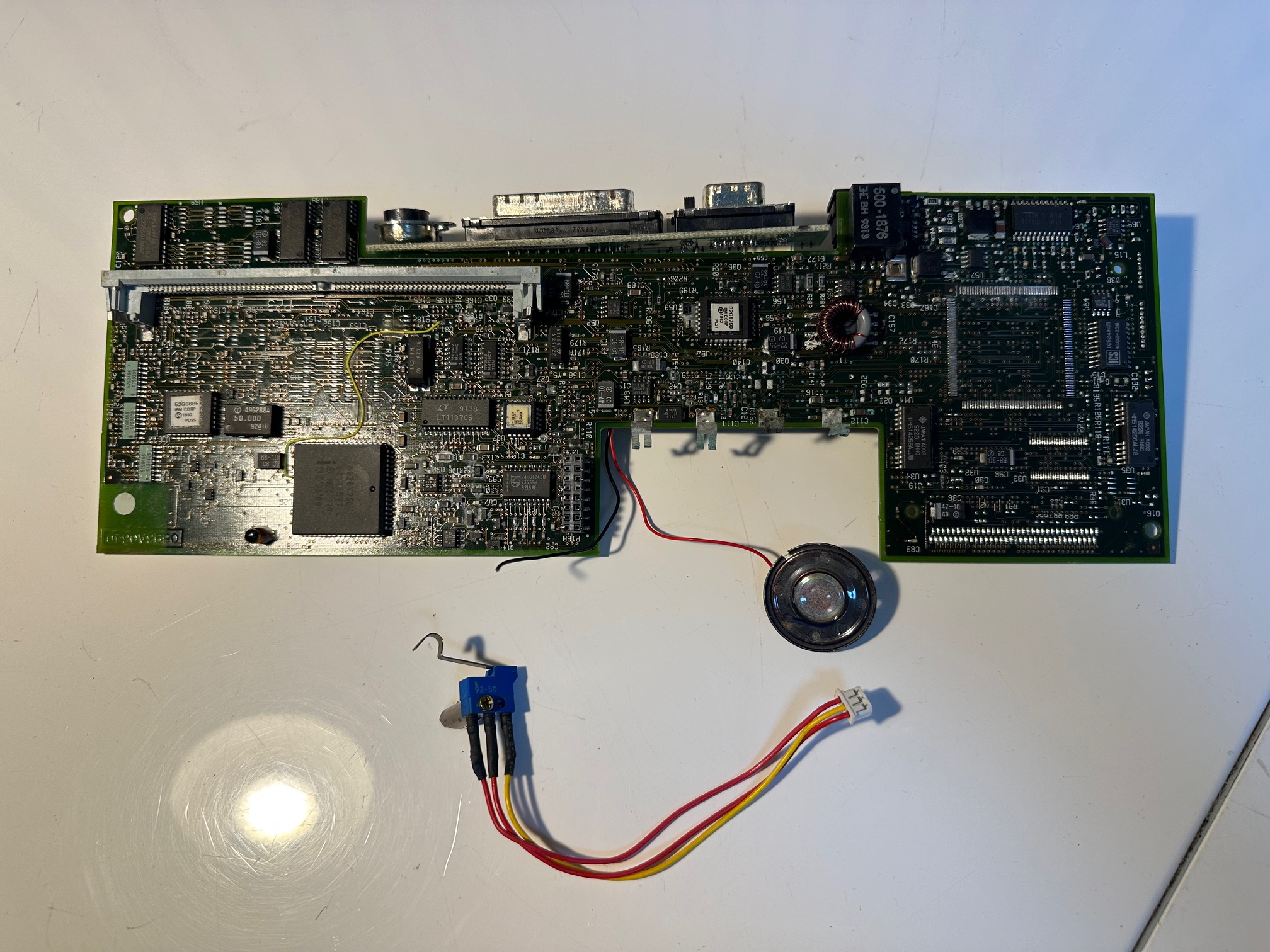
Now the machine is working, I checked the insides for issues:
The bottom pops out simply after removing the two screws on the back.
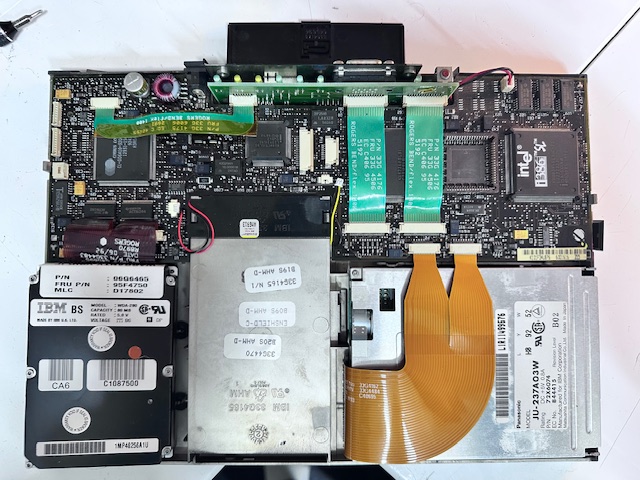
And with the motherboard removed (no screws on this one, just some plastic retainer clips:
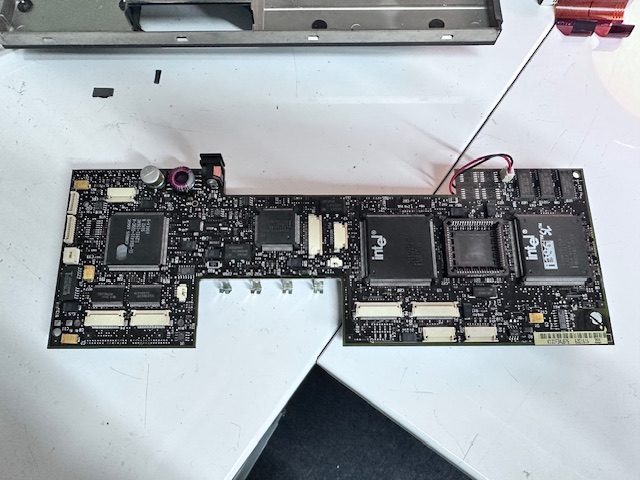
And a dreadful hibernation battery, bottom-right:
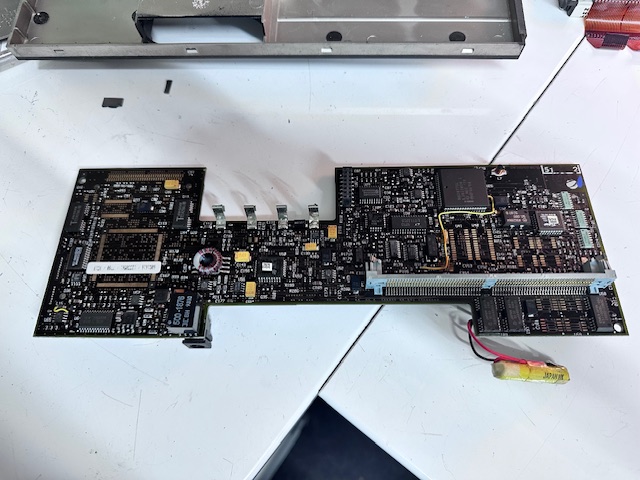
There is one large-ish cap that had failed over by the power DC jack - 330uf / 25v:
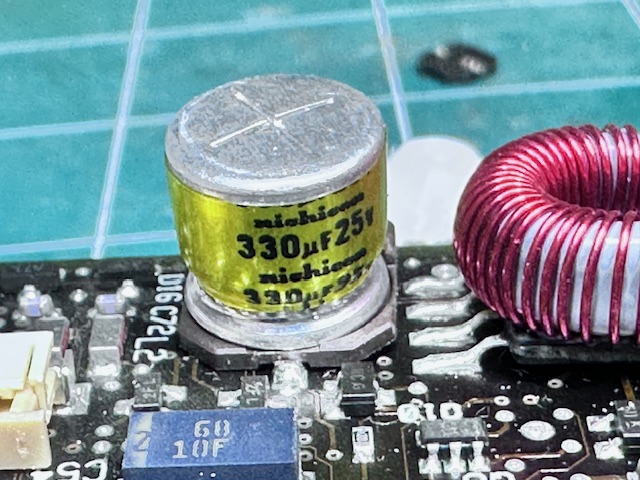
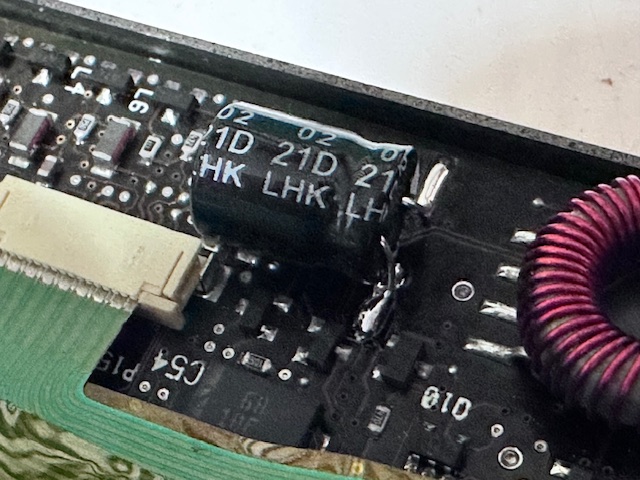
Replaced with a standard electrolytic, mounted sideways:
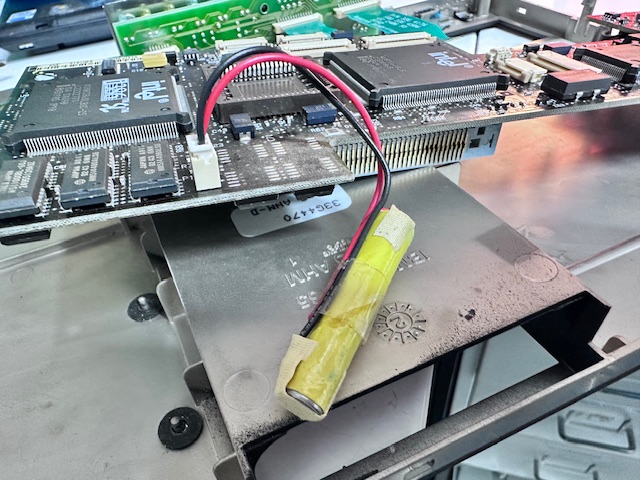
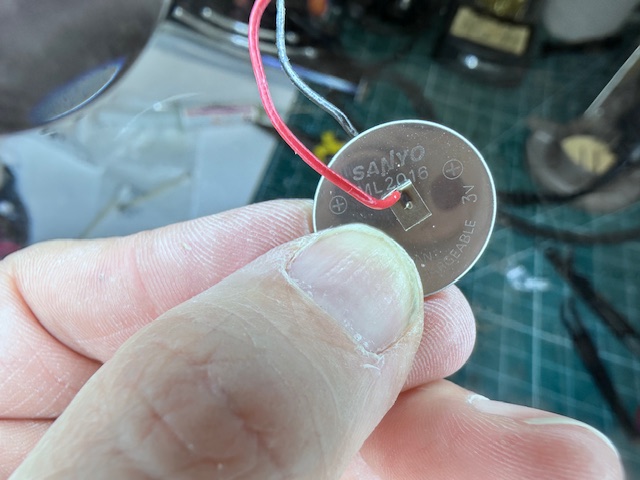
And finally, underneath is a rechargeable ML2016 coin battery. I re-routed it out and into the (missing) battery bay for easy access. Don't replace this with a standard cheap CR coin battery as they're not build to be recharged. The replacement was £12 on Amazon.
And finished! A fairly simple repair!
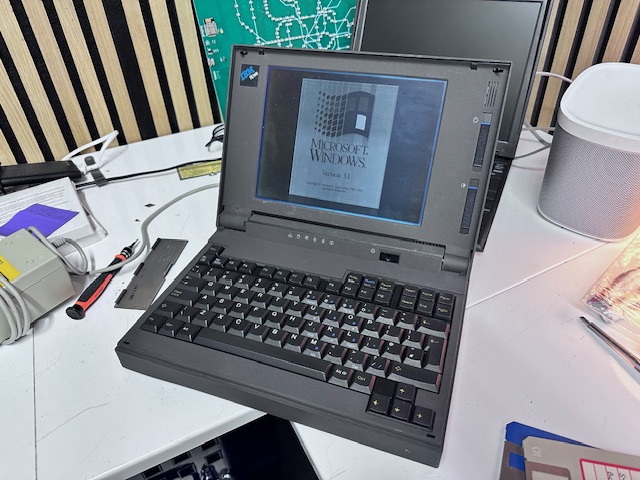
And the First of My Machines:
Here is the best shot I have of my 2141-182, complete with busted hinges. In this shot, the screen cables are hanging out of the side.
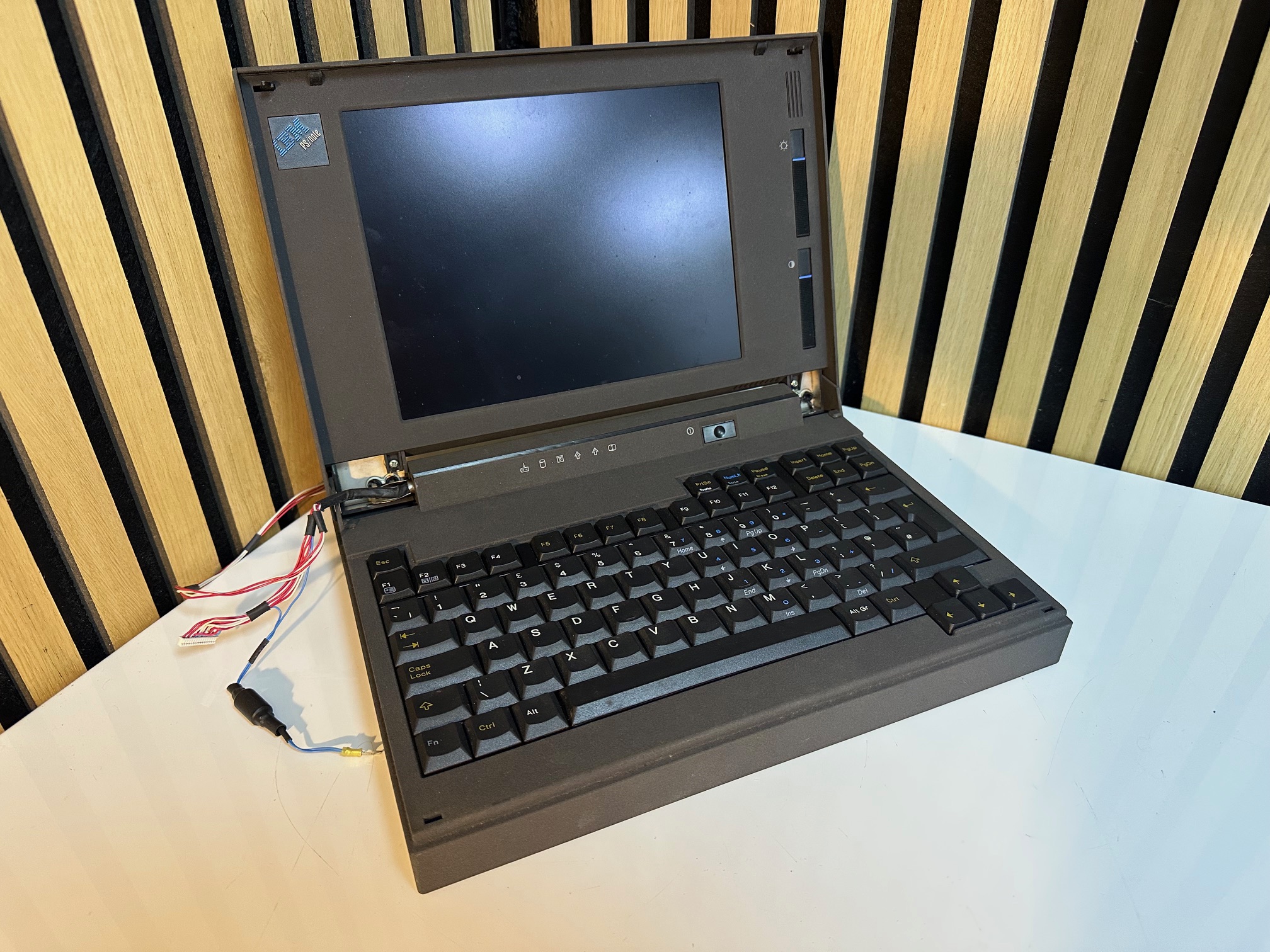
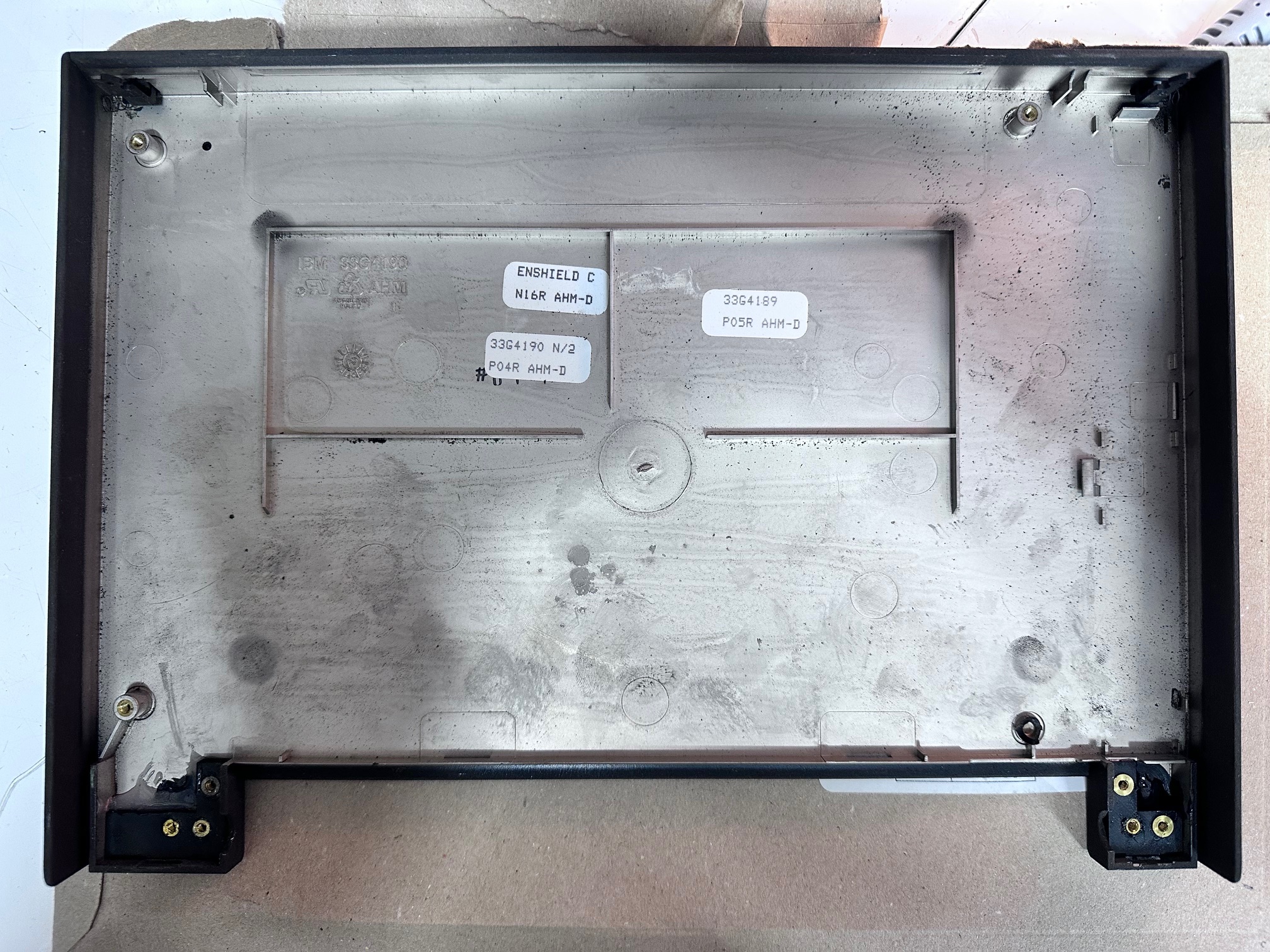
On my first machine, the bases which present themselves to the two hinge mechanisms were broken, so another friend made some 3D designs for 3D printed replacement foundations. I sanded down the old ones and Araldited these in place. These are the same design as you'd do for the Thinkpad 350 and PS/Note 425 as all of them share the same hinge designs and plastic chassis, so you can use them on all three types of lids.
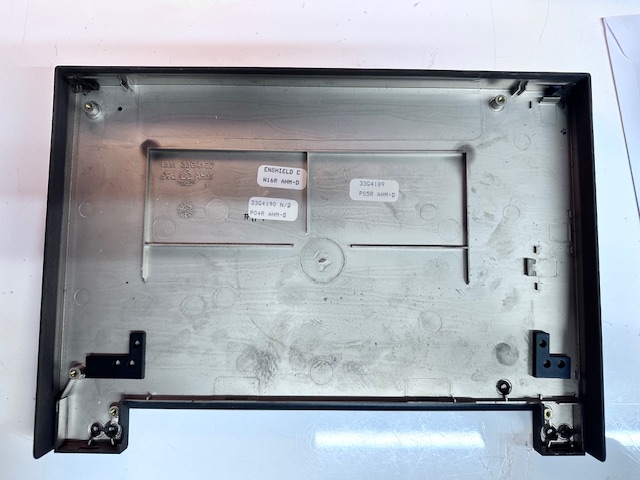
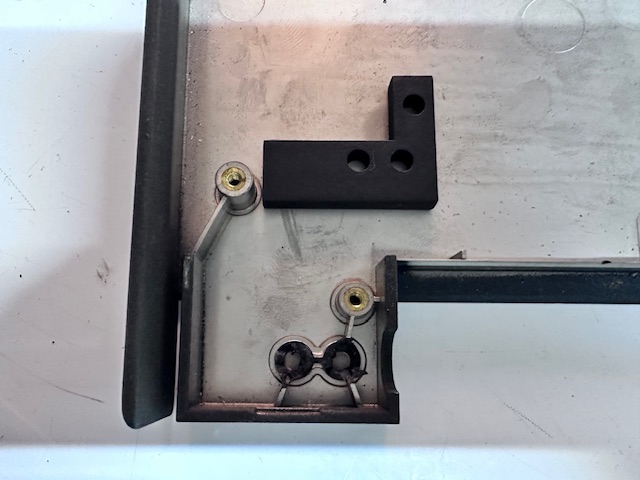
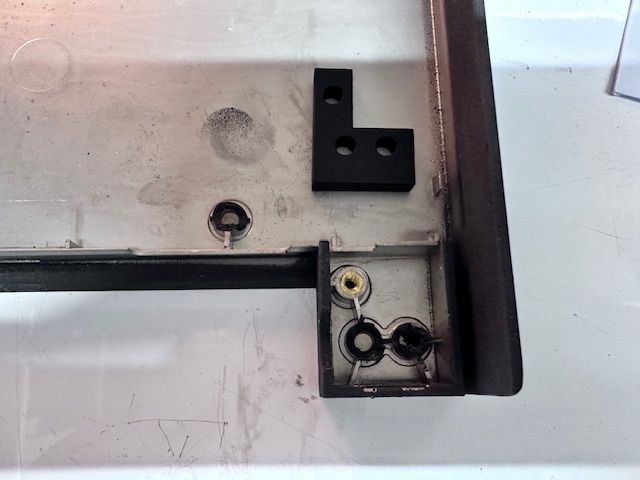
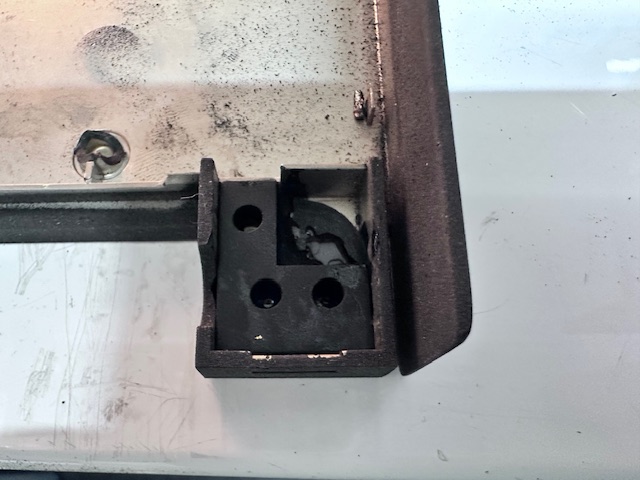
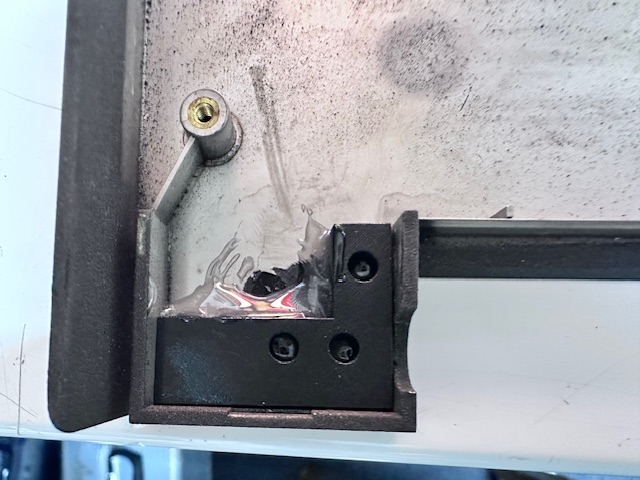
Next job is to heat-sink these knurl nuts into place....
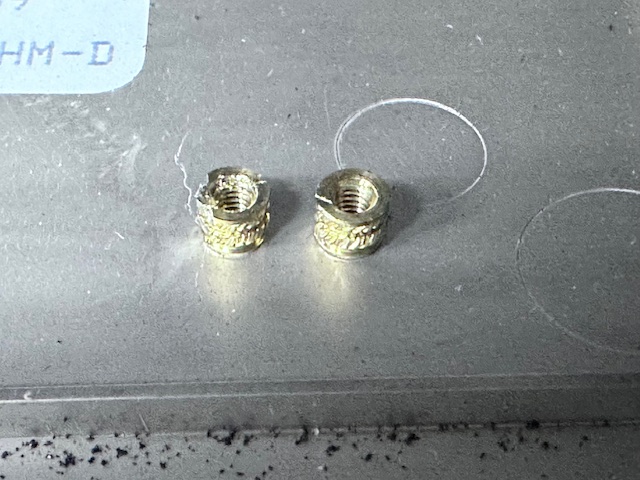
Here they are, sunk into the nylon 3D print with a soldering iron:
I have to say, this is another tough machine to love. I have yet to see a working one and I'm not entirely sure why. Whilst the internal hibernation batteries regularly cause a lot of internal corrosion and are likely damaging microscopic components on the PCB, one of my machines does not suffer from internal corrosion. There is only one, large 330uf surface mounted electrolytic capacitor which doesn't tend to leak, but replacing this cap does not allow the machine to boot. I cannot spot any fuses on the internal PCB and the rest of the capacitors are solid-state tantalums (which tend to fail very visibly in an explosive short). It's possible my unique external power supply, specifically for this machine is the problem. I'm past caring all that much because this machine is likely to be a little disappointing.
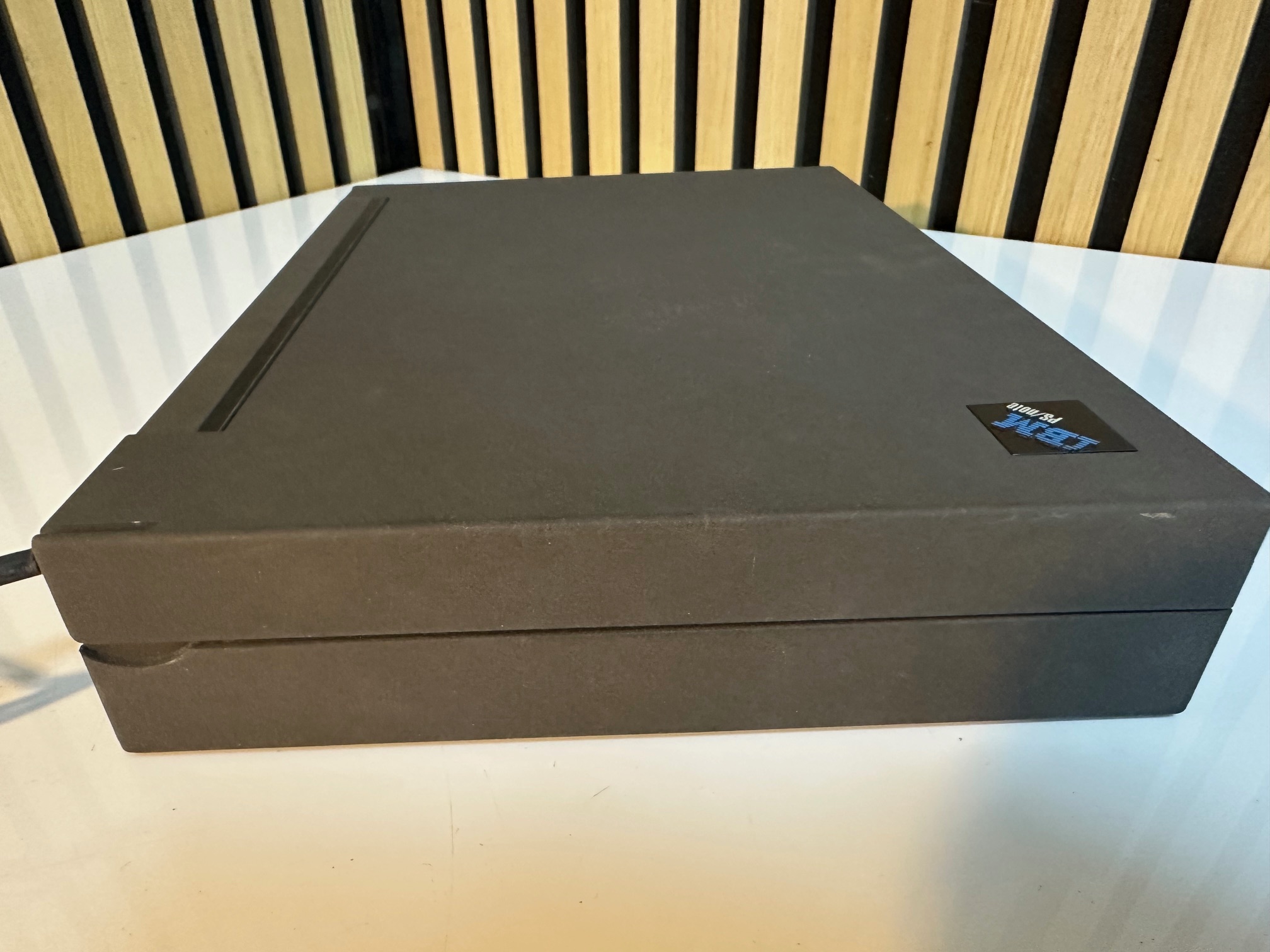
The plastic ingredients of the case have become extremely brittle due to an imperfect plastic chemical makeup - it will literally split and break with normal movement. What is also unusual is that the case has been coated in a -somewhat- vinyl paint which you can peel off like a skin. The colour of this paint is almost exactly the same colour as the plastic below, so it's either been added to provide a different texture or perhaps it absorbs RF. Either way it feels like an experiment.
My understanding of how this machine came about is perhaps within a world of competing 'labs' of IBM Japan, USA and external partners Zenith. In this case we have a USA developed machine, branded as a note competing for IBM 'value' customers - which were also being given the Japanese low-end PS/55 notes. As the low-end Japanese PS/55 M23V and C23V (as opposed to the high-end C52 / 700C) notes evolved into the Thinkpad 330, this US-designed PS/note 2141-182 and PS/note 425 became the Thinkpad 350. As previously mentioned Zenith were making the PS/note N45SL as well to become the 300.
I'm going to quote @Thinkdan rather than steal his expert knowledge with some more trivia:
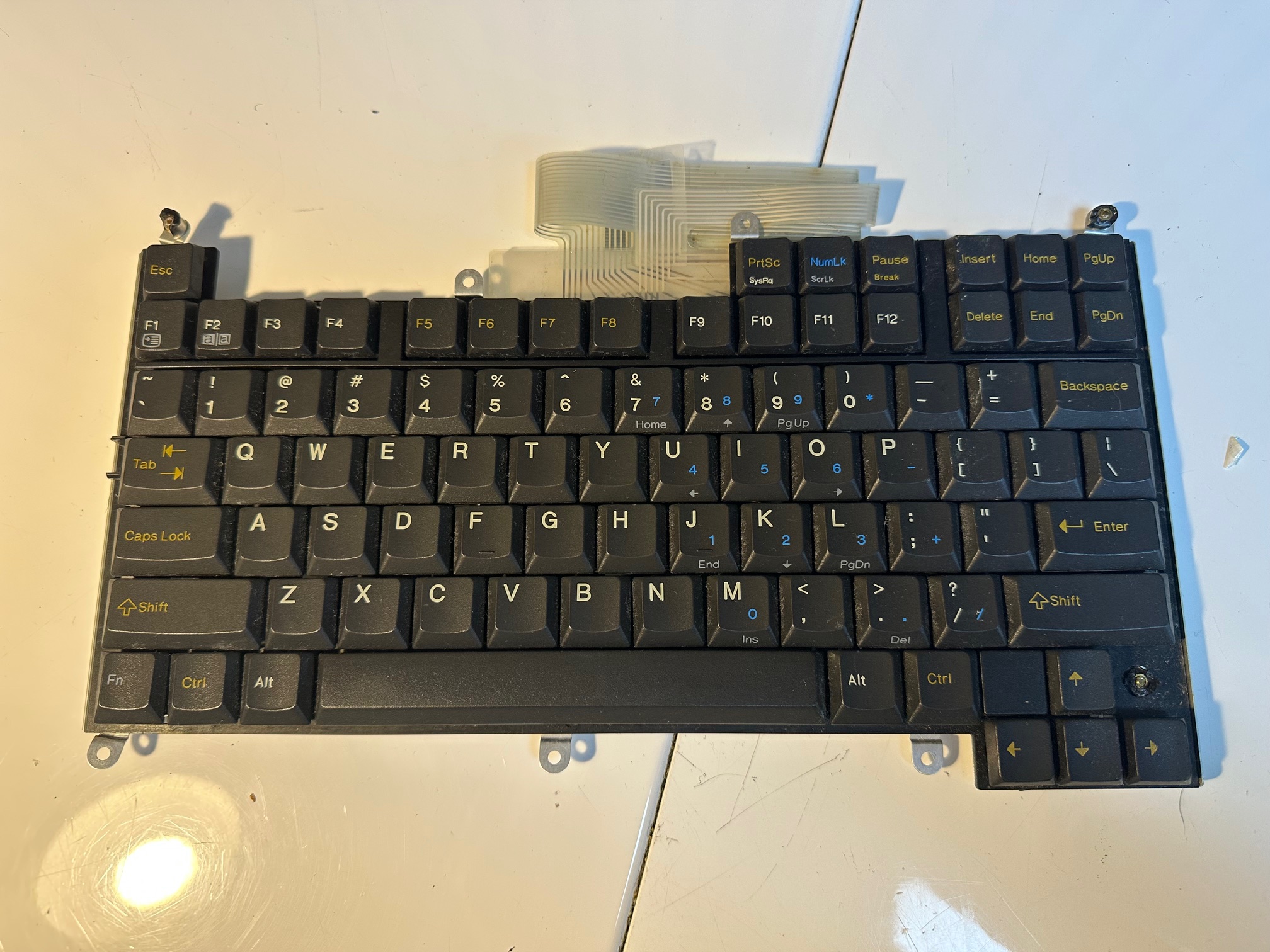
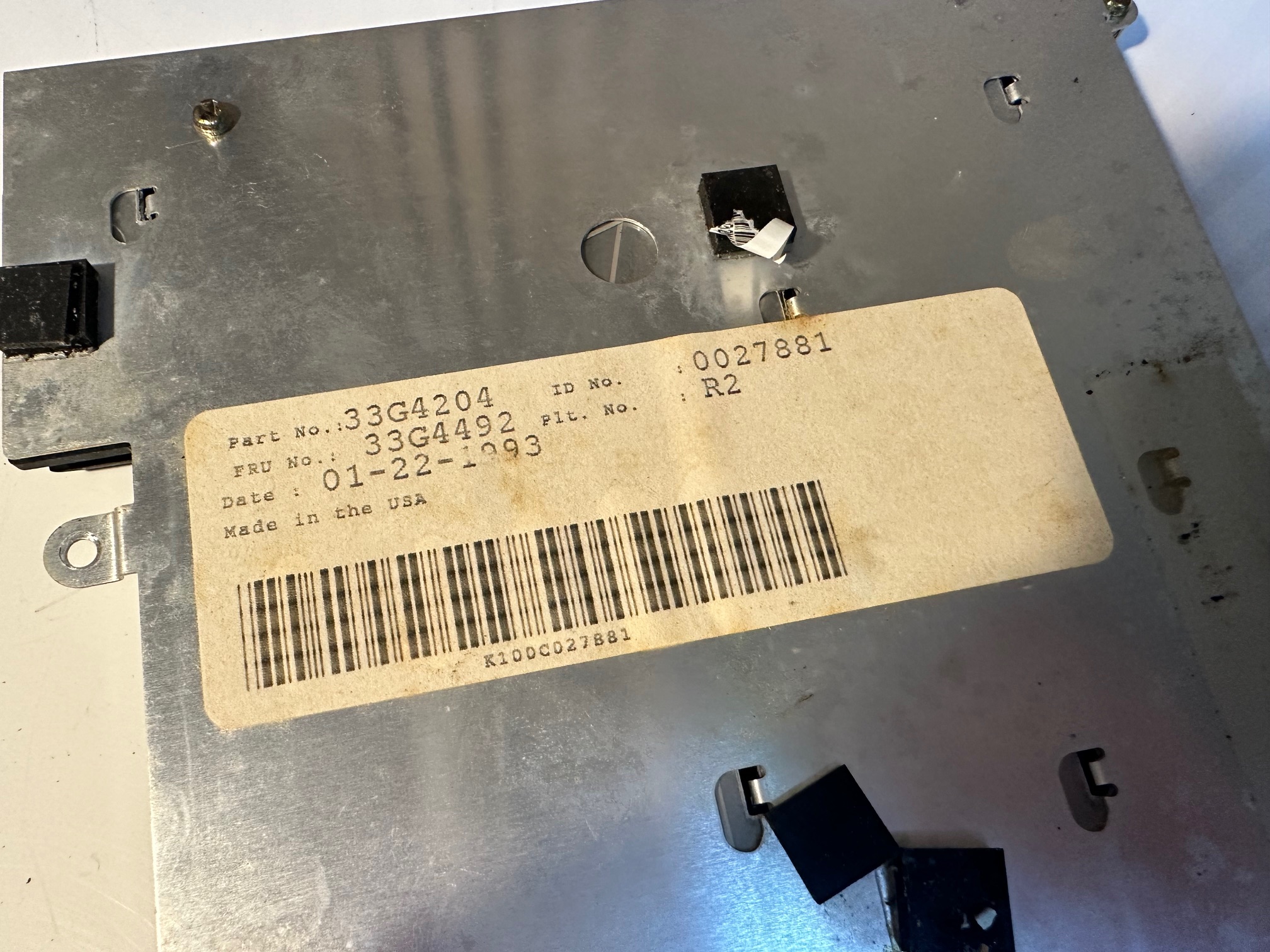
"the 23- on plastic mouldings (IBM Raleigh), ignoring the Q4 prefix to the serial number the 55 indicates IBM Greenock, and the label states 'Made in UK'. 'Plant R2' on the sticker on the underside of the keyboard (I presume) looks like a Lexington/Lexmark code. Even when assembled in the UK, the Model M keyboards always had unique labelling, with things like day of manufacture rather than just year-month and a completely different style of label from anything else that came out of Greenock. I do regret that I never got to see the keyboard assembly area when I worked there..."
and
"I have vague recollections that the PS/Note 182 - type 2141, sometimes referred to by IBM as PS/1 Note (but I don't recall seeing it badged as such) was an IBM Raleigh design, but it also bizarrely is the only other ThinkPad to share the weird grey fleck case paint with the 300, made by Zenith. It sits in the timeline of PS/1 design/development being transferred from Boca Raton to Raleigh, and Raleigh had form with notebook development with the ThinkPads 500, 510, and 701"
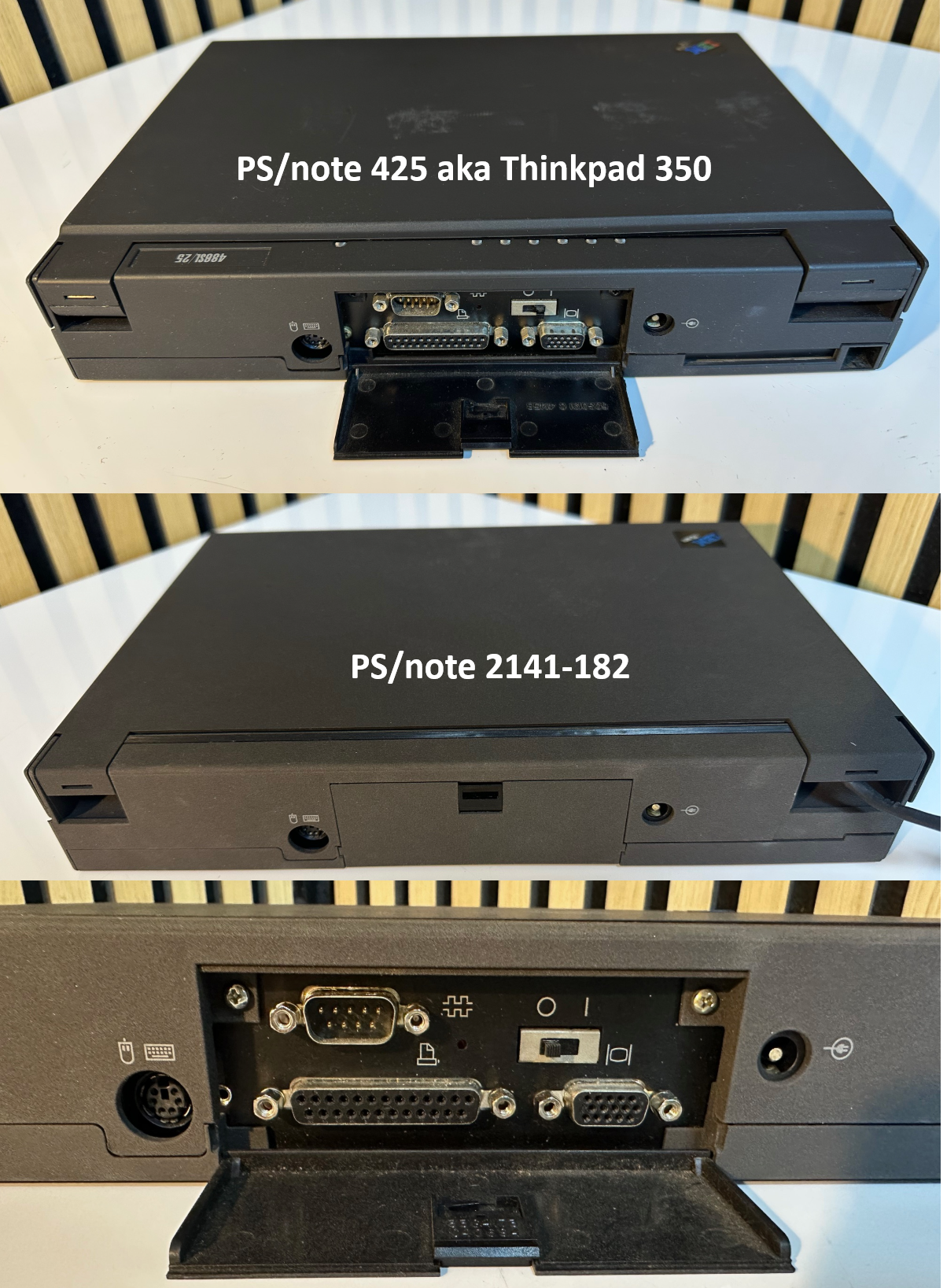
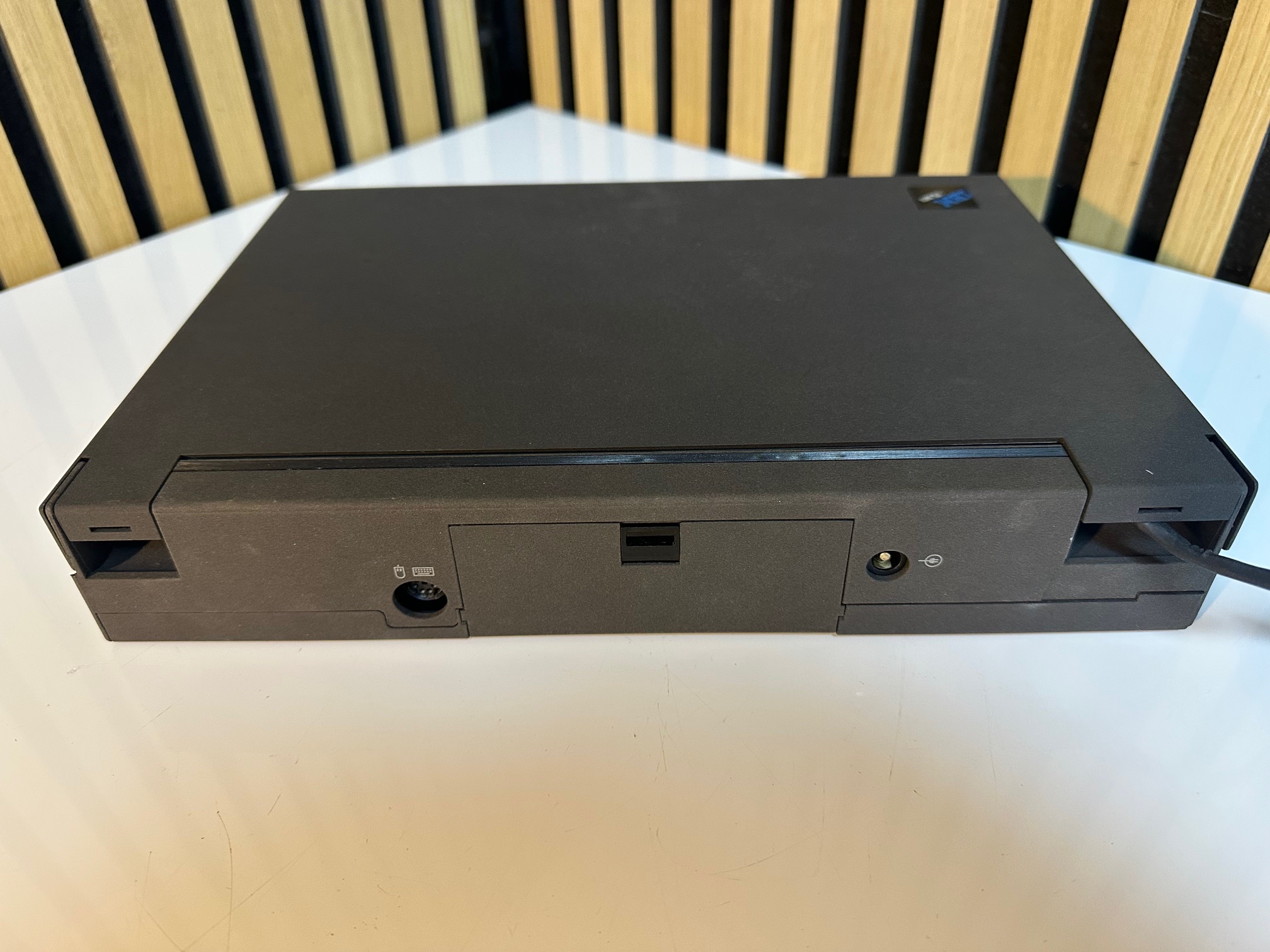
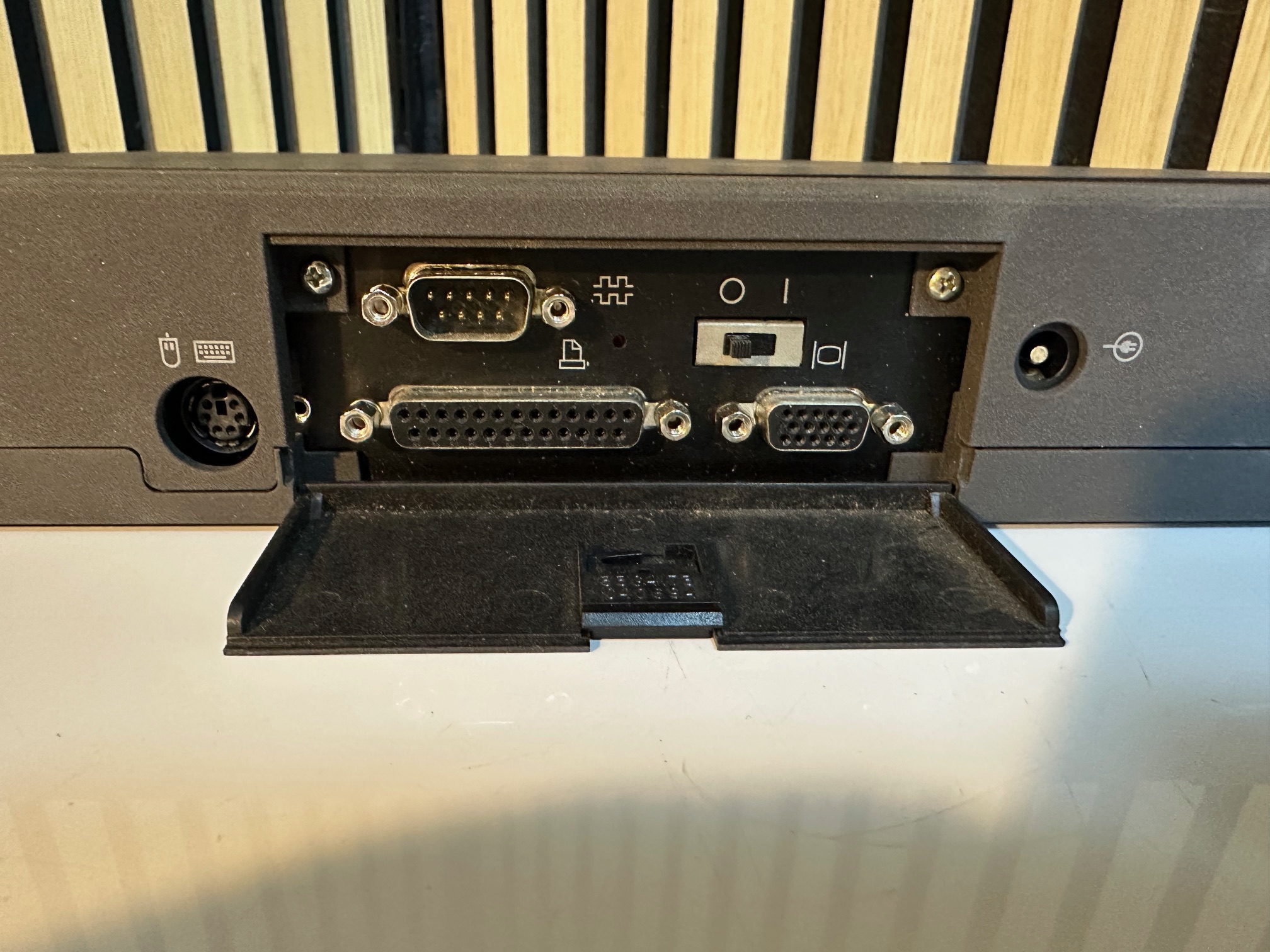
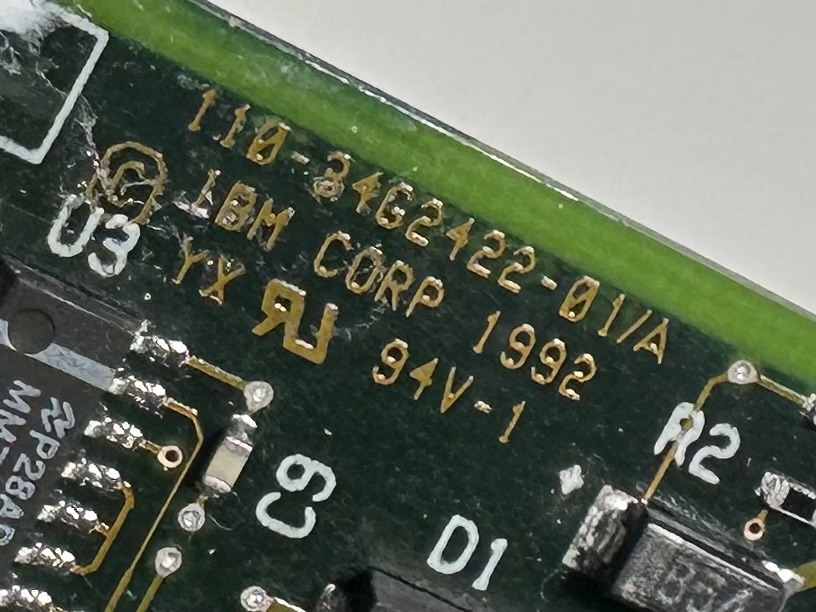
At the time, we must remember that in different places and moments, IBM were working with Zenith and IBM's newly formed stepchildren at Lexmark, alongside their own distinct engineers. Ideas and designs seemed to be shared in a bit of a free-for-all from all sorts of places. The 182 feels very cheap. Not quite as bad as the Zenith 300 build, but somewhat close. Having said that, it's very much built by IBM as confirmed by the writing on the bottom ("Manufactured By IBM") and the silkscreen printing of IBM on the motherboard. It certainly shares a lot of design similarities in design with the 'value' PS/note 425/Thinkpad 350 of which share the same brittle kind of plastic leading to lid/hinge failure. The ports and screw design on the rear are exactly the same as the ps/note 425/Thinkpad 350
Bear in mind on my 182, the front plastic hinge covers of the screen bezel have snapped off due to the bad plastic which makes it looks like ther eise is a bigger empty space in the hinge area that wouldn't have existed in the original:
Eventually, IBM somewhat sacked off the Japanese and US designs of the evolved Thinkpad 330 and Thinkpad 350 and restarted the whole consumer range of Thinkpads with the cost-reduced version of the 755 - the Thinkpad 360 and the ground-up designed 'cheap' Thinkpad 340.
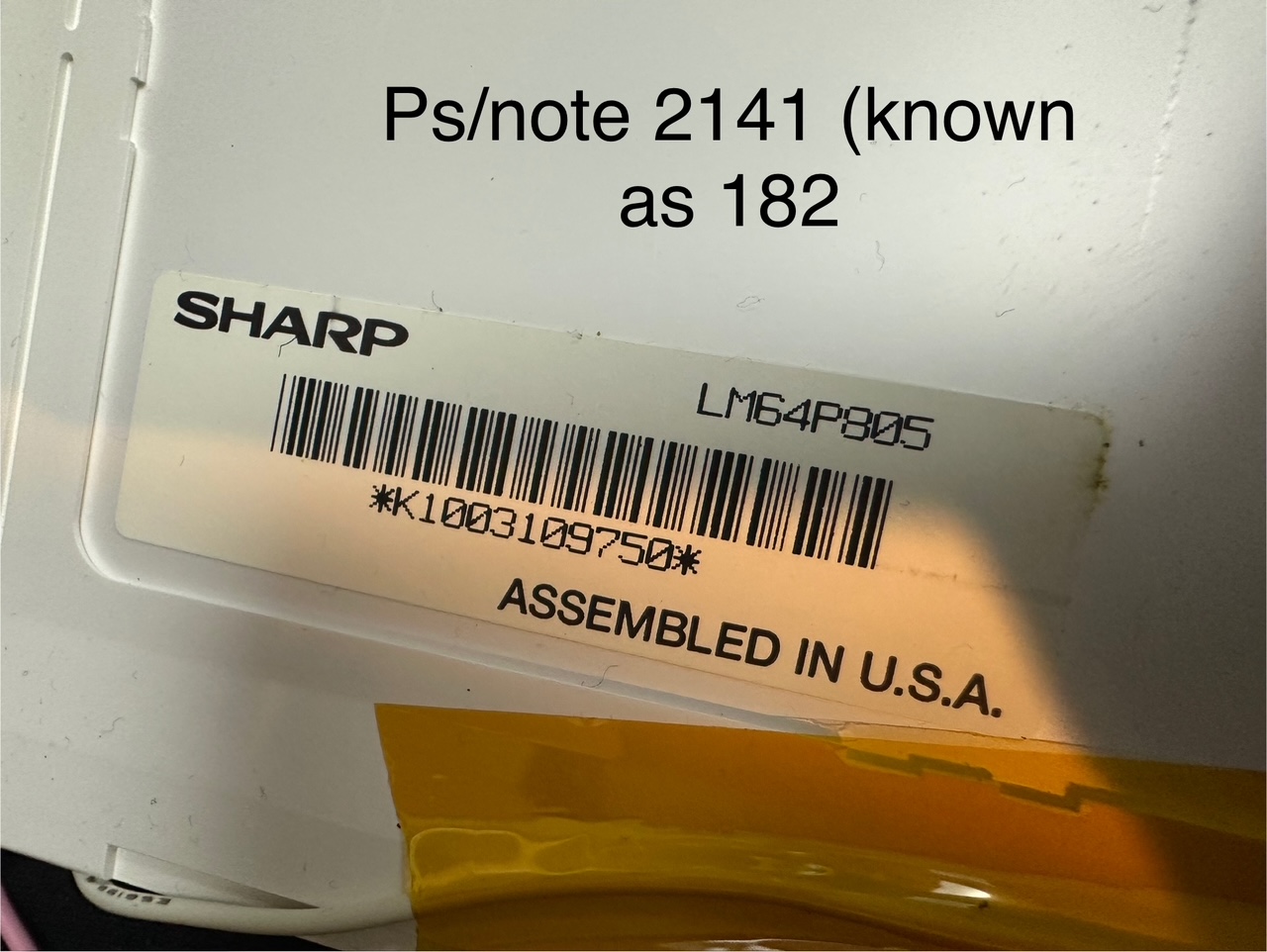
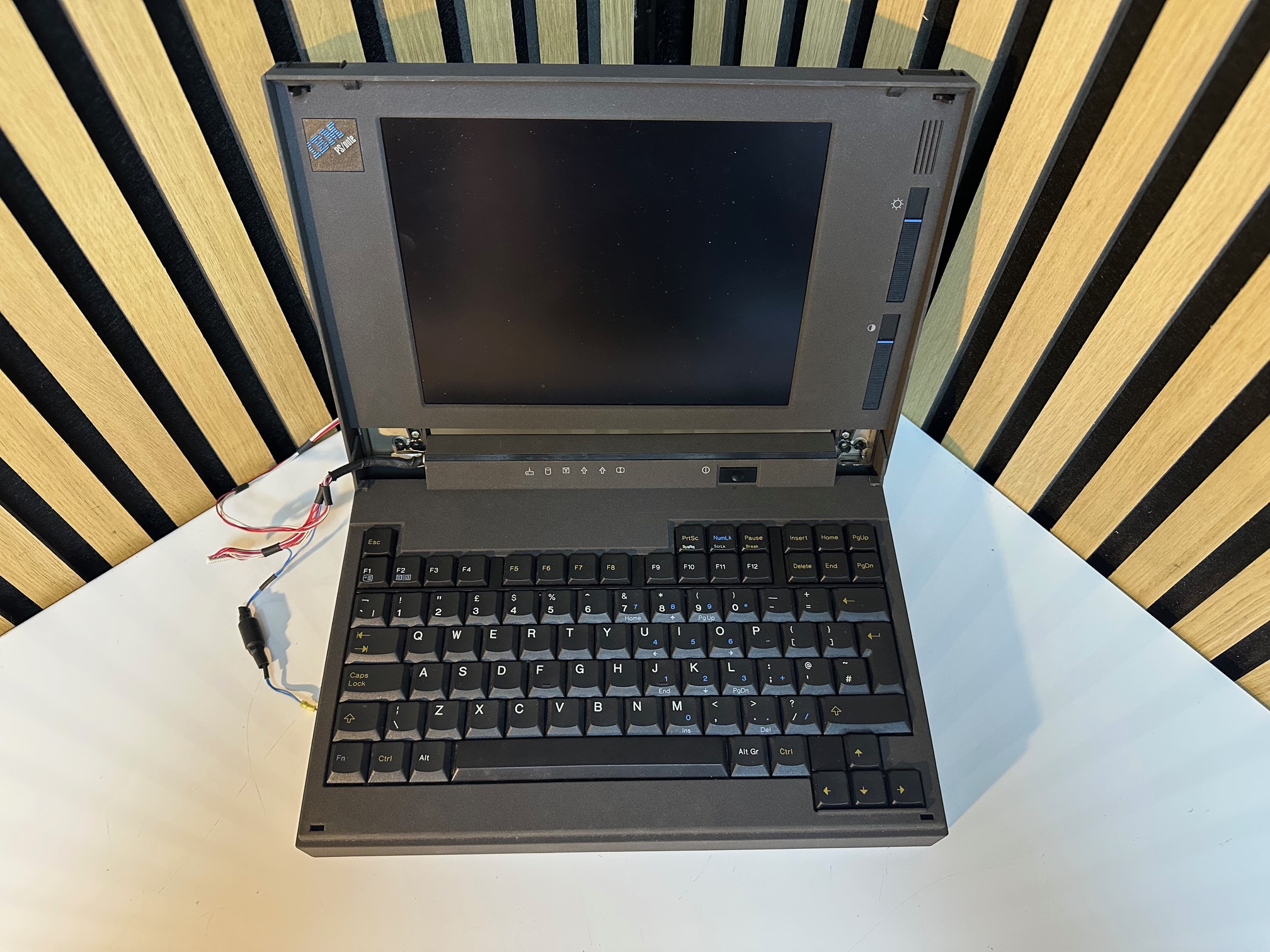
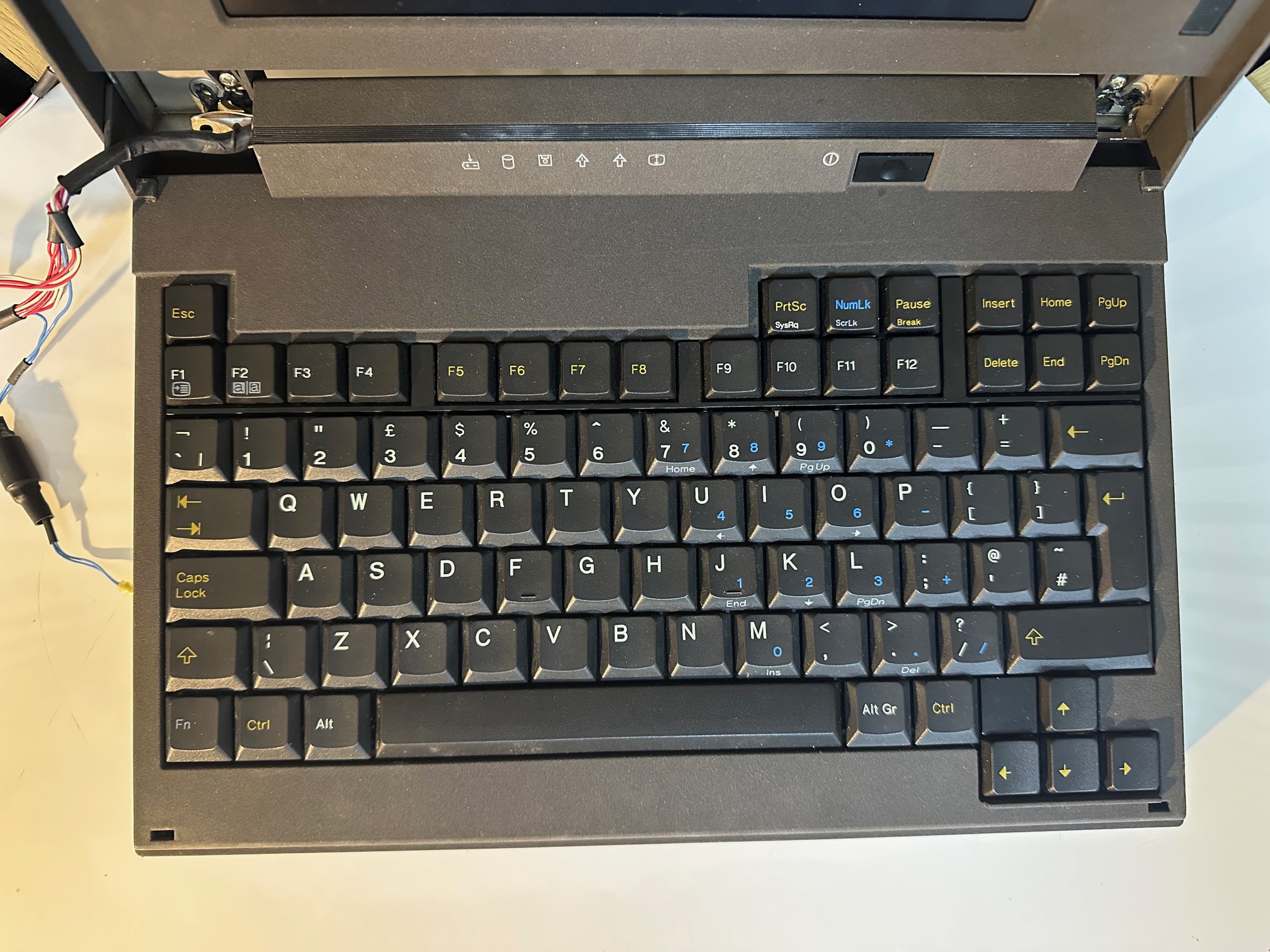
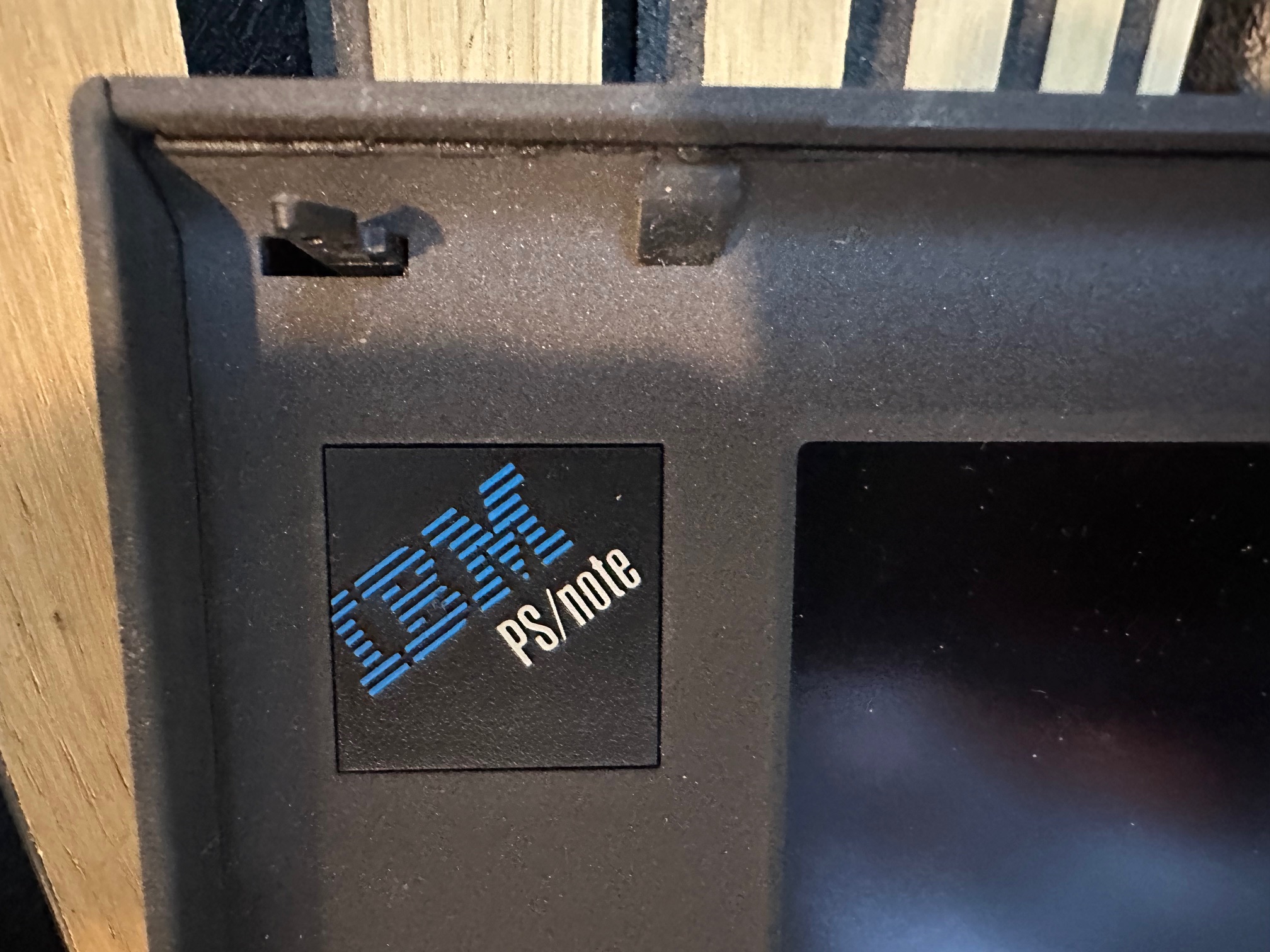
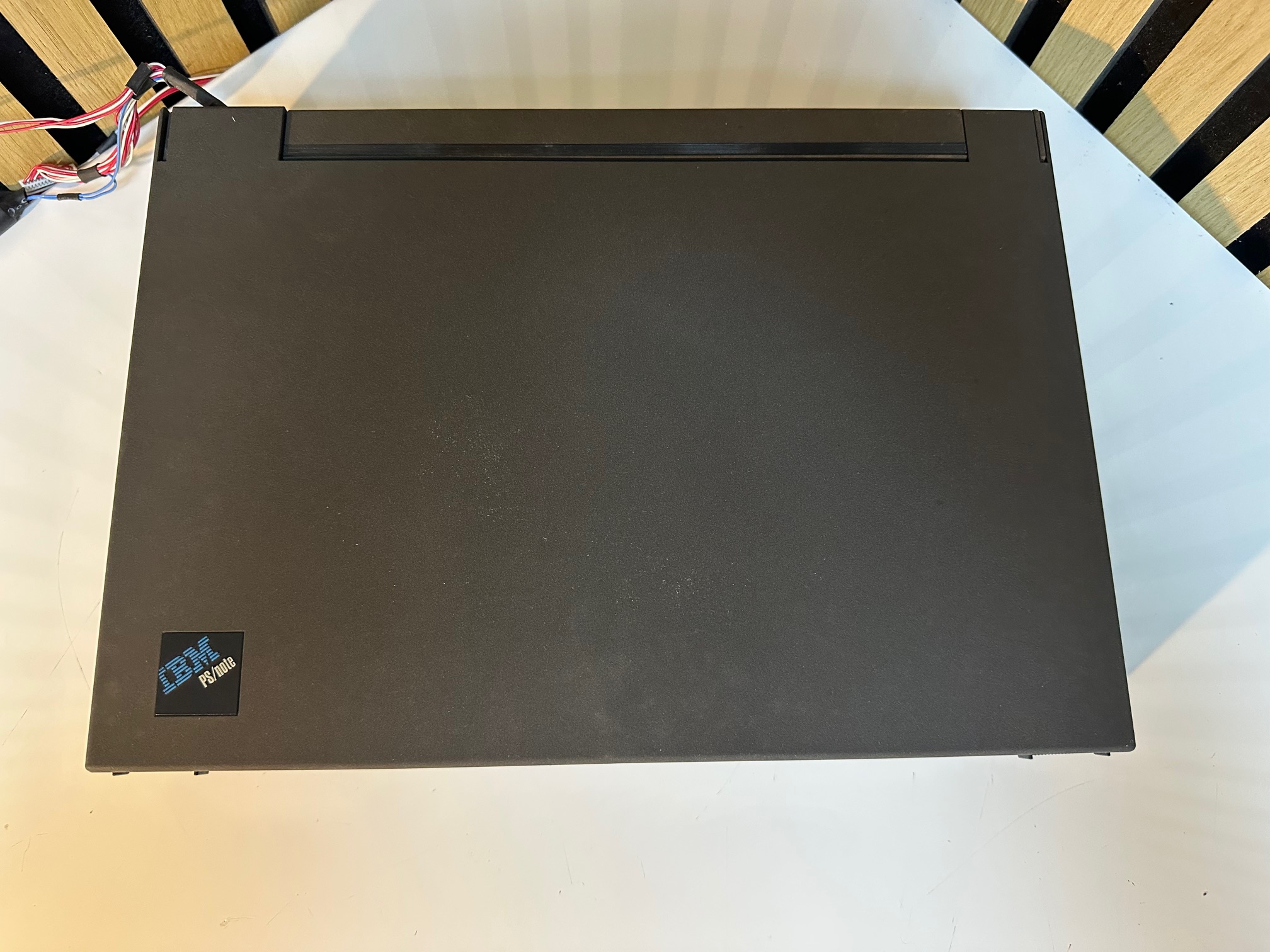


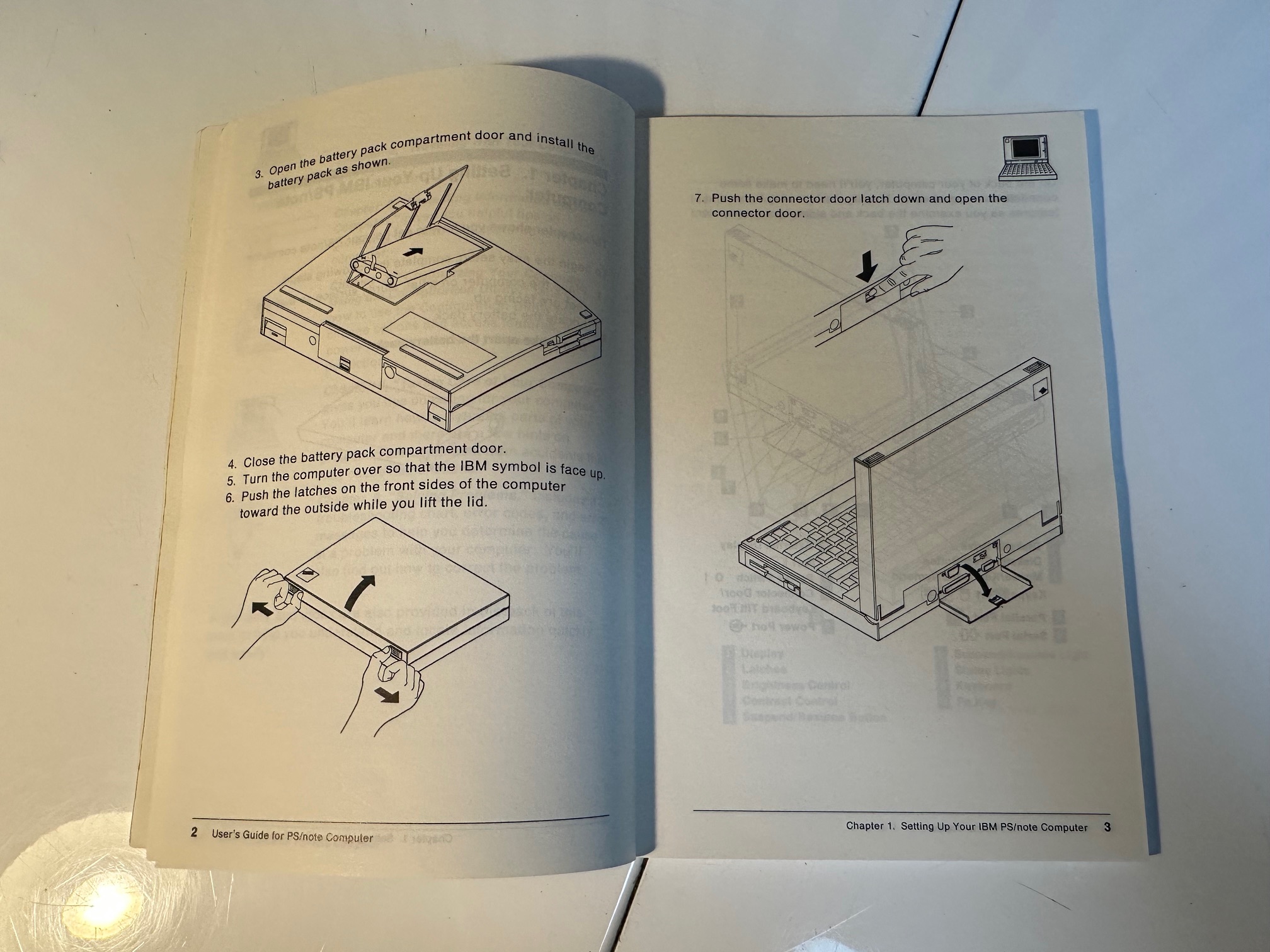
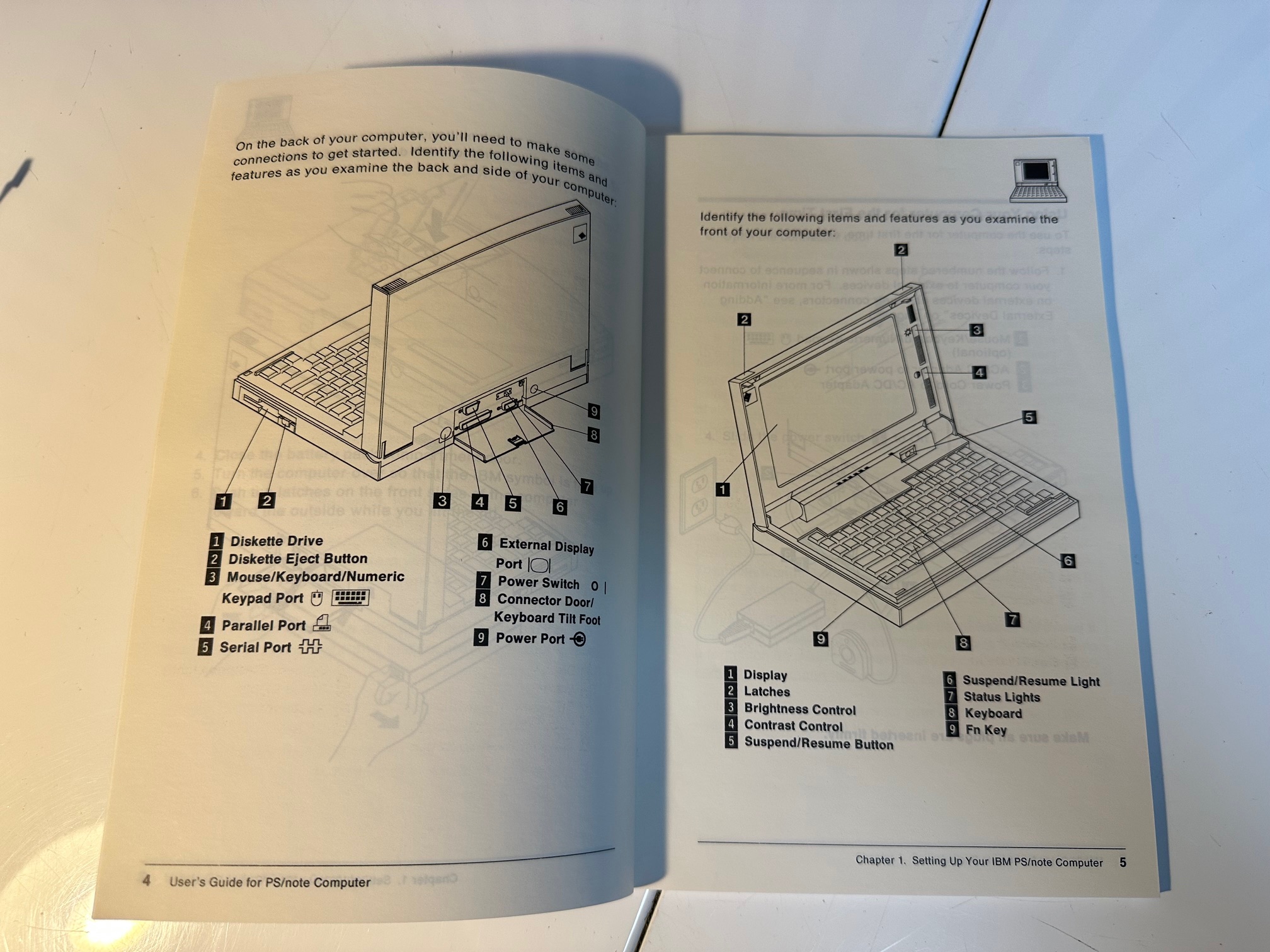
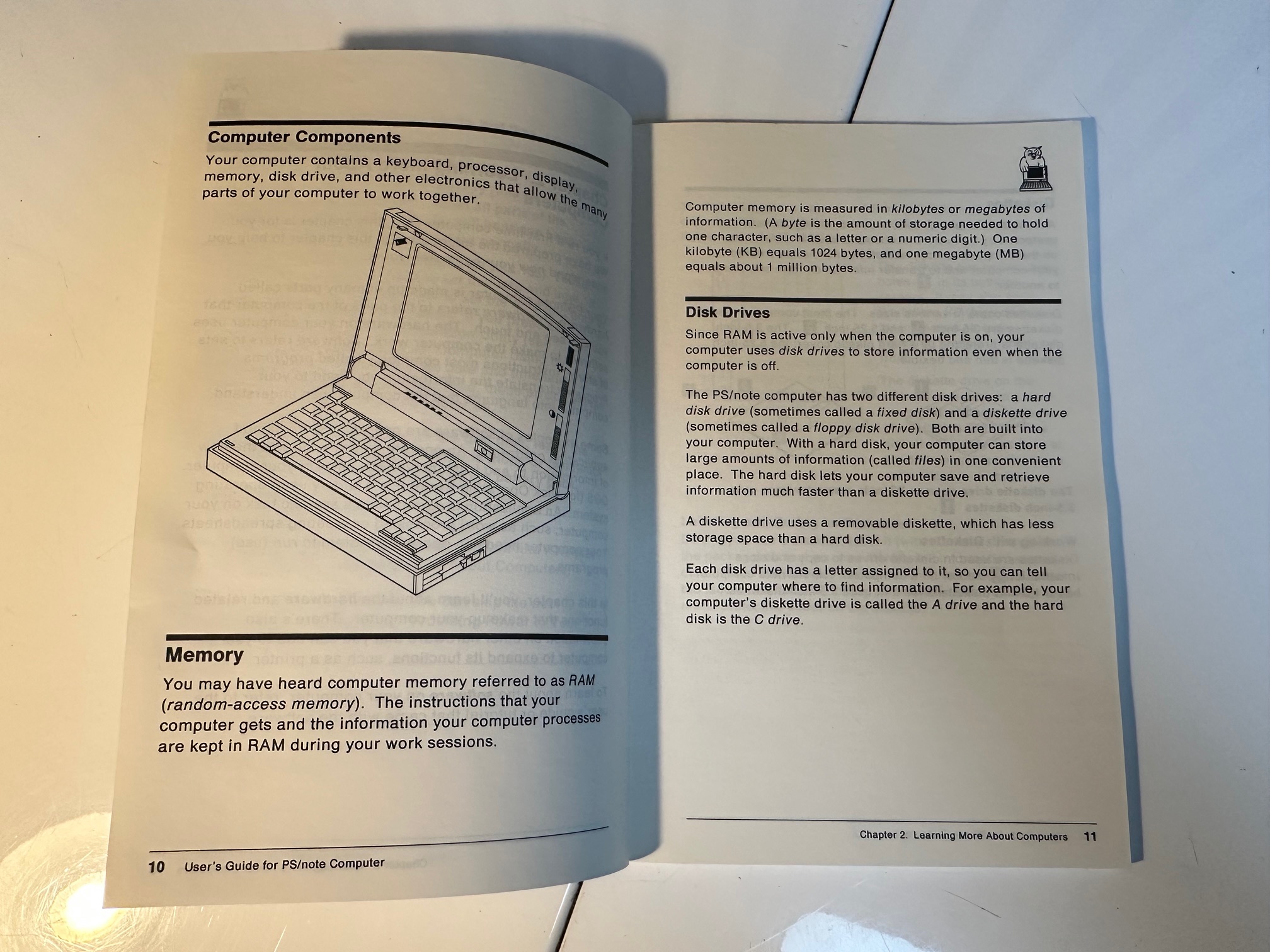
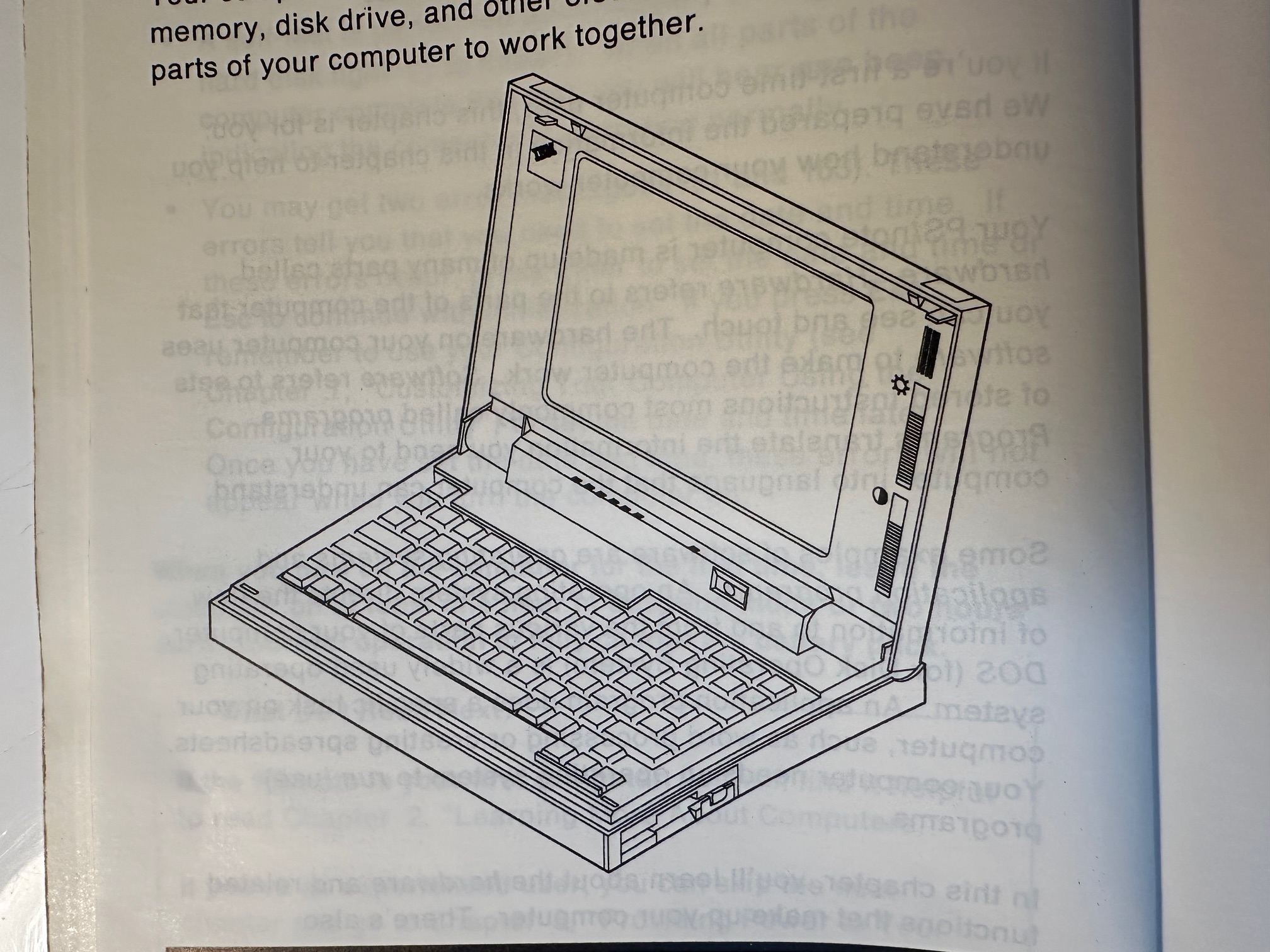
Extra tit bit - here is it's patent: https://patents.google.com/patent/USD346592S/en
And here is a picture taken by @AdmiralShark showing how the Lexmark AR-10 notebook bares some striking similarities to the PS/note 182: