
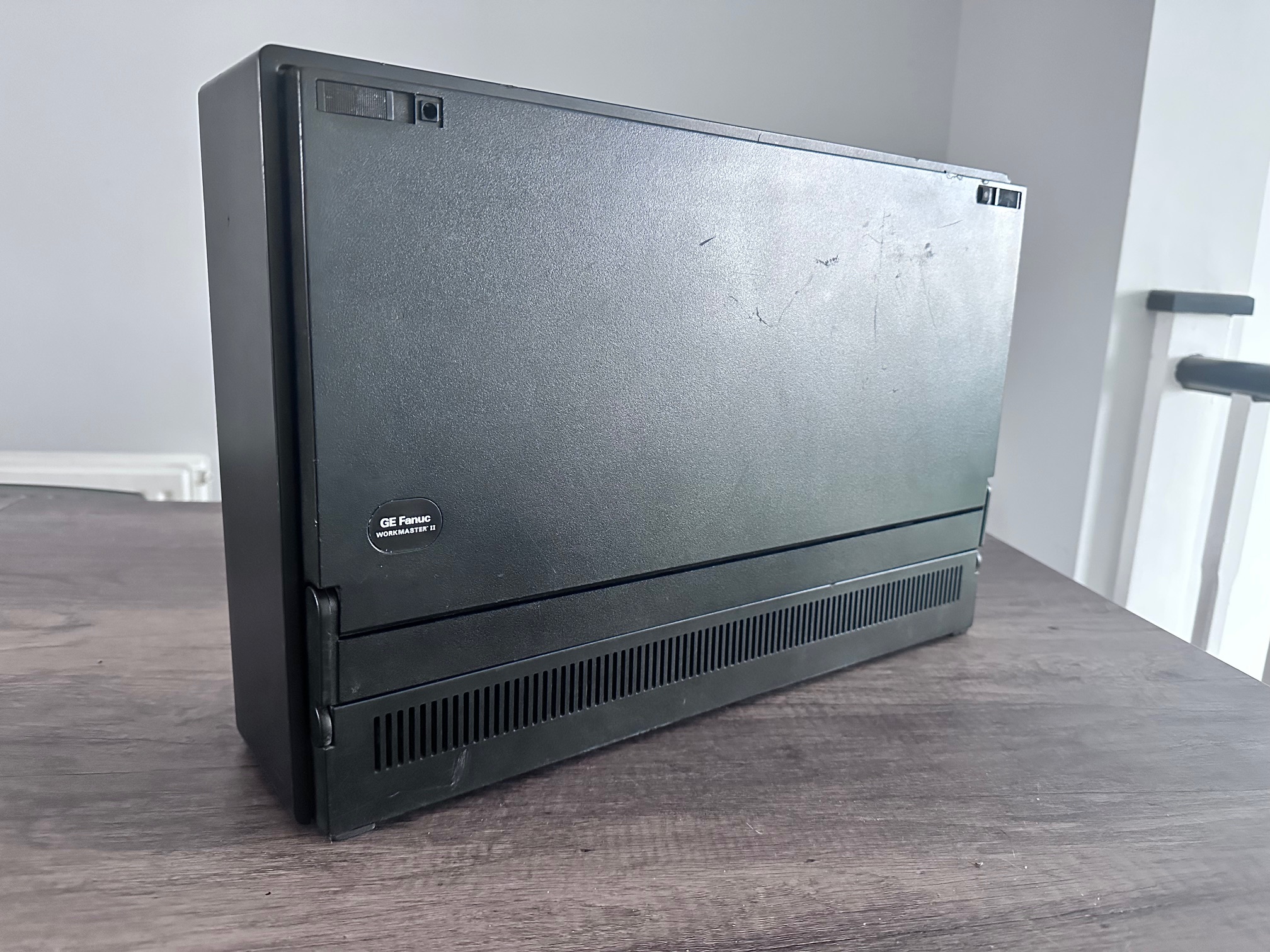
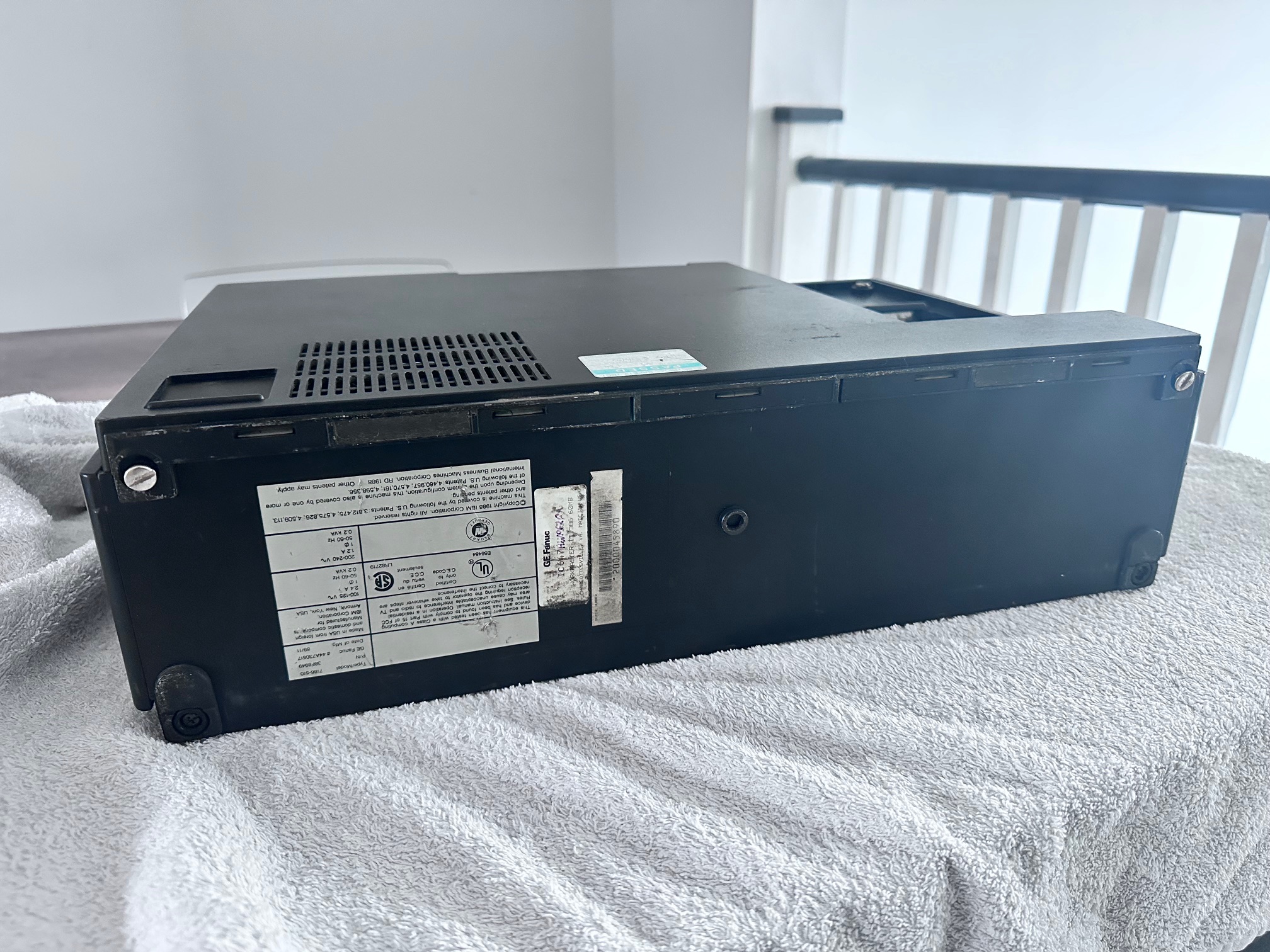
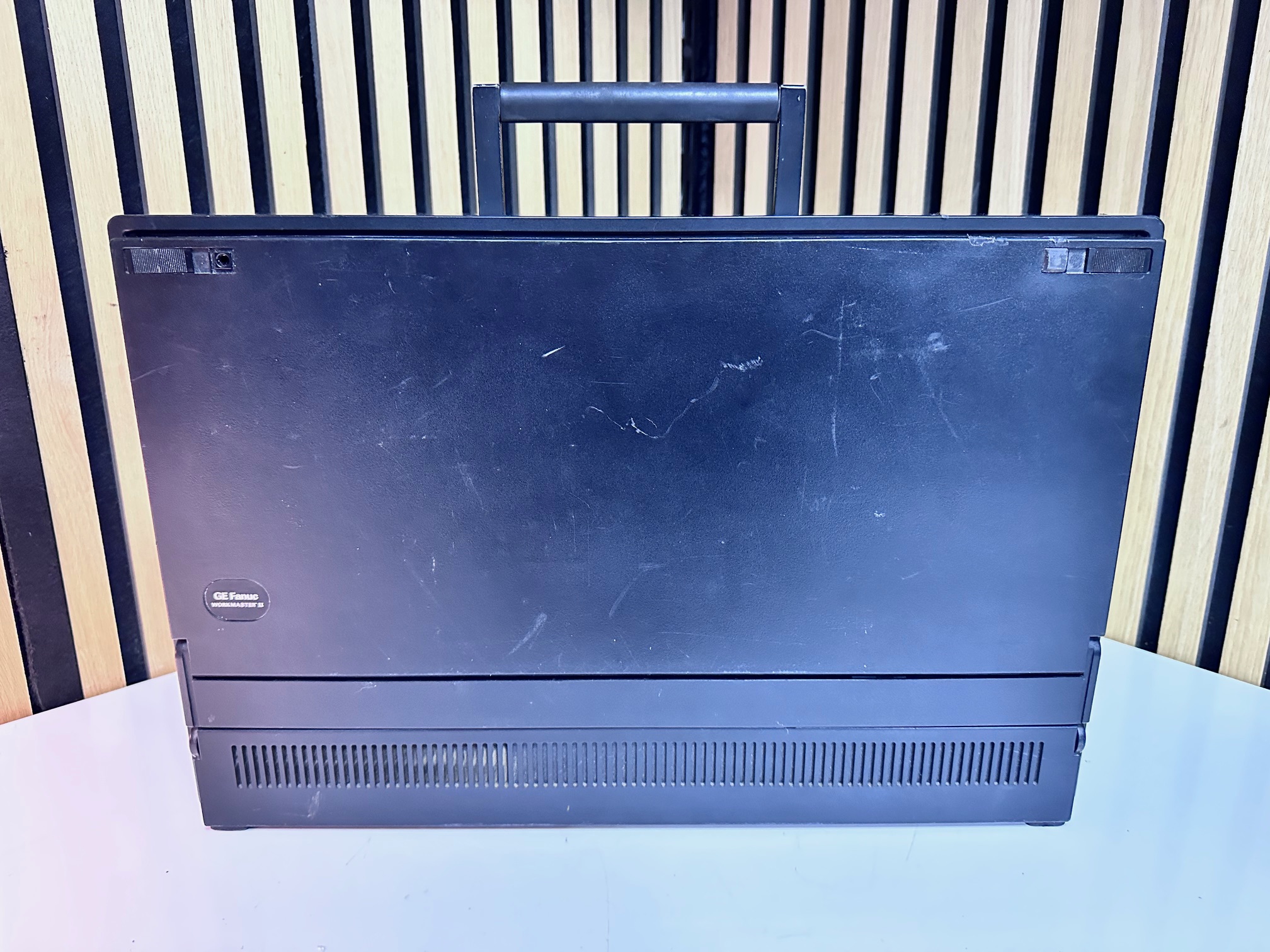
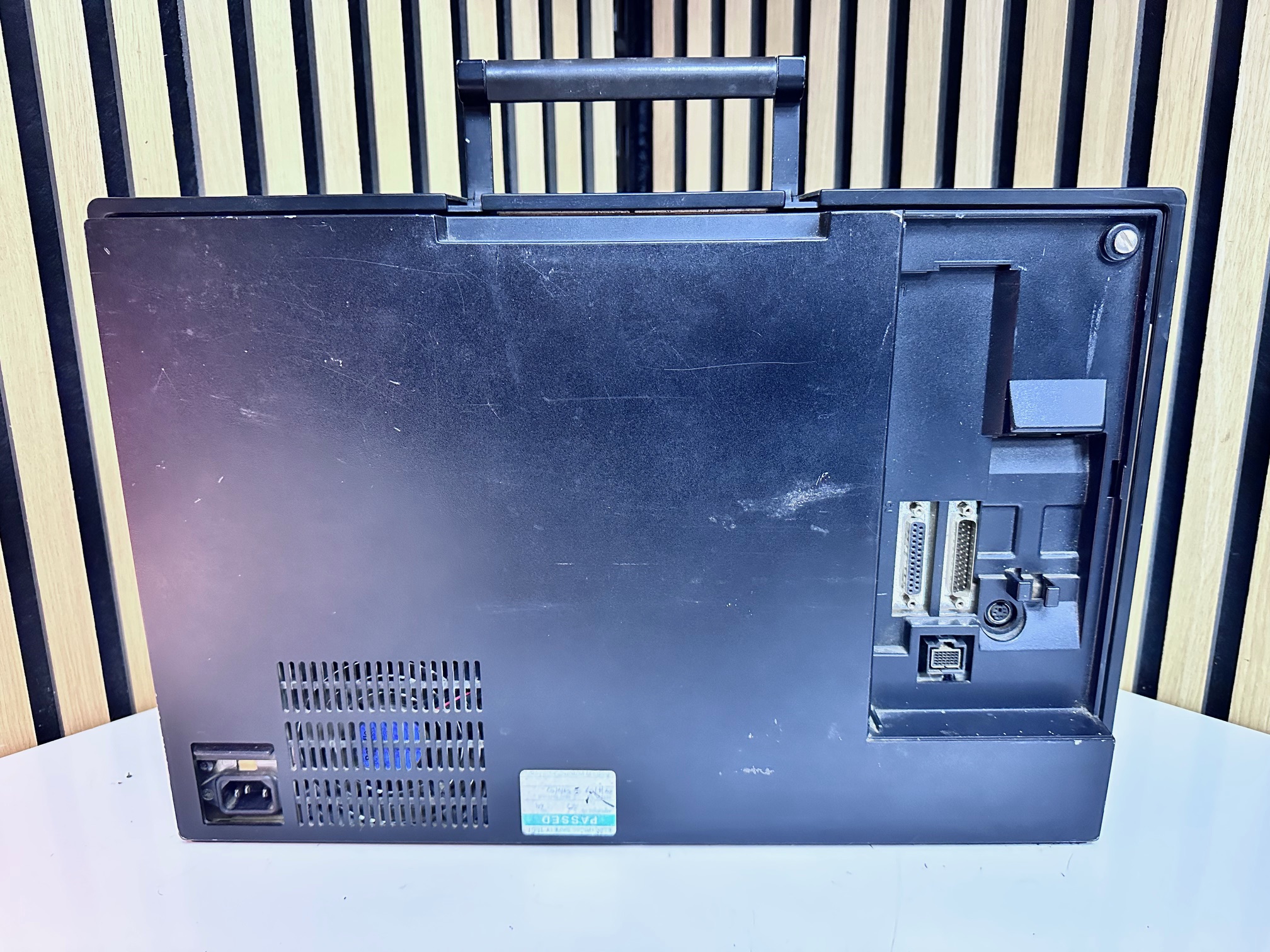
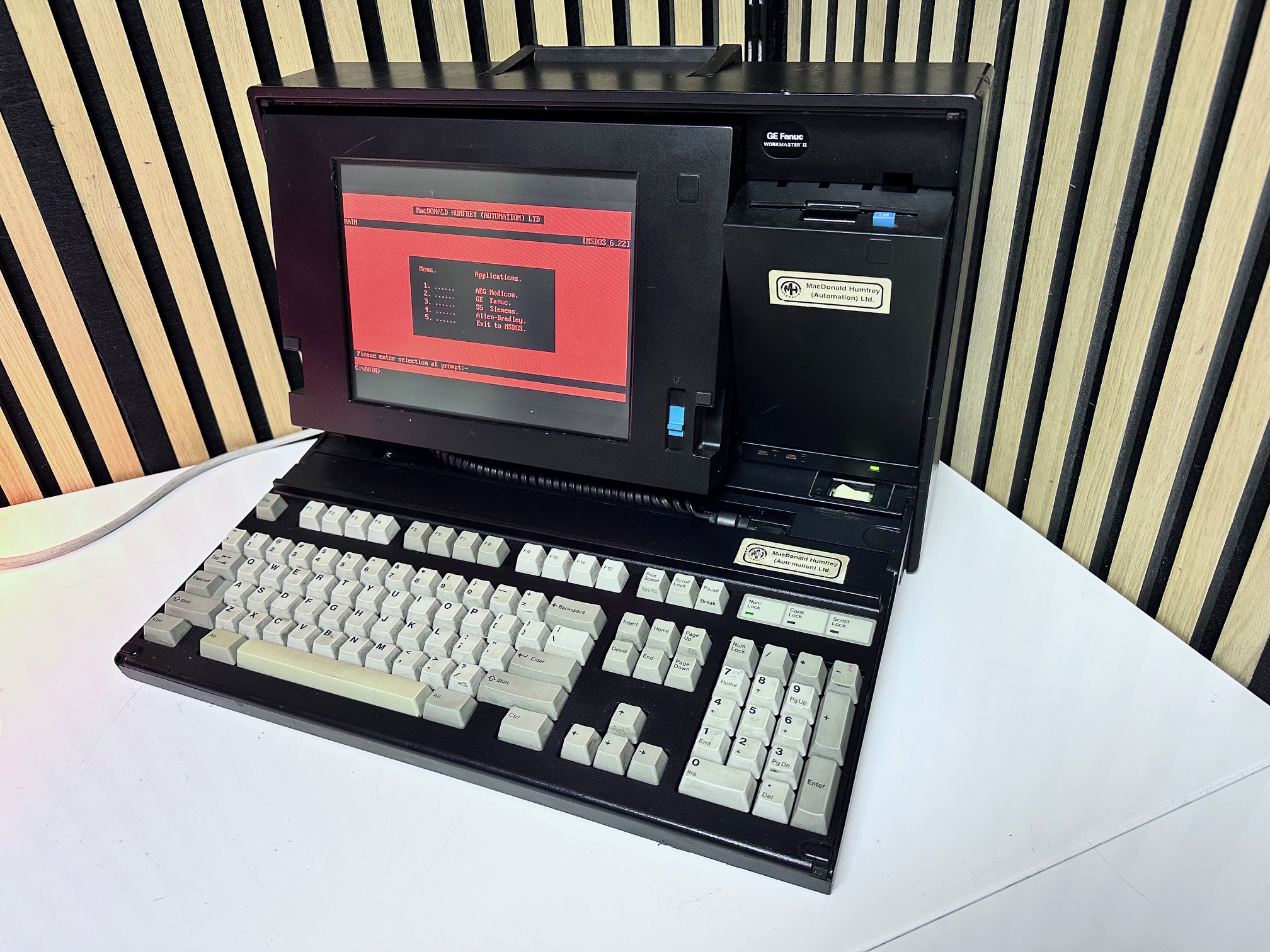
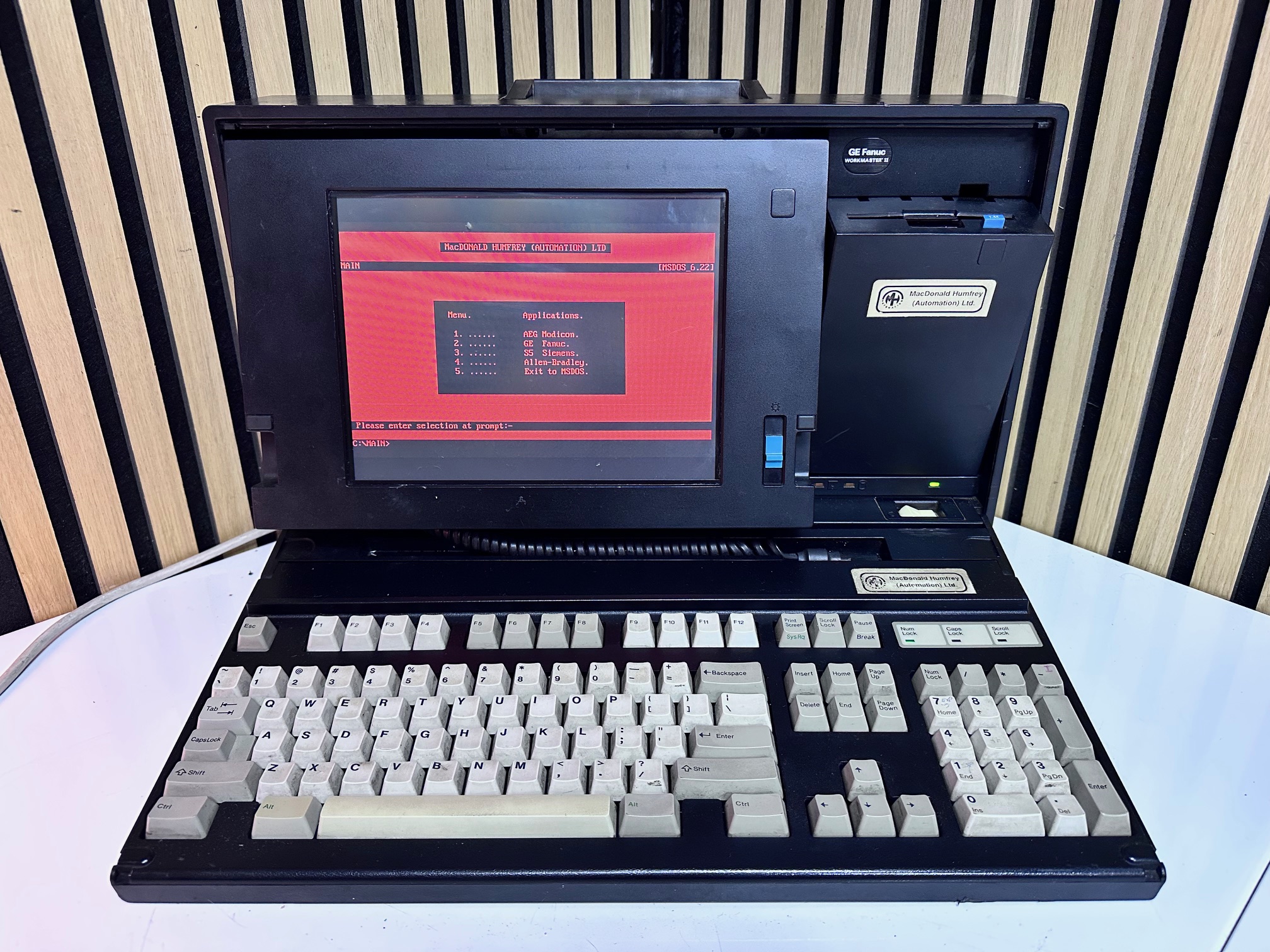
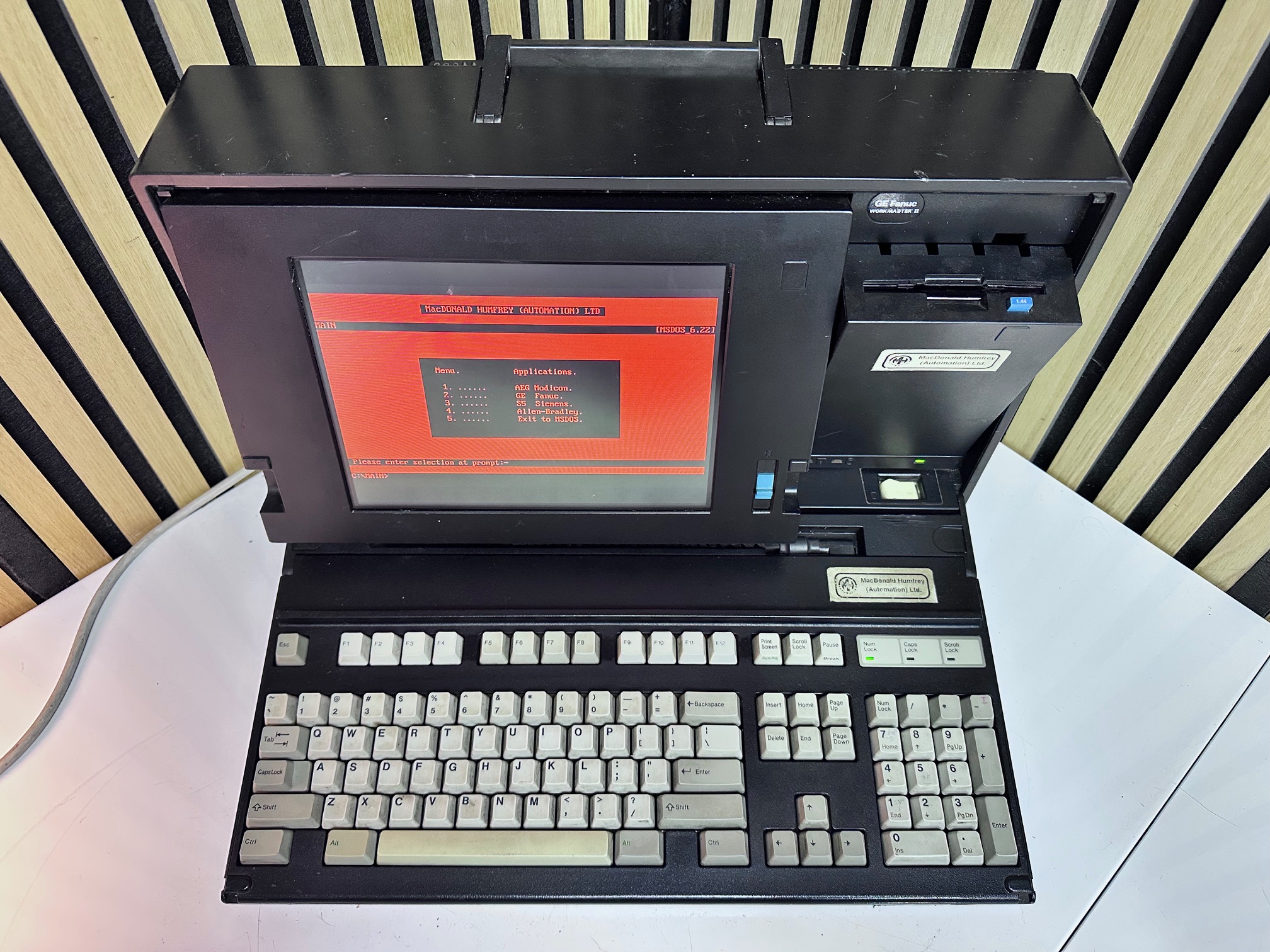
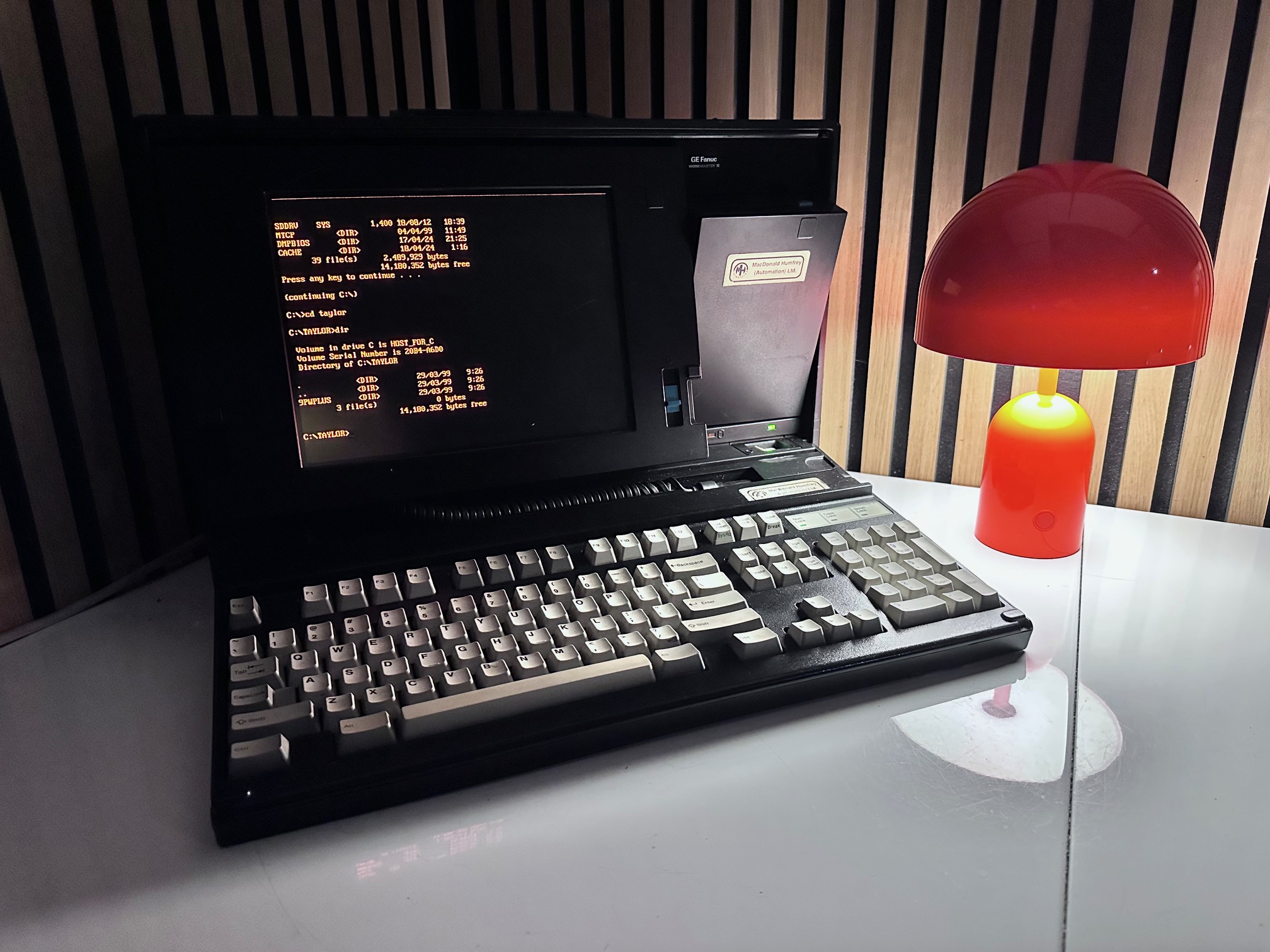
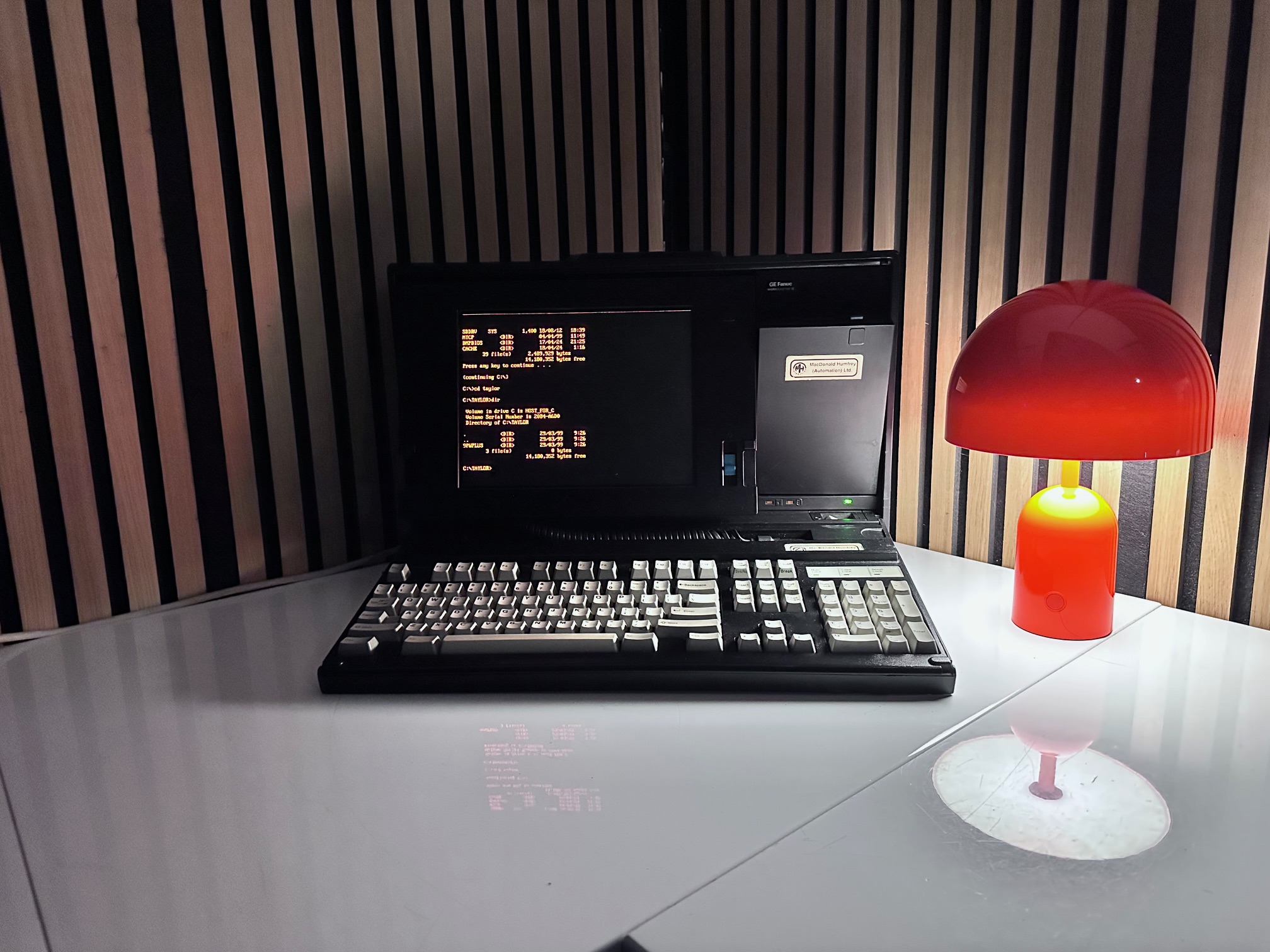
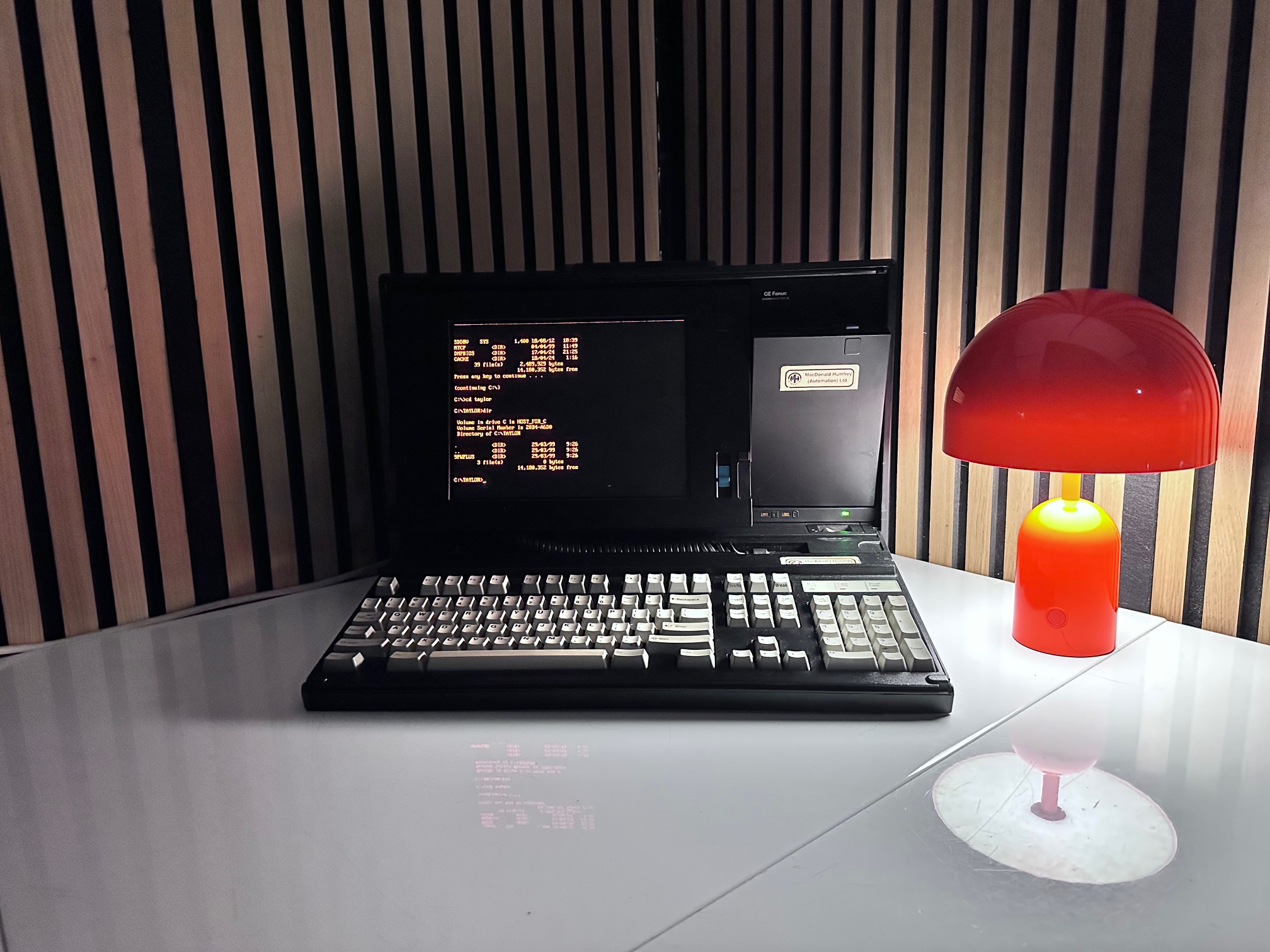
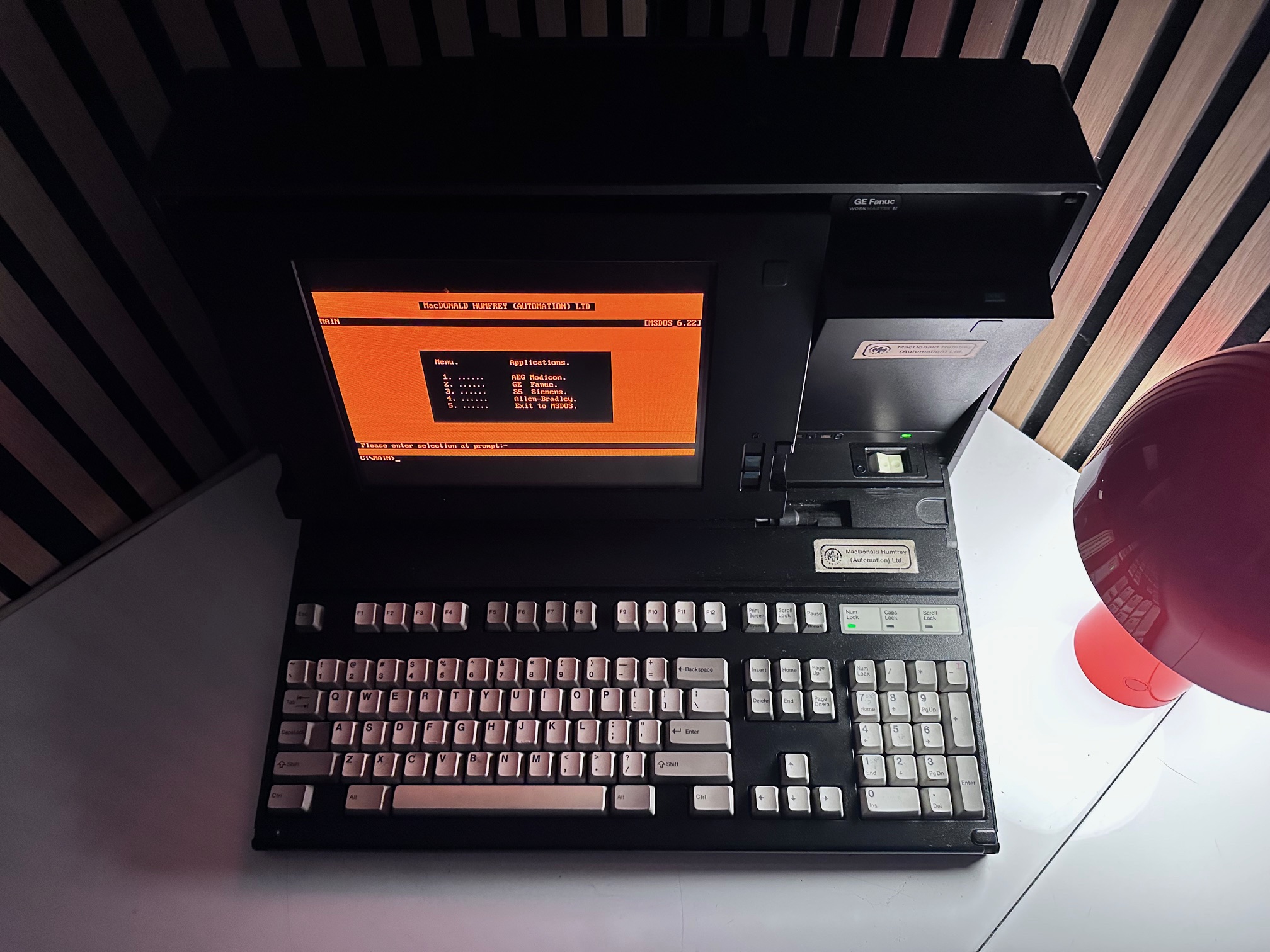
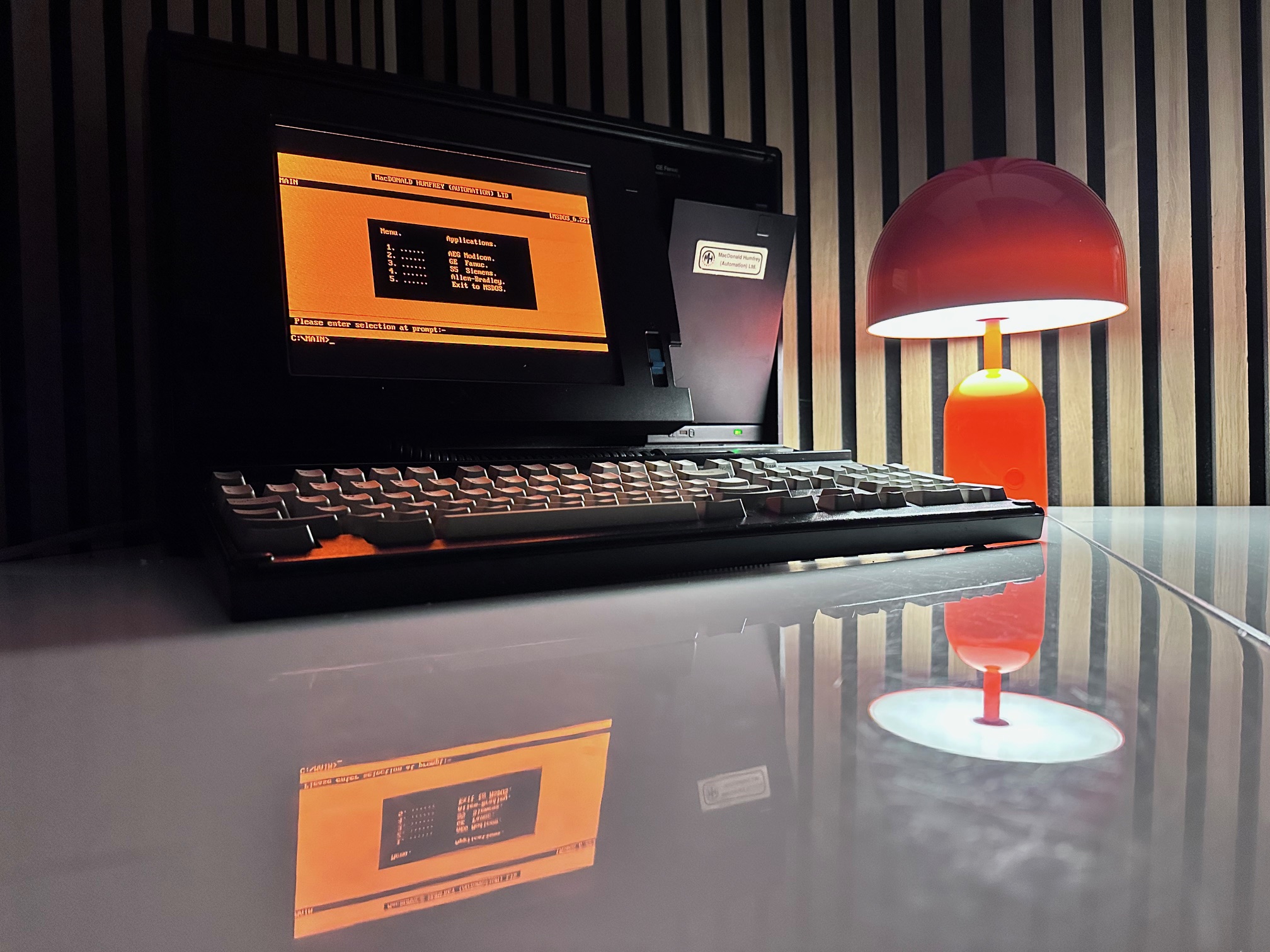
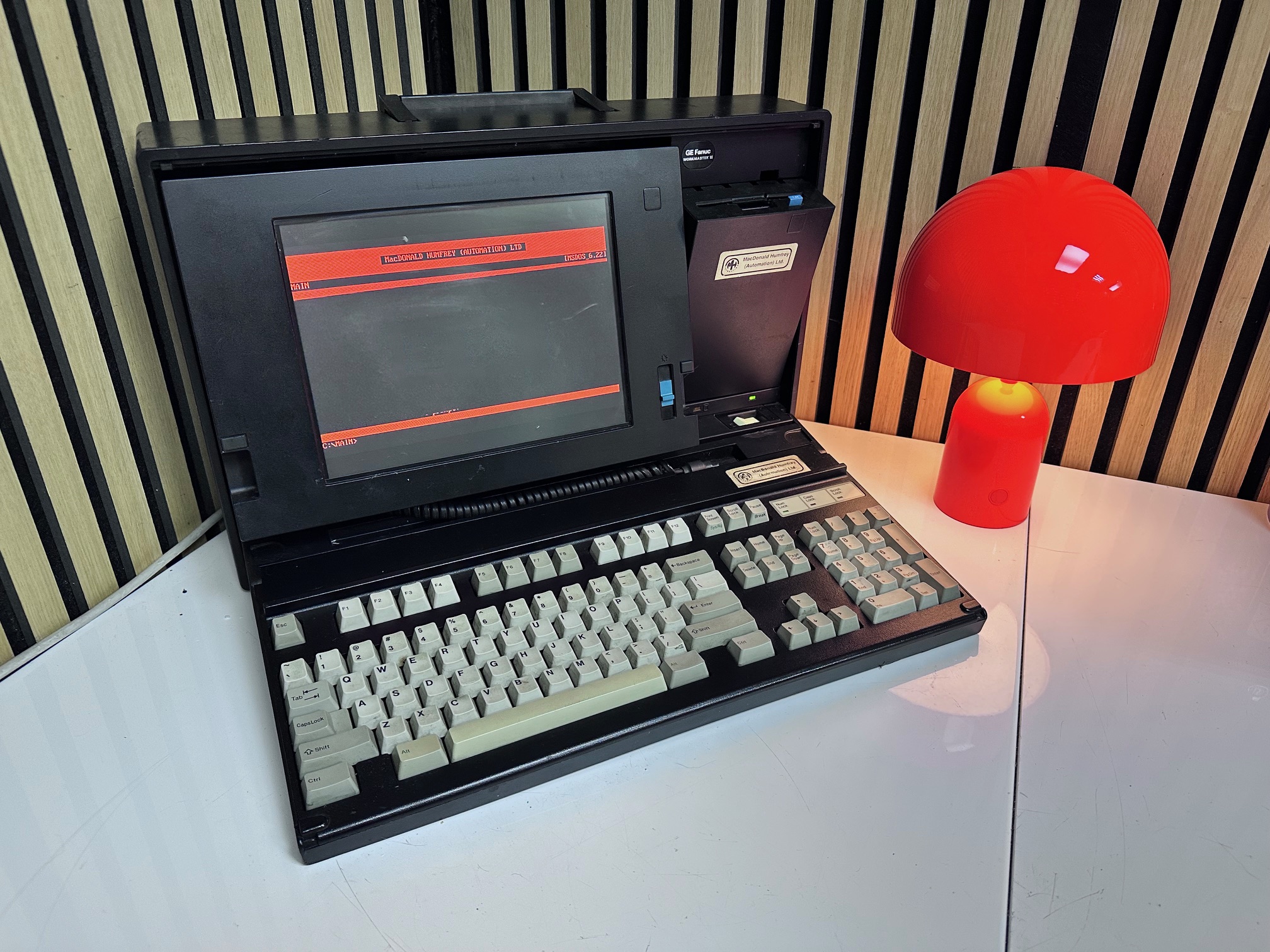
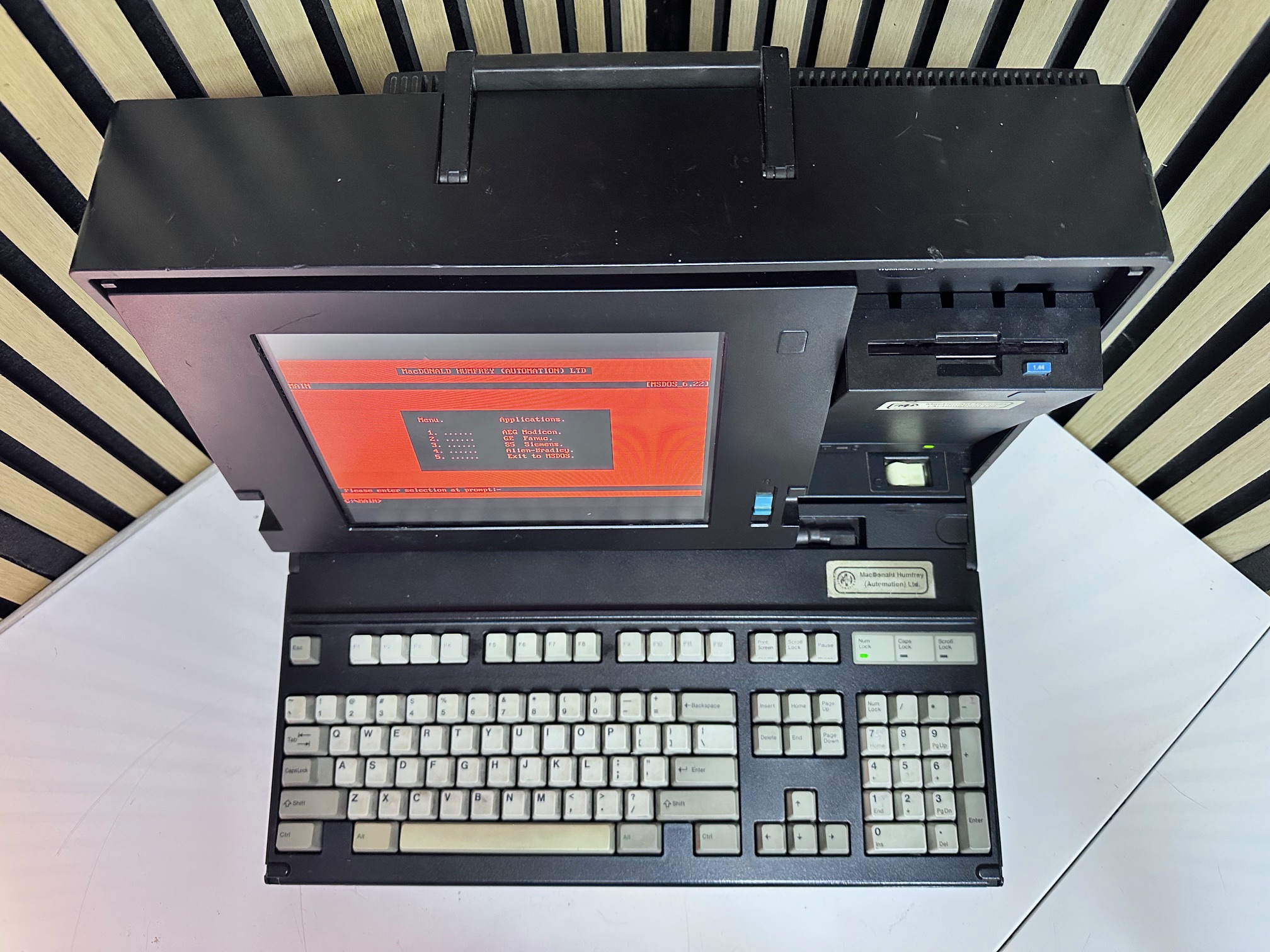
The GE Fanuc WorkMaster II is a unique variation on IBM's 386 PS/2 P70 gas-plasma luggable, somewhat similar to the Compaq Portable III. It was intended to be used to program GE Series Six Programmable Logic Computer (PLC), which is an industrial computer that has been ruggedized and adapted for the control of manufacturing processes, such as assembly lines, machines, robotic devices, or any activity that requires high reliability, ease of programming, and process fault diagnosis.
First came GE's Program Development Terminal which was a huge, ancient proprietary computer built into a desk. The PDT tipped the scales at 45kg. The PDT was superceded by the Workmaster I, which was a black modified IBM 5155 CRT-equipped Portable (or Sewing Machine) computer. The Workmaster I was introduced around 1986 as a DOS-based programming tool for GE Fanuc Programmable Controllers. Prior to that, you needed a dedicated prgrammer. GE was among the first to introduce software for PLCs that could run under DOS. The Workmaster 1 had a unique keyboard specific to GE, but the Workmaster II simply has a standard P70 keyboard, albeit encased in black moulded plastic. There was no Workmaster III as GE developed software which most IBM/PC-compatible machines would support and carried data over standard RS-232 serial.
The main differences with the Workmaster II to a standard IBM PS/2 P70 is the following:
- The WMII is encased in a black plastic case, as opposed to IBM's cream P70
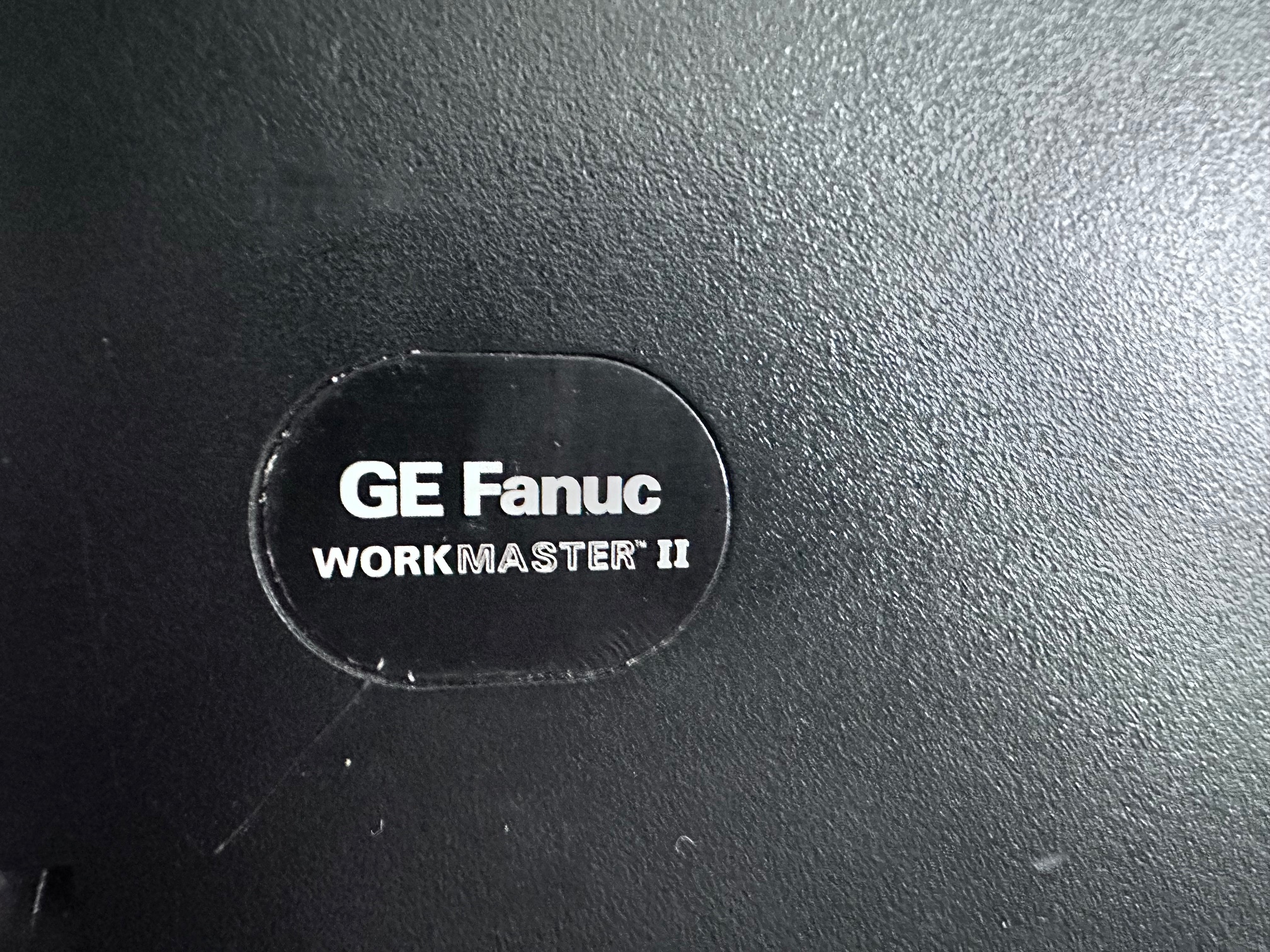
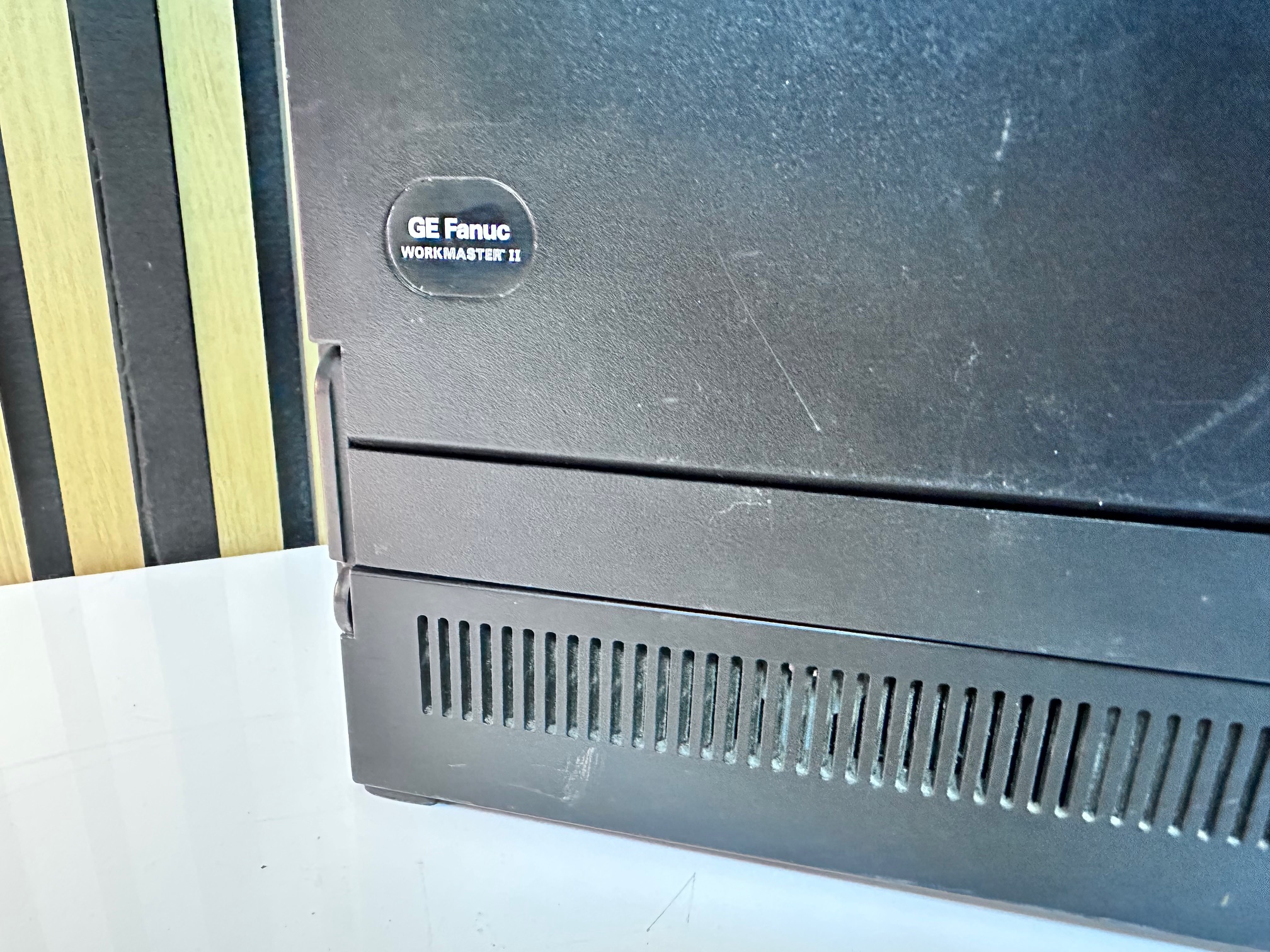
- It's rebadged with GE badges instead of IBM.
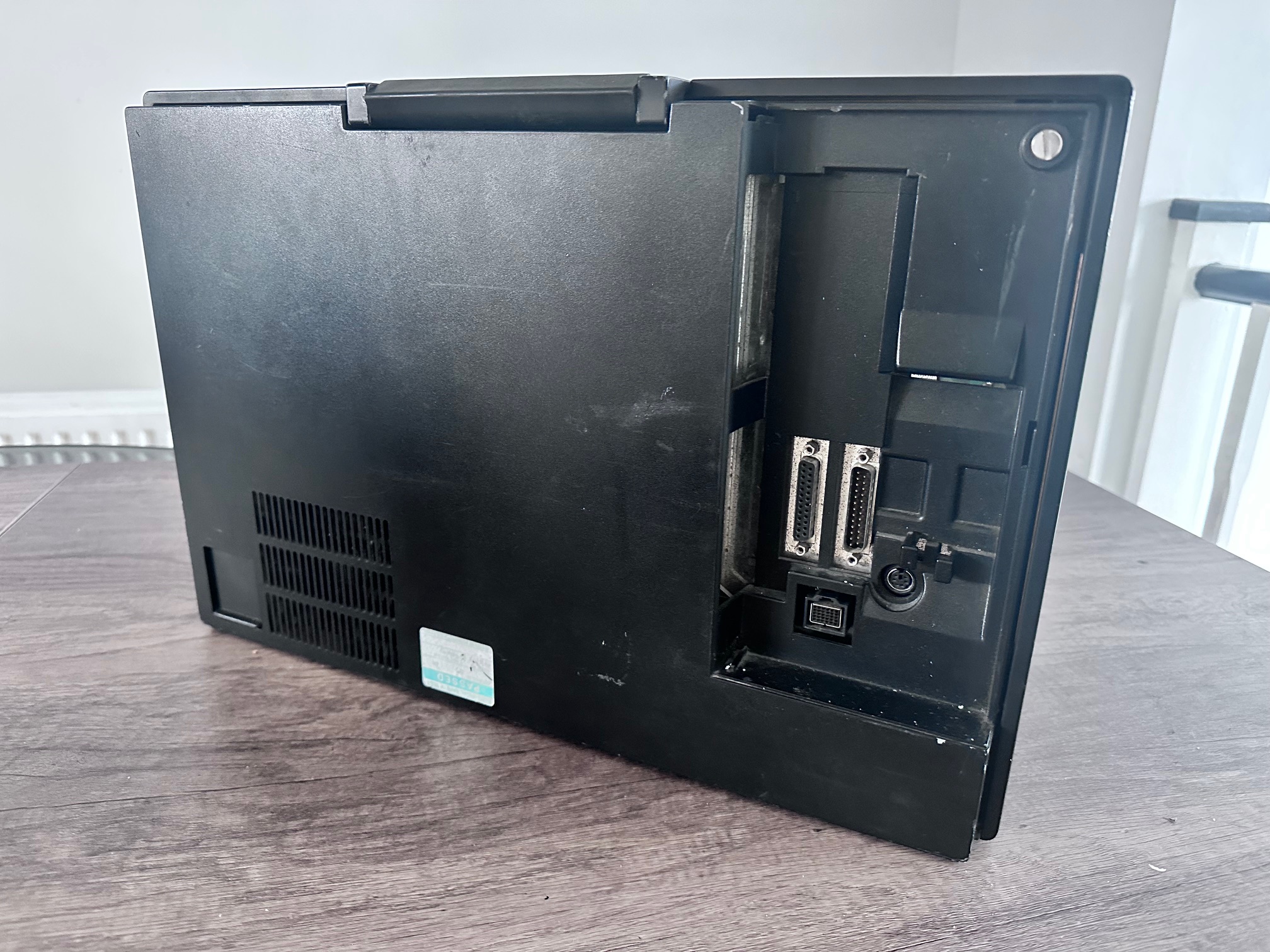
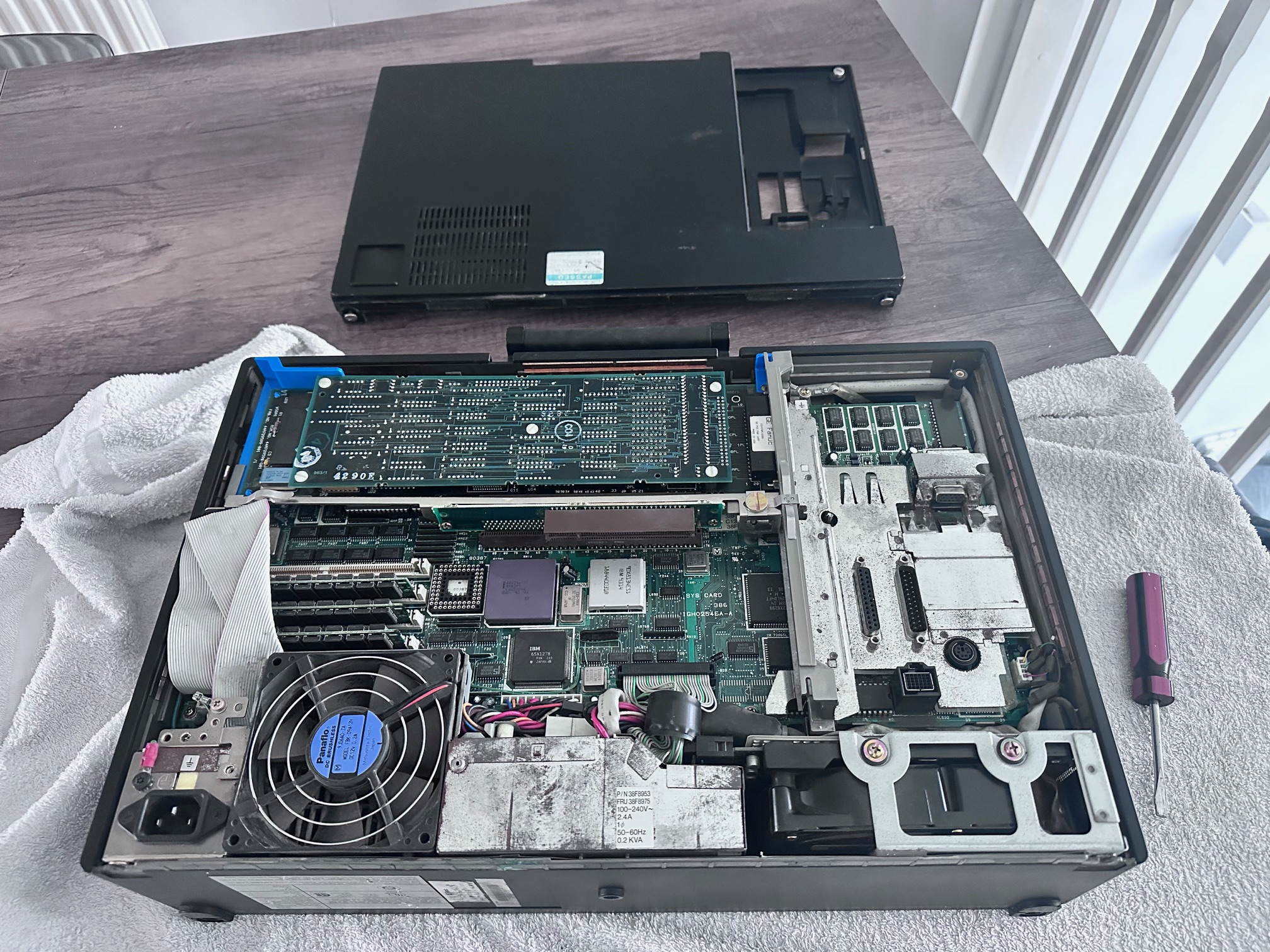
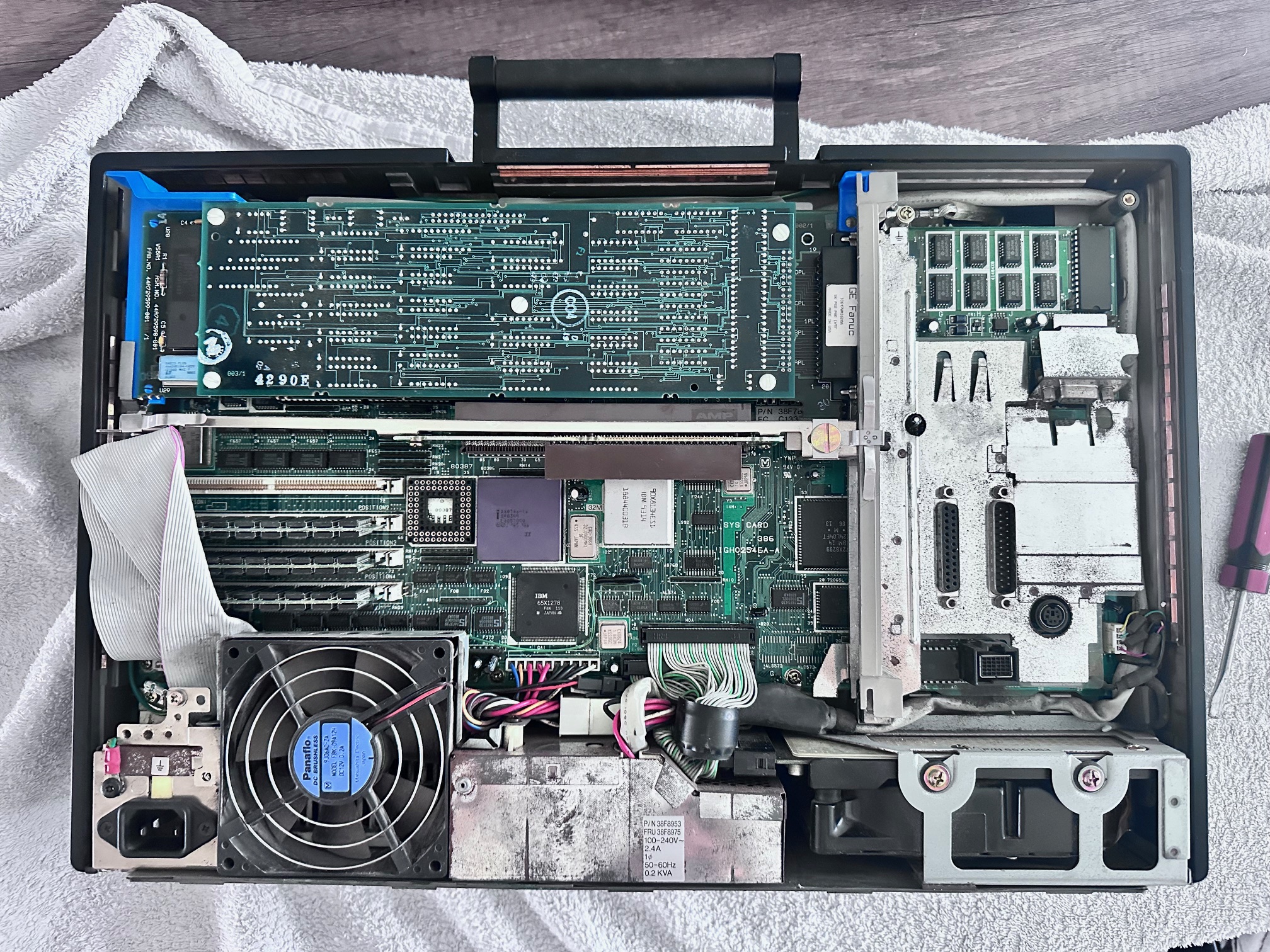
- It's fitted with a full-length MCA WSI parallel card for interfacing with a PLC.
- The 60Mb ESDI hard drive contains a unique set of software (Parallel logic master, as opposed to Serial).
The software for programming the S6 is on the hard drive, and it is called LogicMaster 6 or LM6.
The MCA card used to interface to GE PLCs, known also as the WSI board, is fairly unique in that it does not require an ADF or IBM option file to add to the configuration - it's 'stealth' or essentially invisible to the initialisation of the P70 and is simply programmed upon booting up with standard, spare configuration space.
The WSI board has one LED which can be seen only when the computer’s cover is partially removed. This LED blinks during the power–up diagnostics. If a board failure is detected by the power–up diagnostics, the LED will turn OFF and remain off. Otherwise, it is ON. If this happens, the board should be replaced. A second LED, located on the daughter board, is ON during a communications session and for 500 ms after receiving a message from the CPU.




Remedial Works
The previous owner did some work on this machine which I have followed up with my own. The floppy disk drive on the P70 is renowned for failure due to it being mounted vertically which tends to mean it will absorb a lot of dust! This machine has had it's original drive replaced. Mike, the previous owner also replaced the catches which hold the keyboard up in it's locked position, which he said was a bit of a nightmare.
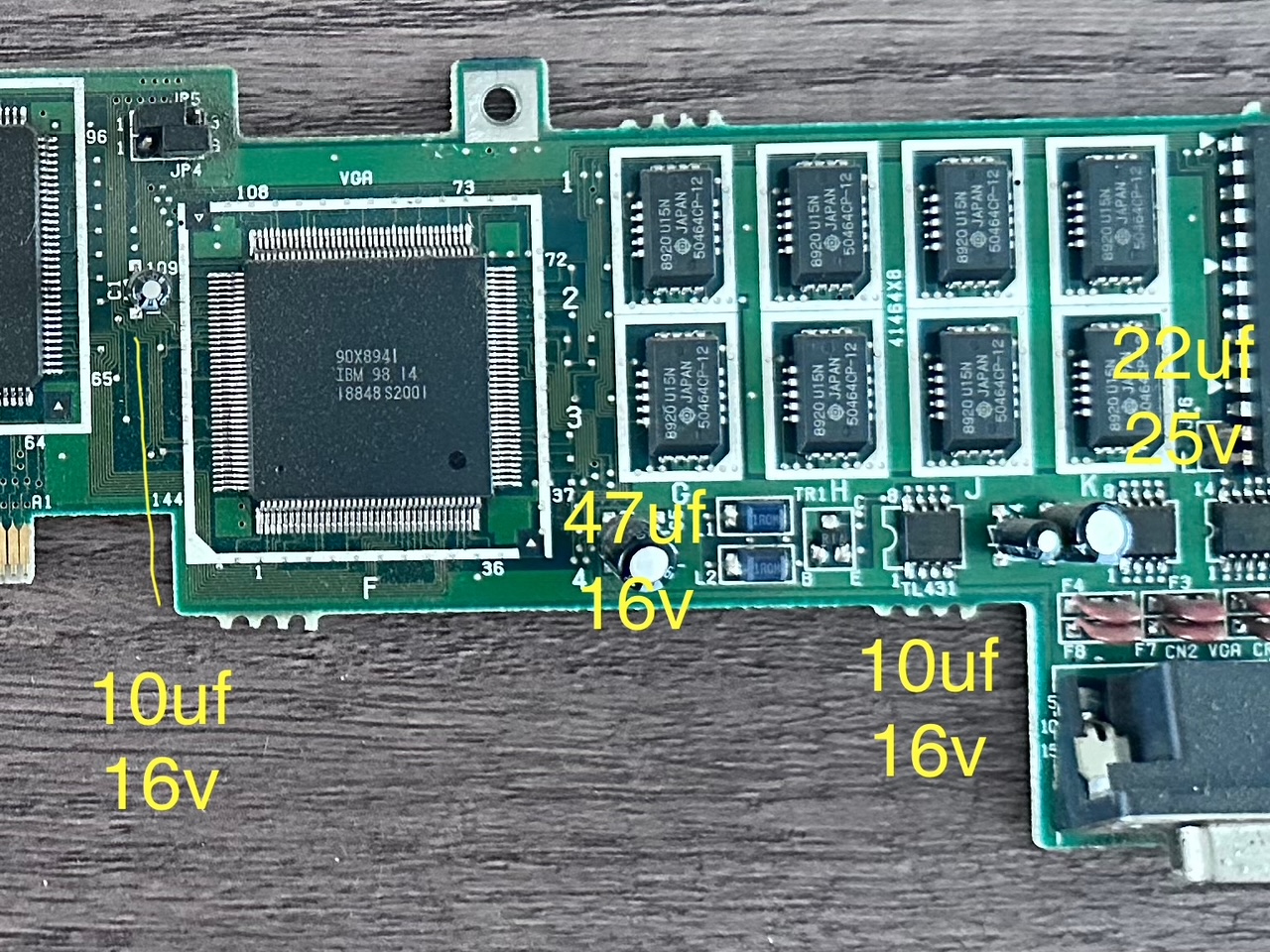
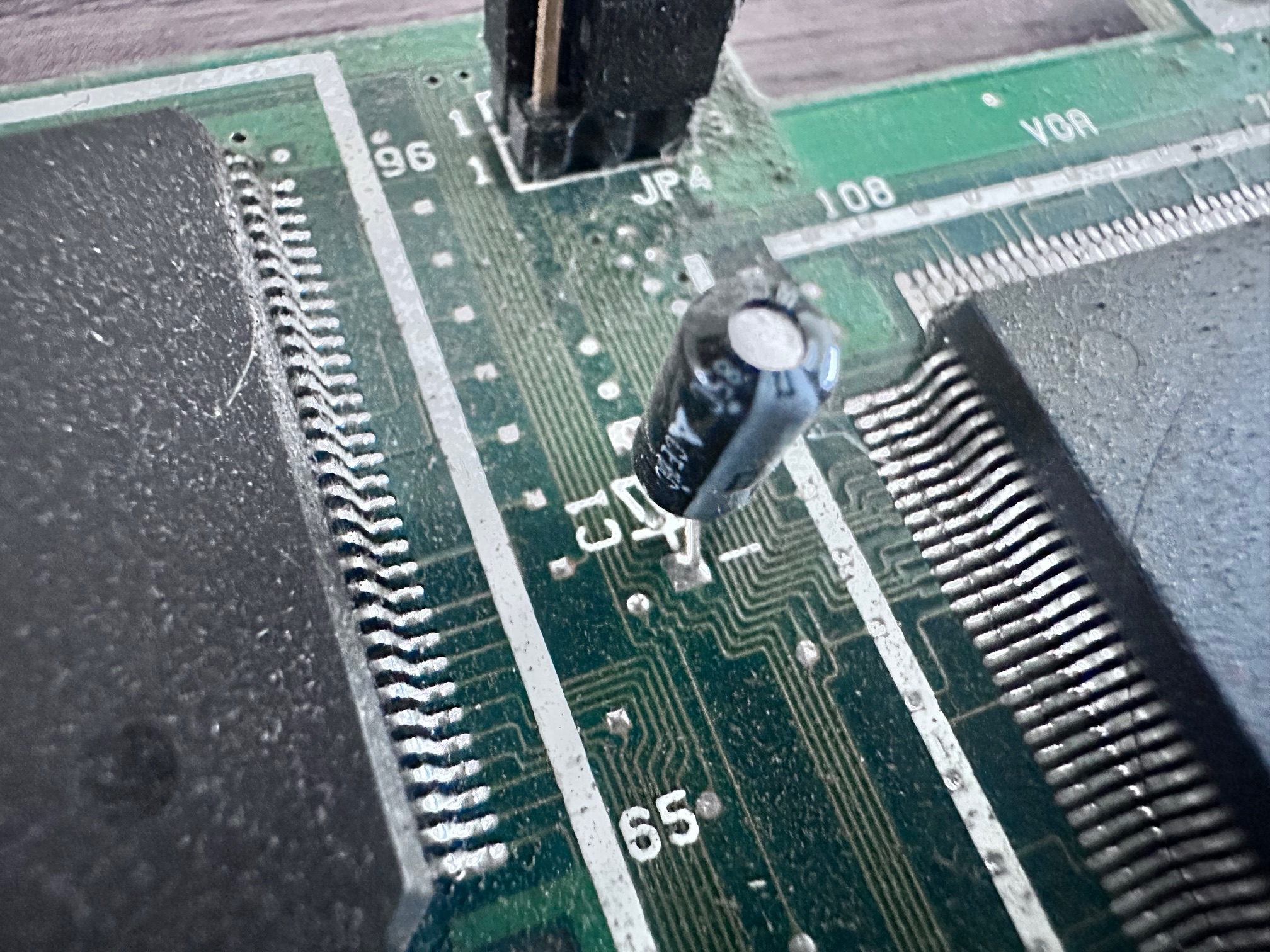
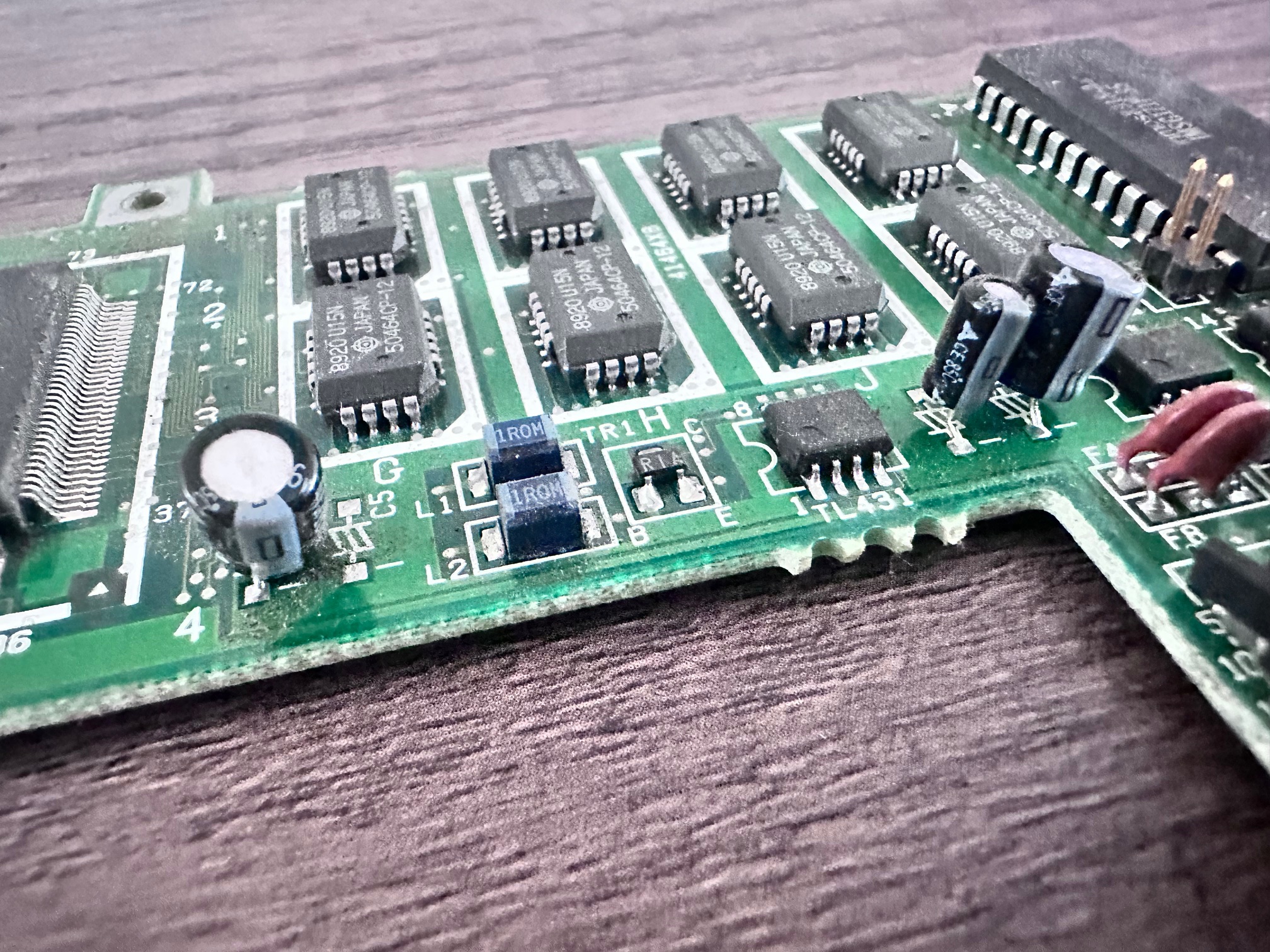
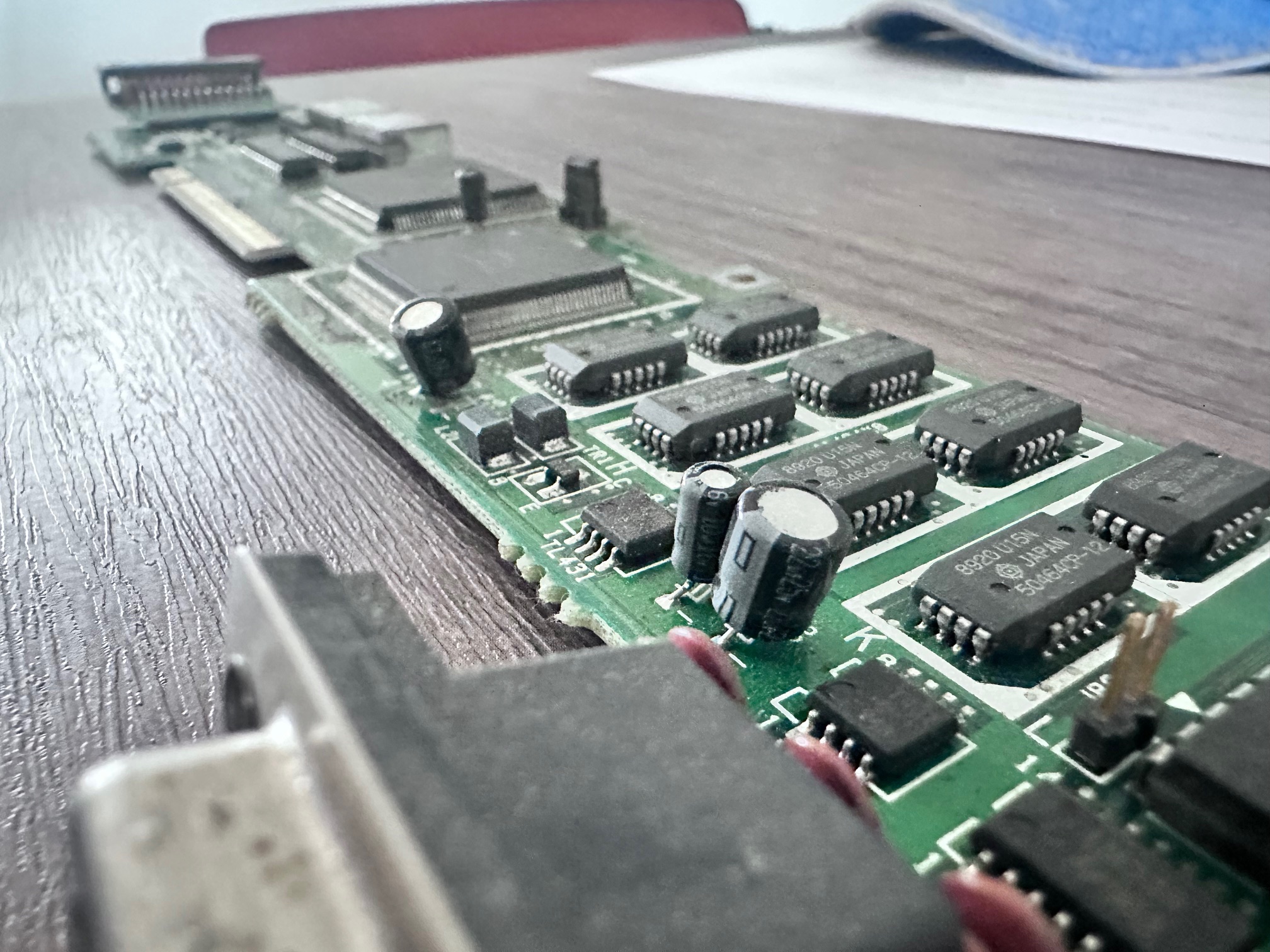
Since I owned the machine, having been around a few other P70 machines, I'm aware there are two places where capacitor rot can cause unrecoverable damage - three surface mounted capacitors on the hard drive and several on the video board. I've taken photos above showing both sets being replaced, which in this case was relatively simple. The solder on these older IBM boards can be hard to shift, but if you know what you're doing and go gently, it can be de-soldered and re-soldered.