
The 755CE is possibly the least-interesting of the 755 model range....
755C/Cs is the first, principle model, simple on the insides, clean and slim. The CD/CV and CX all have their special unique selling points. The CE is really just a bit boring, slightly evolved and slightly better than the C. Sligho tly faster 486, slightly better sound card, infra-red and the 'option' to upgrade to a Pentium (but not actually sold as an option).
If we take a look at the PSREF doc, in the top right corner, we can see the marketing strengths of the machine....
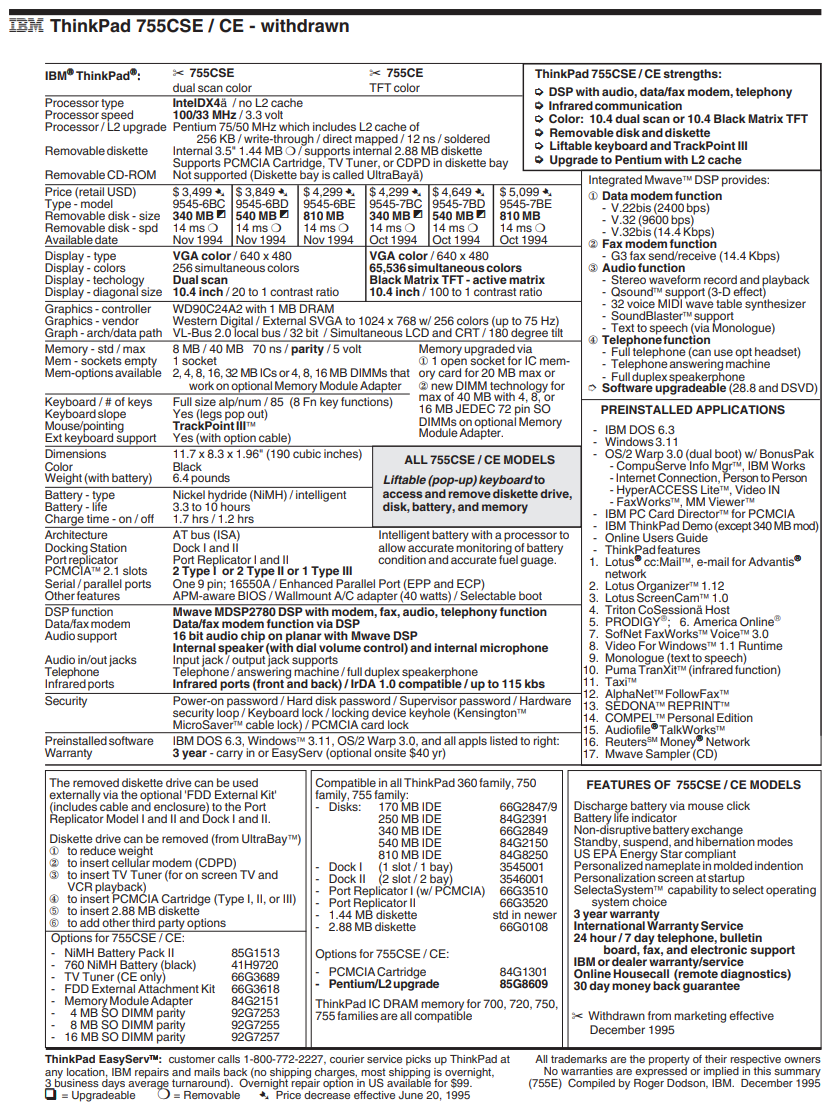
I've worked to restore a 755CE...
Strengthen the Lid
As with all 755 models, the standoffs within the lid have a tendancy to snap, and when one snaps, it increases the load on the remaining stands making them each more likely to snap as well. As a preventative measure, along with recapping the inverter/panel, I tend to apply some JB Weld sensitively around the standoffs and allow it to try. I'll try and be a bit more liberal over the top of the hinge to hold it right and not solely rely on the screws.
Recapping
There are some electrolytics around the LCD panel and Inverter to be replaced. Then inside, there are some surface mounts on the sound card and on the DC board to be replaced. If I spot a build up of corrosion on any of the boards - particularly the sound board, I will run them through an ultrasonic cleaner a few times and allow to dry extensively in the sun.
Remove Hibernation
There is a small hibernation battery found under the keyboard lid, under the floppy drive. A 3-cell green varta battery. This is a bridge battery to allow the machine to sit in hibernation whilst you change the battery, without mains power. It's deadly - remove it and live without that feature!
Memory Upgrade
By default the 755CE will need a Parity IC DRAM card, but if you upgrade the BIOS firmware to latest and greatest (this one doesn't need a charged main battery), you can disable parity within the BIOS and use an easier-to-come-by and cheaper non-parity IC DRAM card.
Reinstall OS
Whilst this era of machine was in a world where IBM were in the last knockings of pushing their own OS/2 operating system, I find it a bit tiresome to install. I love the look and feel of it, particuarly on these early 1990s machines, but for practical purposes, I tend to lean towards an MS-DOS 6.22 foundation, some basic drivers in DOS and then a Windows 95 OSR2.5 with plus on top, along with all the drivers, software and patches.