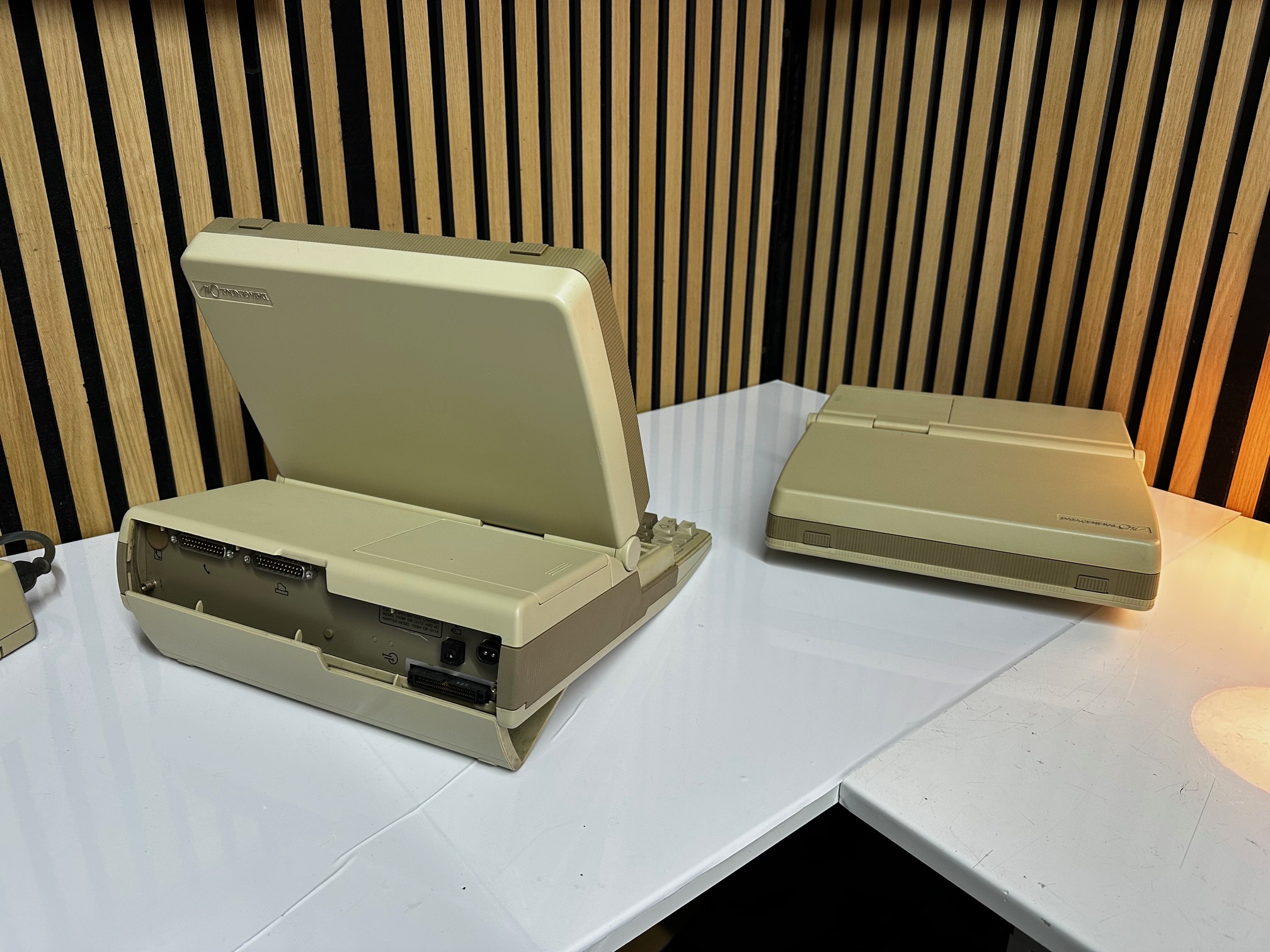
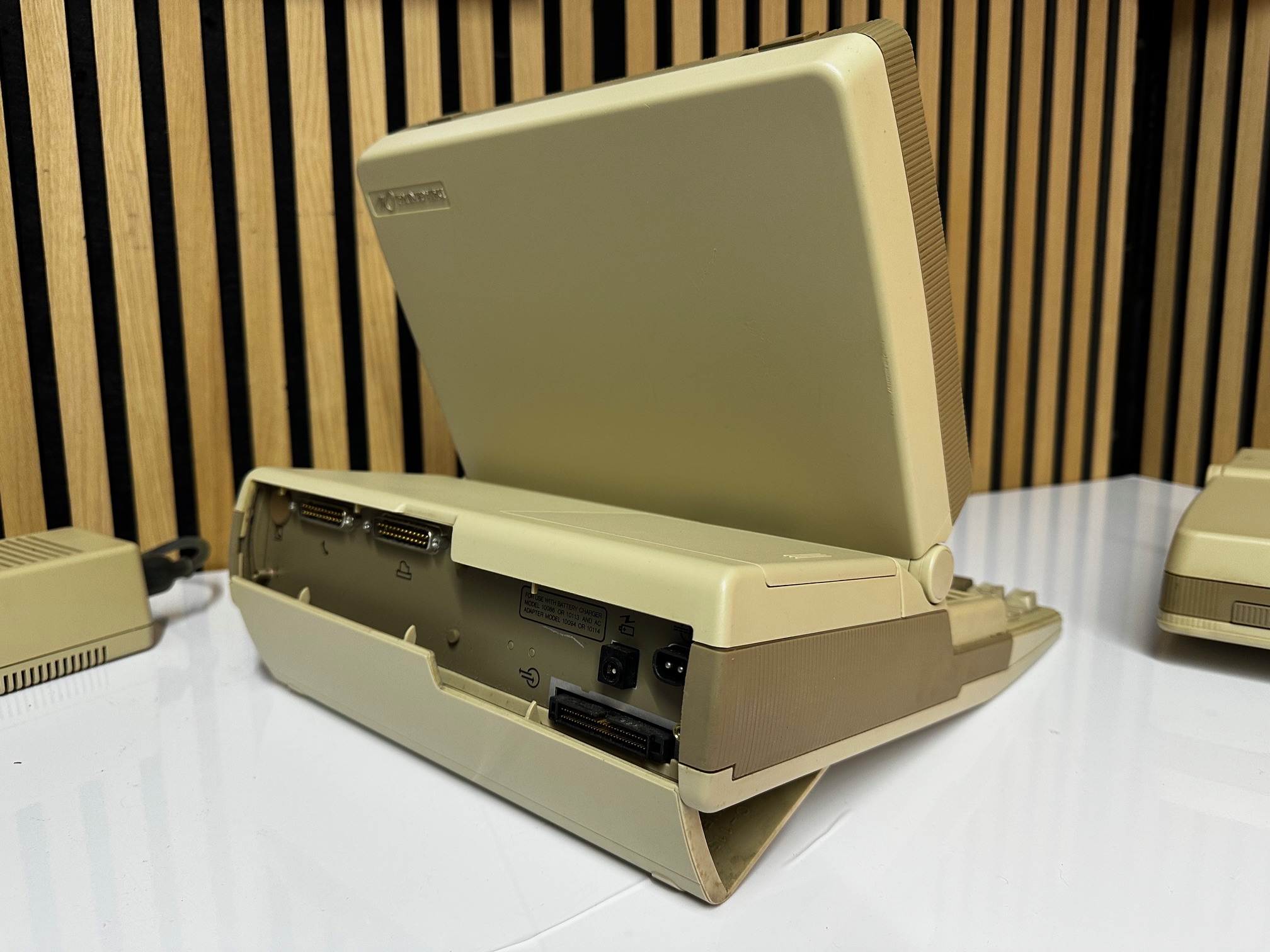
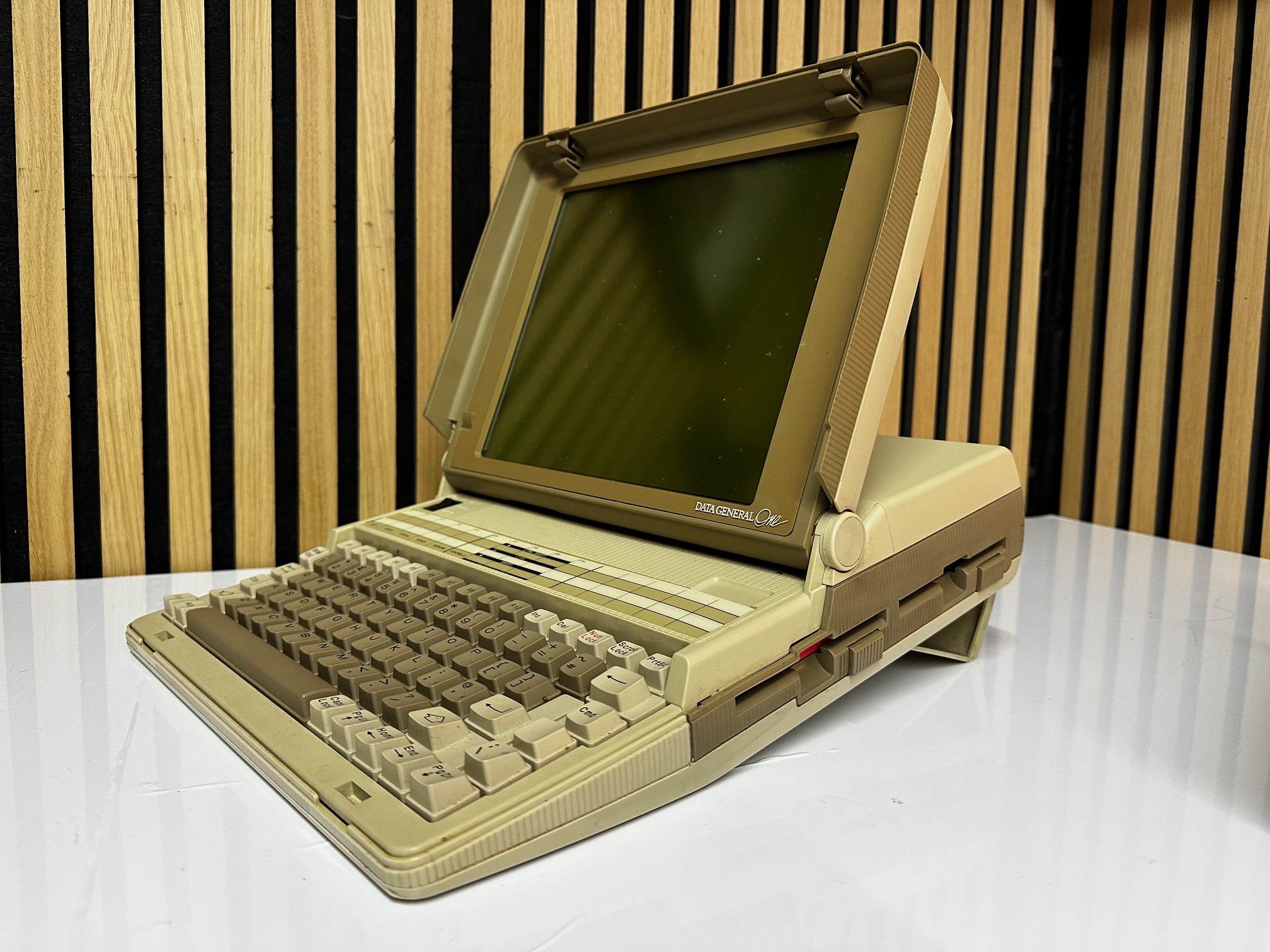
When Data General introduced their /One portable in late 1984, they introduced a 'clamshell' laptop design which would stand firm in laptop design until today. At a little under $3000 in 1984 money, it was also the first battery-powered laptop computer, which was IBM PC compatible. Apart from perhaps the GRiD Compass, every portable (luggable) until this time came with a very power hungry CRT monitor. Whilst the screen in the DG /One was huge and very efficient, it was a little hard to see in dim or bright light. Maybe this is why the machine has such a unique angular base to go along with it's odd rear connection cover which doubles as a stand. It's actually pretty ergonmic in feel and looks. And the keyboard is lovely to use.

1984 Press Advert - in many respects, with PC compatibility, 3.5" floppy drives, clamshell design and LCD display, they weren't wrong!
Most people remember the display and how bad it was, but the machine is frequently bogged down by this initial reaction whilst in reality it recieved a number of redesigns to tackle it's shortcomings.
As an aside, the /One is the first mass market, battery powered, clamshell laptop. However the 1982 GRiD Compass also had a clamshell design, but cost 2.5 times the price, with it's EL display did not run on batteries and it had no floppy drive. Whilst it was a trail blazer, you might expect the remaining examples are hard to come by because many burned up on re-entry. Gavilan also released a DOS compatible LCD portable (the SC), but has a comparitively tiny display and Gavilan went bust very quickly!
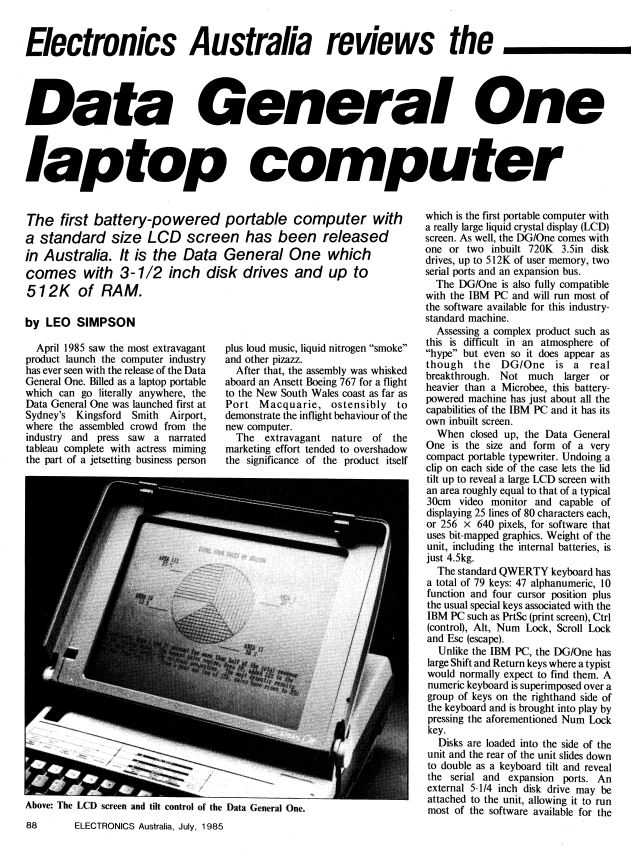 Australia News Article 1985 (click) with some plane advice.
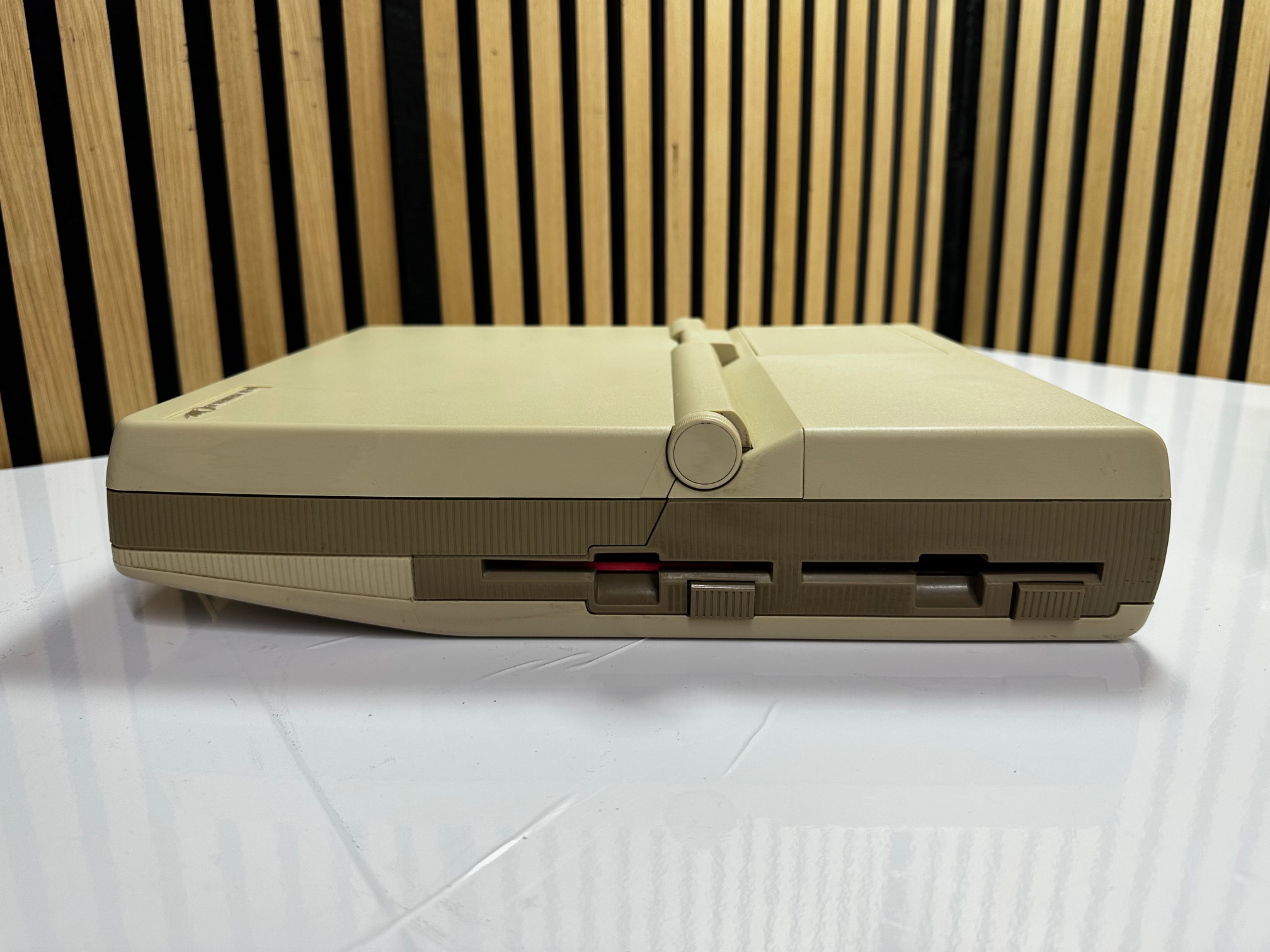
These machines do not have hard drives and whilst an external 5.25" disk drive was available, the machine largely relies on twin floppy disk drives to boot and operate from. This early adoption of twin 720k Sony 3.5" floppy disk drives was a problem because the mass market still preferred using, and selling software on the larger 5.25" disks, which was set to change, but not for a little longer. To get software onto the machine you often had to ensure you had another machine with both 5.25" and 3.5" drives to copy the software from - as most software still did not come on 3.5" disk. That's if the weird copy protection on a lot of software didn't stop you.
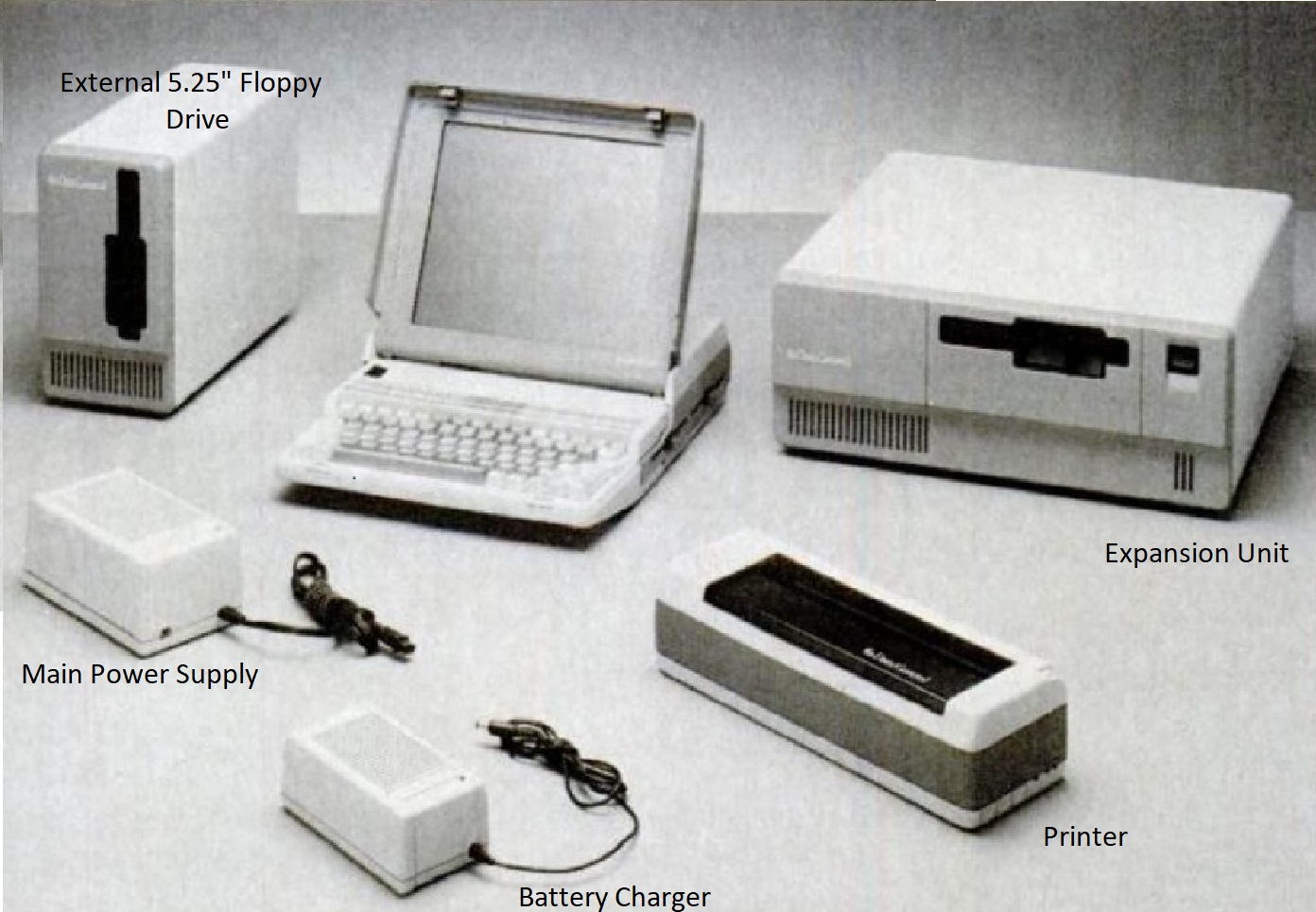
There were some other issues. Despite the IBM PC compatibility, the serial port controller was not fully compatible with IBM's standard and so a lot of IBM PC serial software did not work. In addition to this, the VRAM came out of the system memory, leaving not-a-lot for the Operating System.
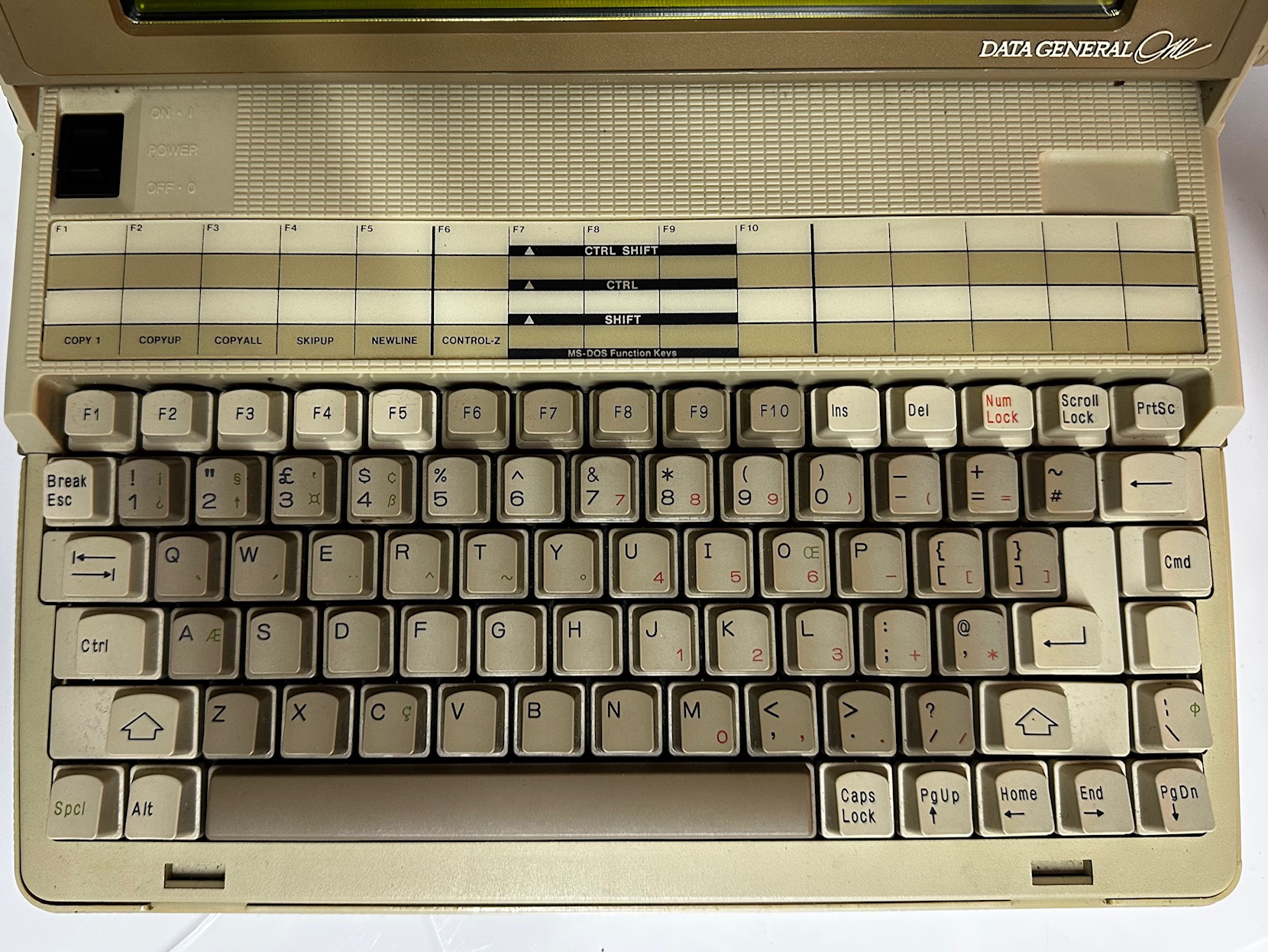
The machine was also notible for having a text editor and a terminal application built-in to the ROM.
Whilst the earliest machines had a very early translfective display with an extremely low contrast and non-tilting display, this was quickly addressed with better designs of LCD panels and multi-angle lock for the lid.
Later versions of the machine tried to improve the display by adding an EL backlight - but whilst these displays Pioneered by the GRiD compass were thin, high contrast and visible in the dark, they brought with them a hunger for power again. Not as bad as a CRT but also so much so that the battery didn't last any usable length of time. They removed the battery and the machine lost another 'feature'. See the screen, but be tied to a power socket.
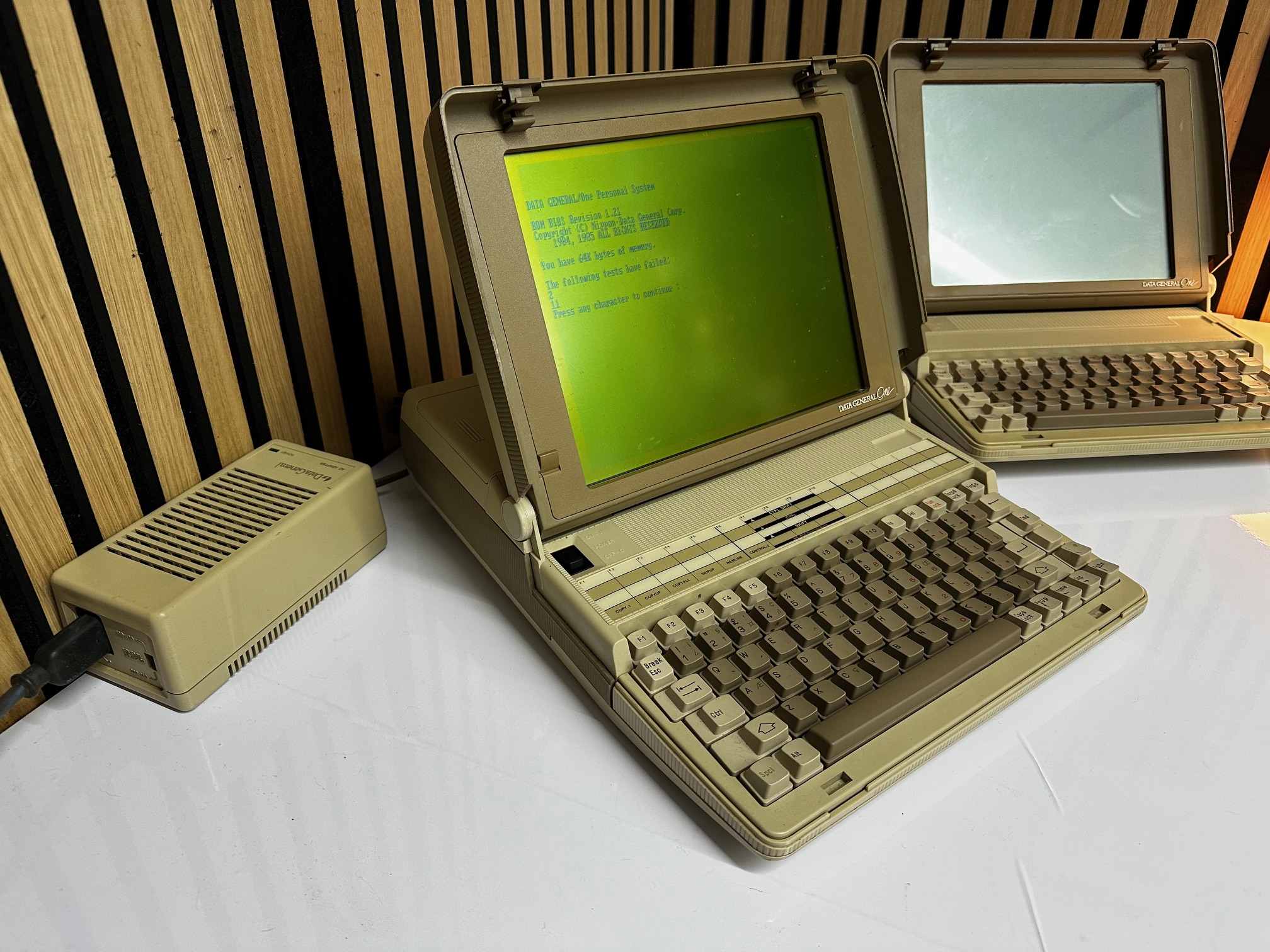
Much later, a huge large dock thing was released which sat underneath a /One and had a bunch of electronic testing stuff on board. It turned the machine into a volt meter, oscilloscope and a bunch of other things.
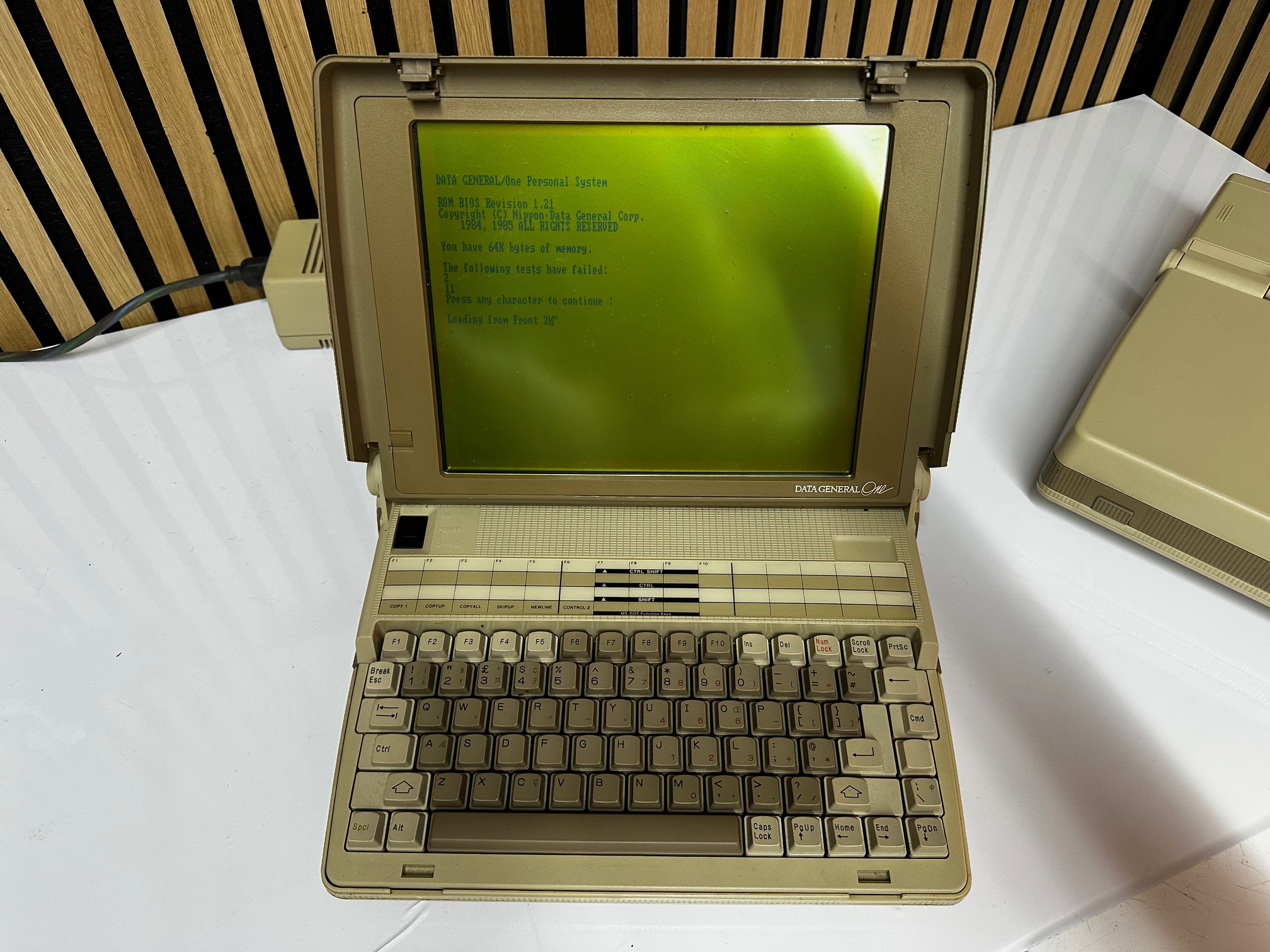
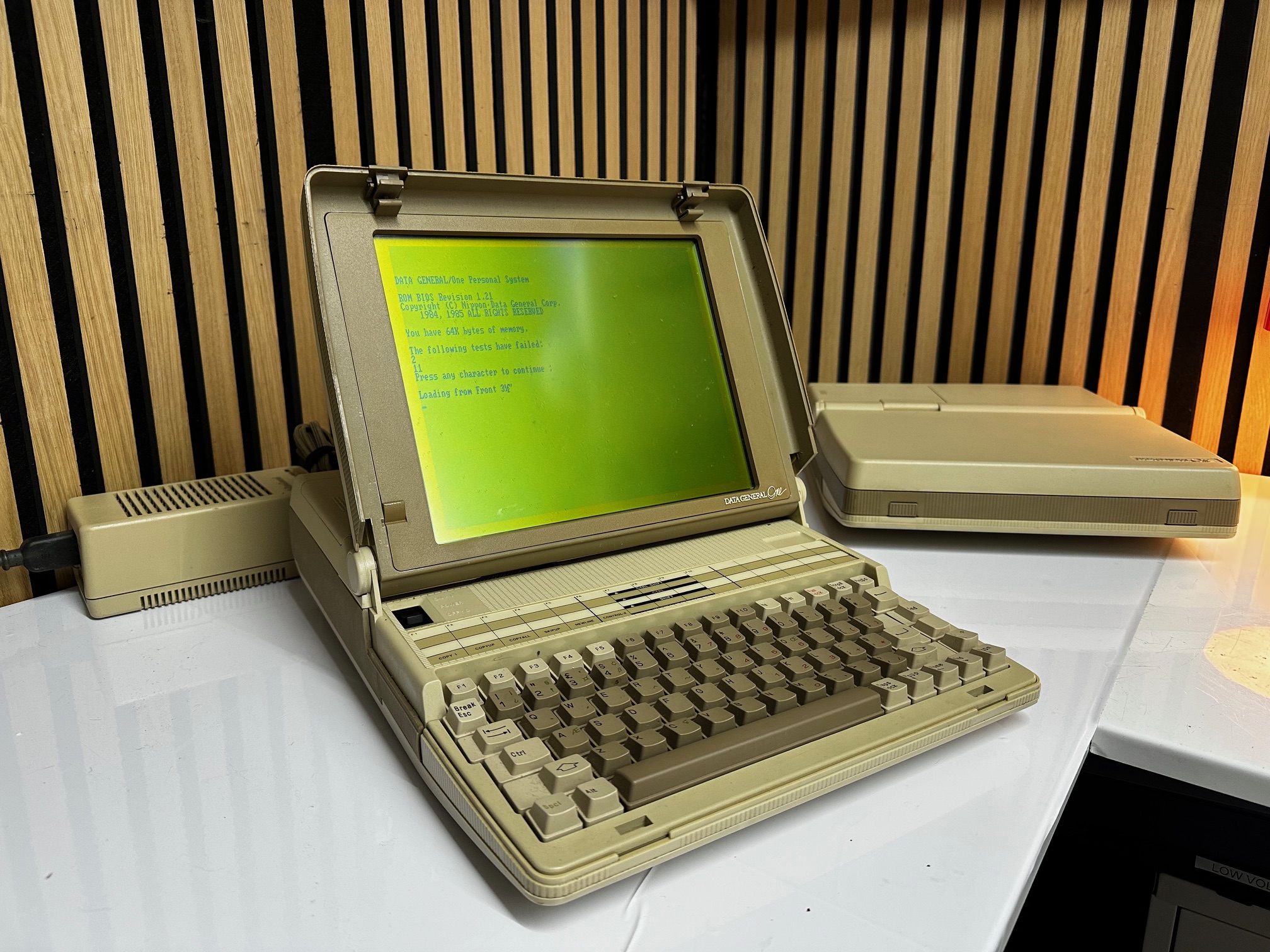
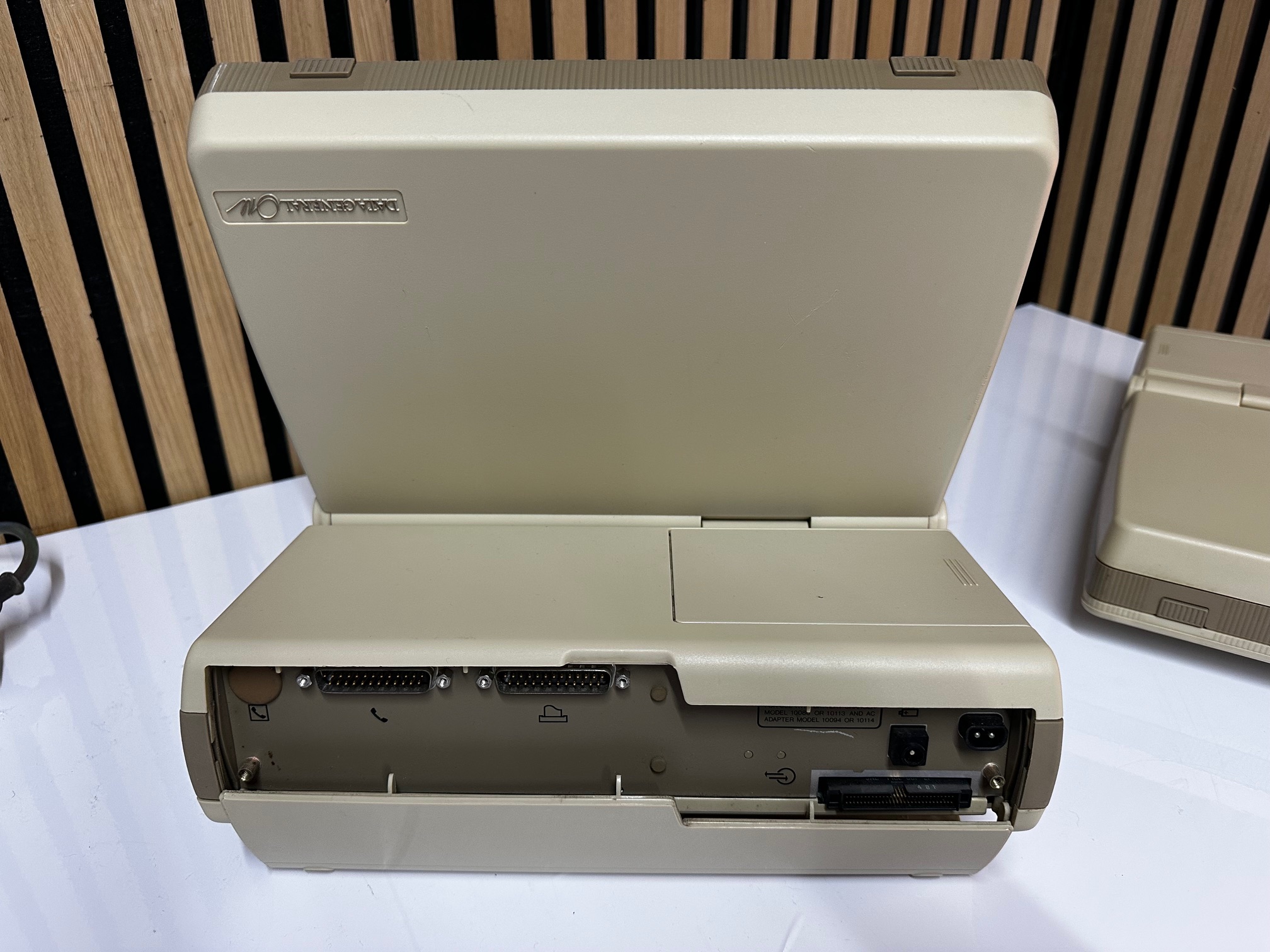
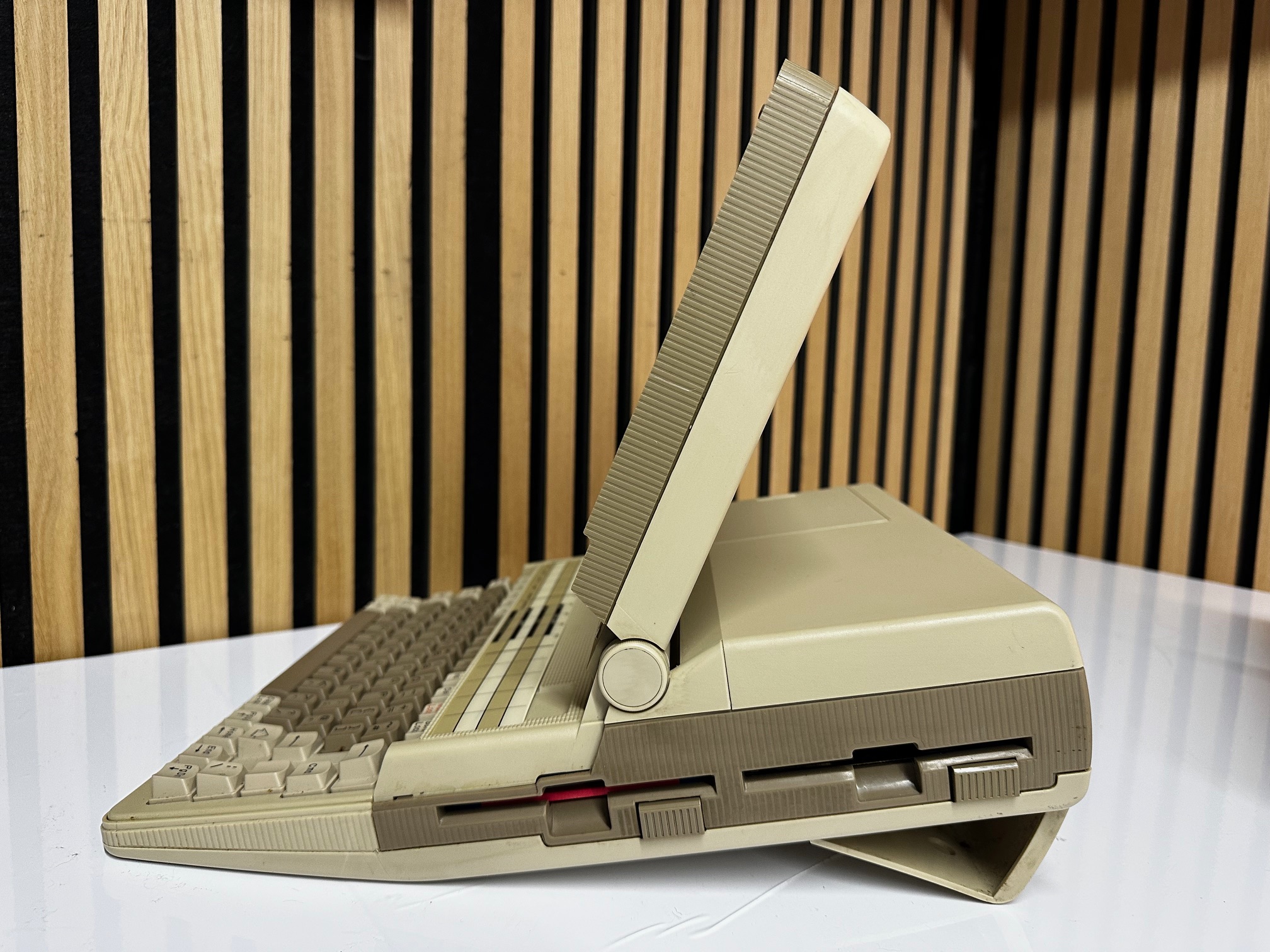
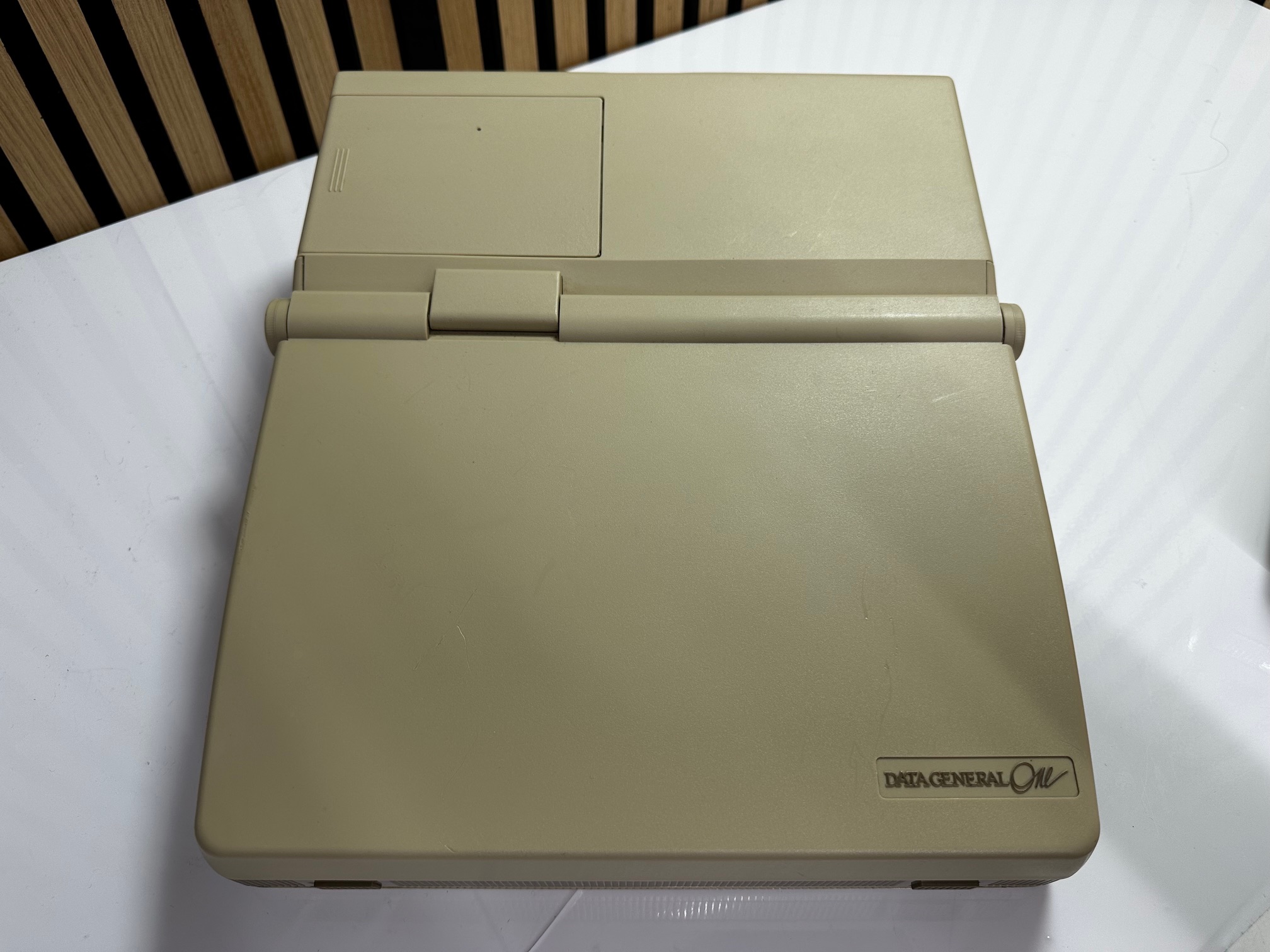
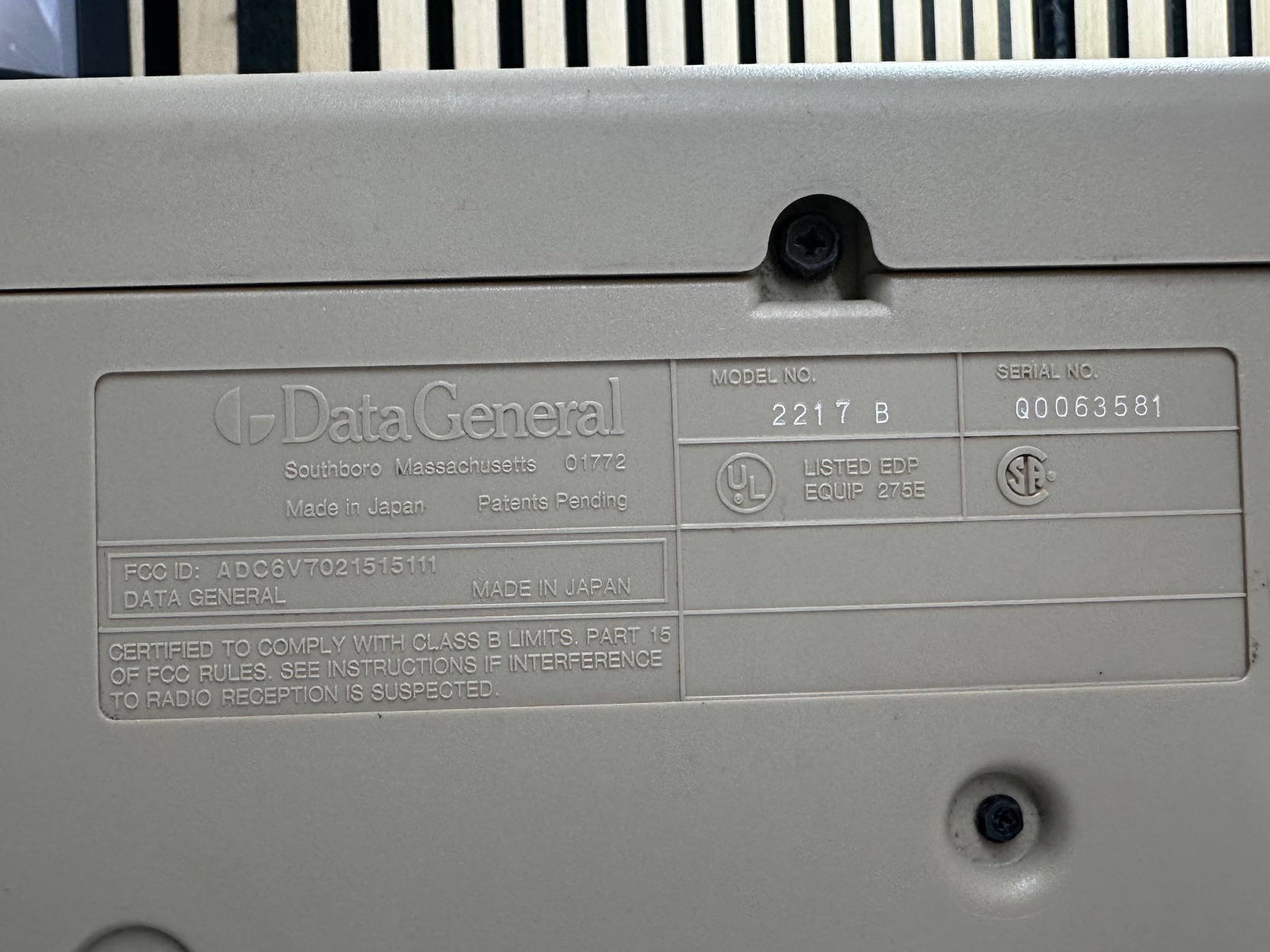
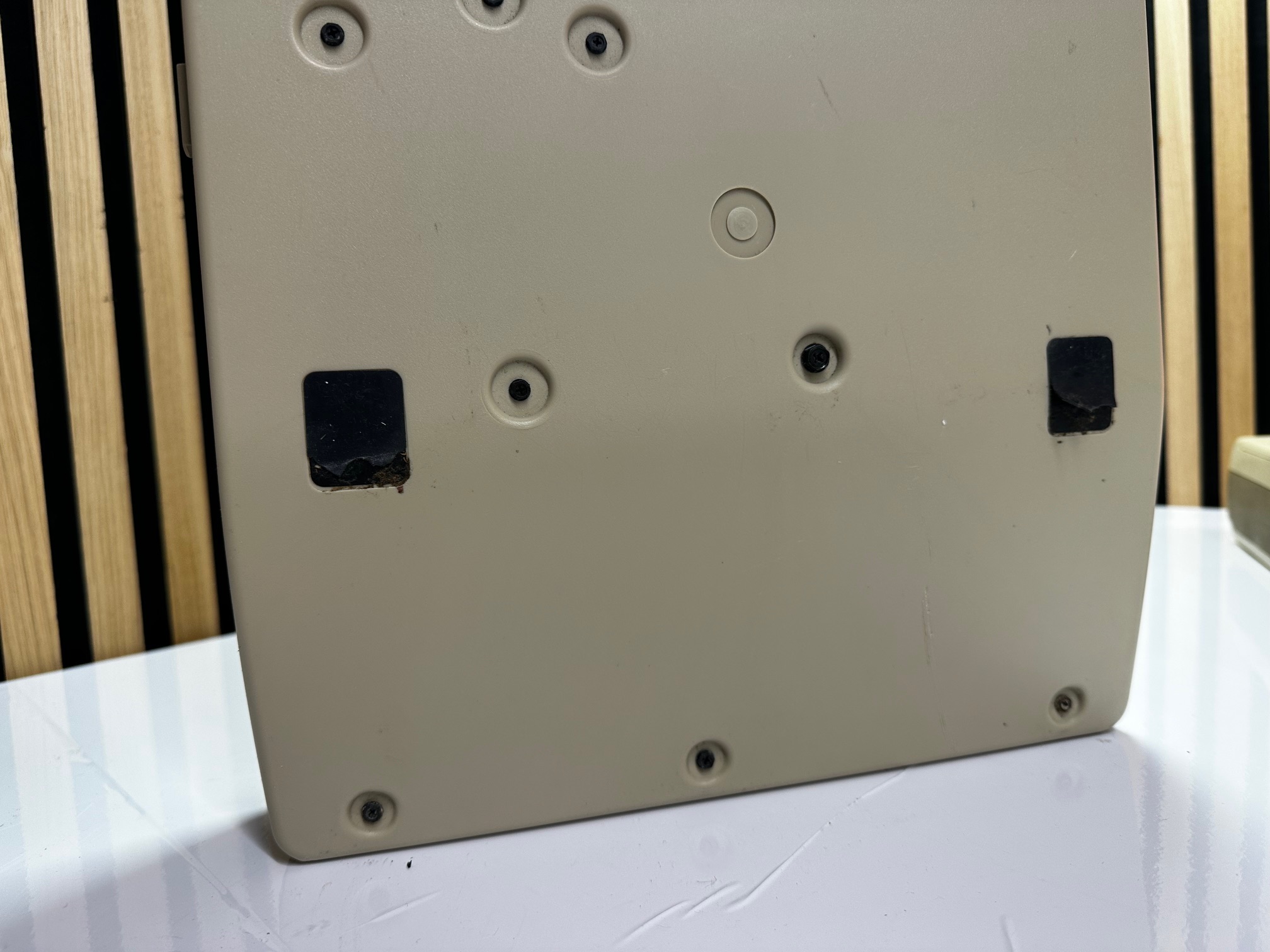
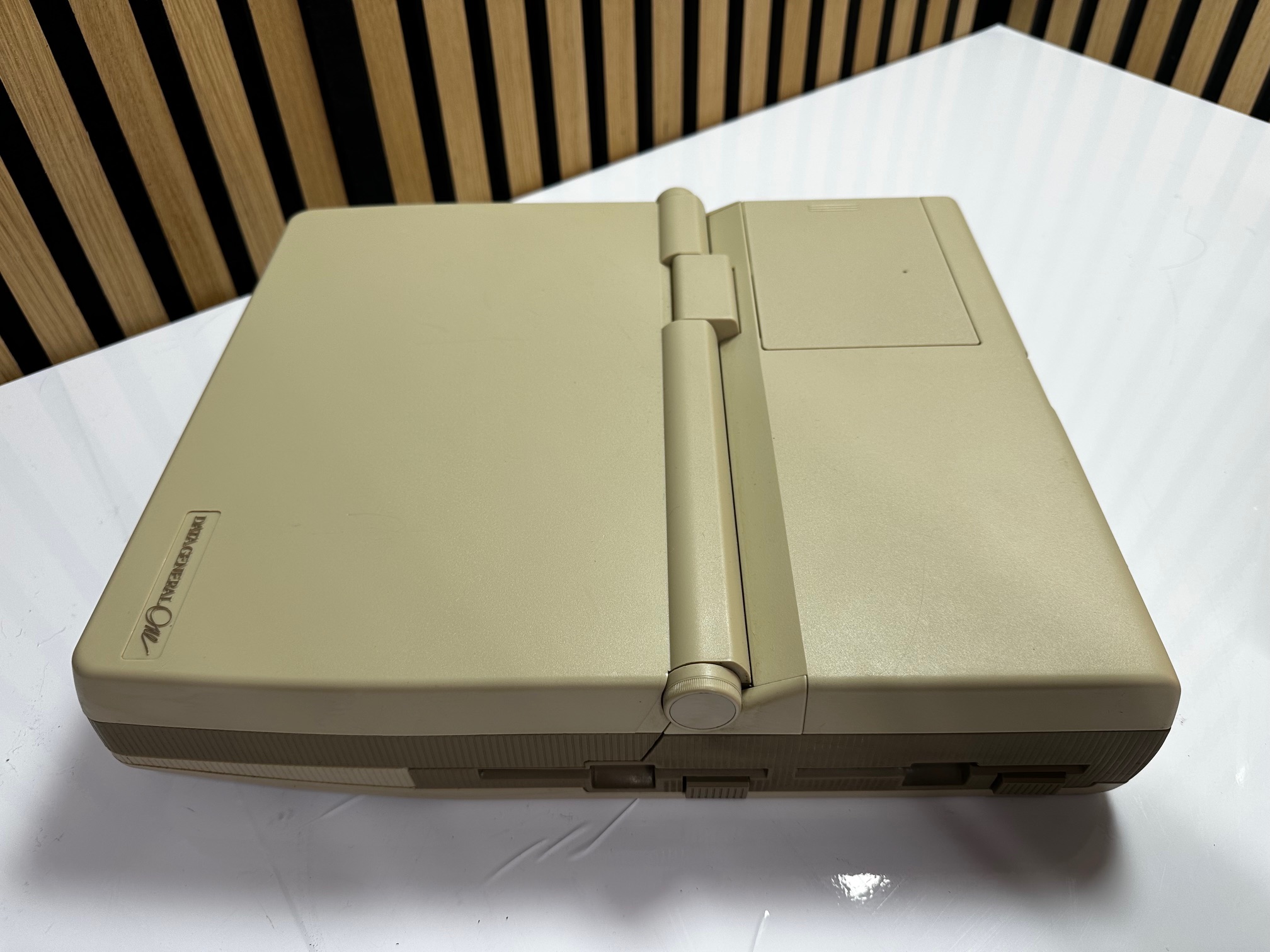
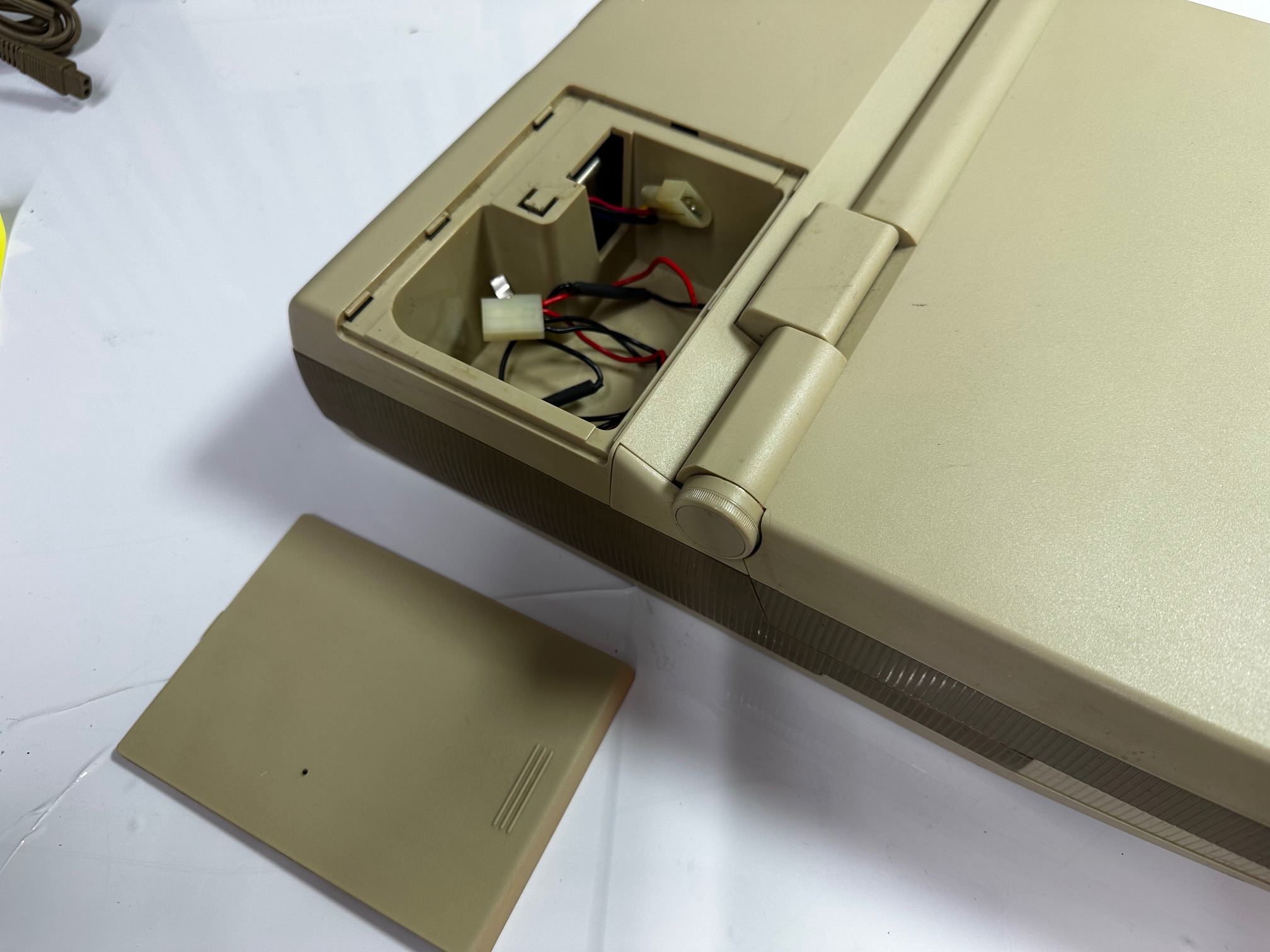
I have a few Data General /One machines. These initial two are unboxed. One works, and one does not.
These are both earlier machines, for which I've noticed that the side buttons are rectangular instead of circles and there is certainly no visible space for a hard drive. On the rear there are no expansion slots.
The working one used to boot from it's primary FDD but now just sits doing nothing. Seems the FDD needs a service. My distant memory is that I could not work out how to get into these machines, so more research is required in order to disassemble and attempt to fix.
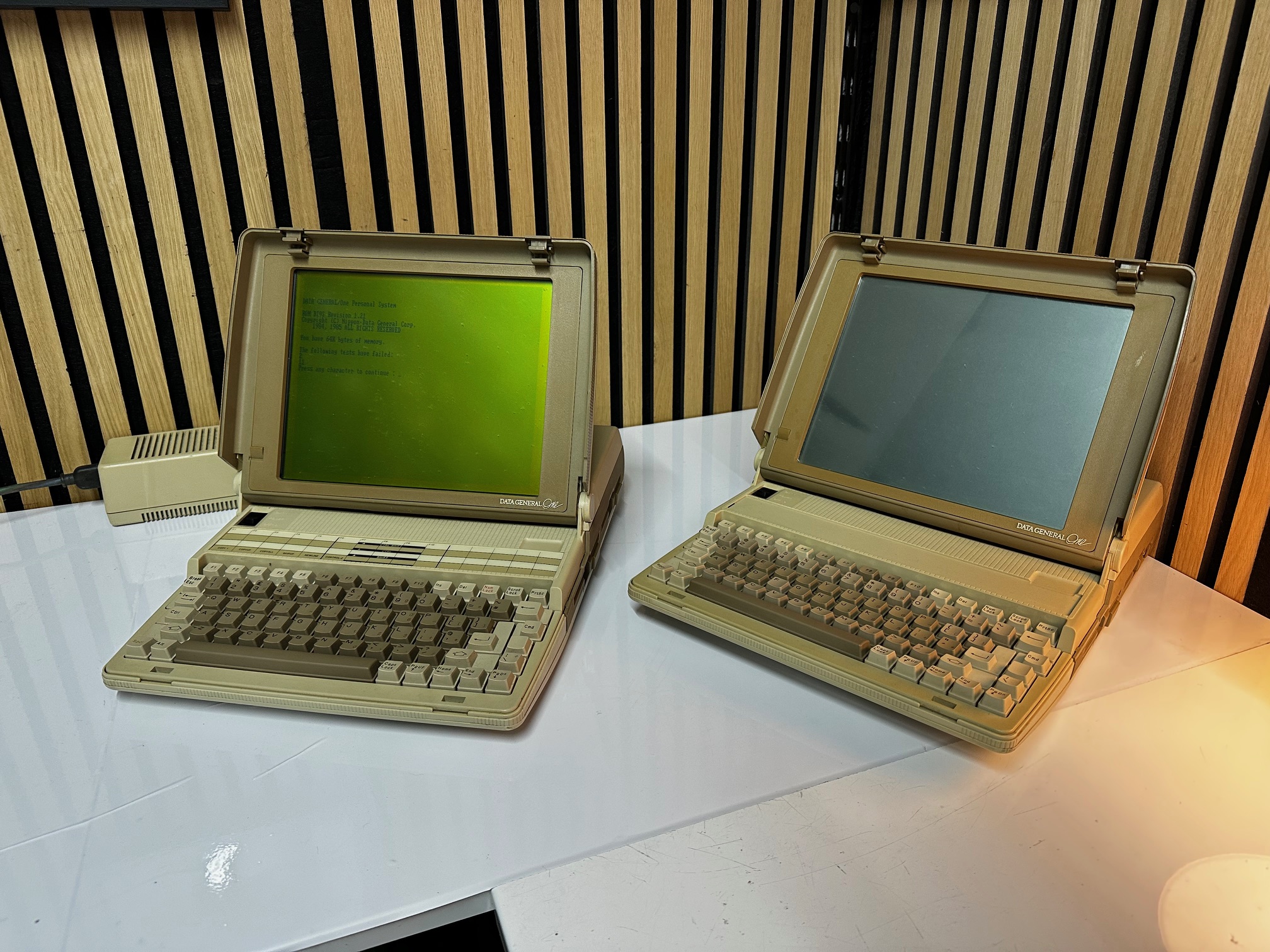

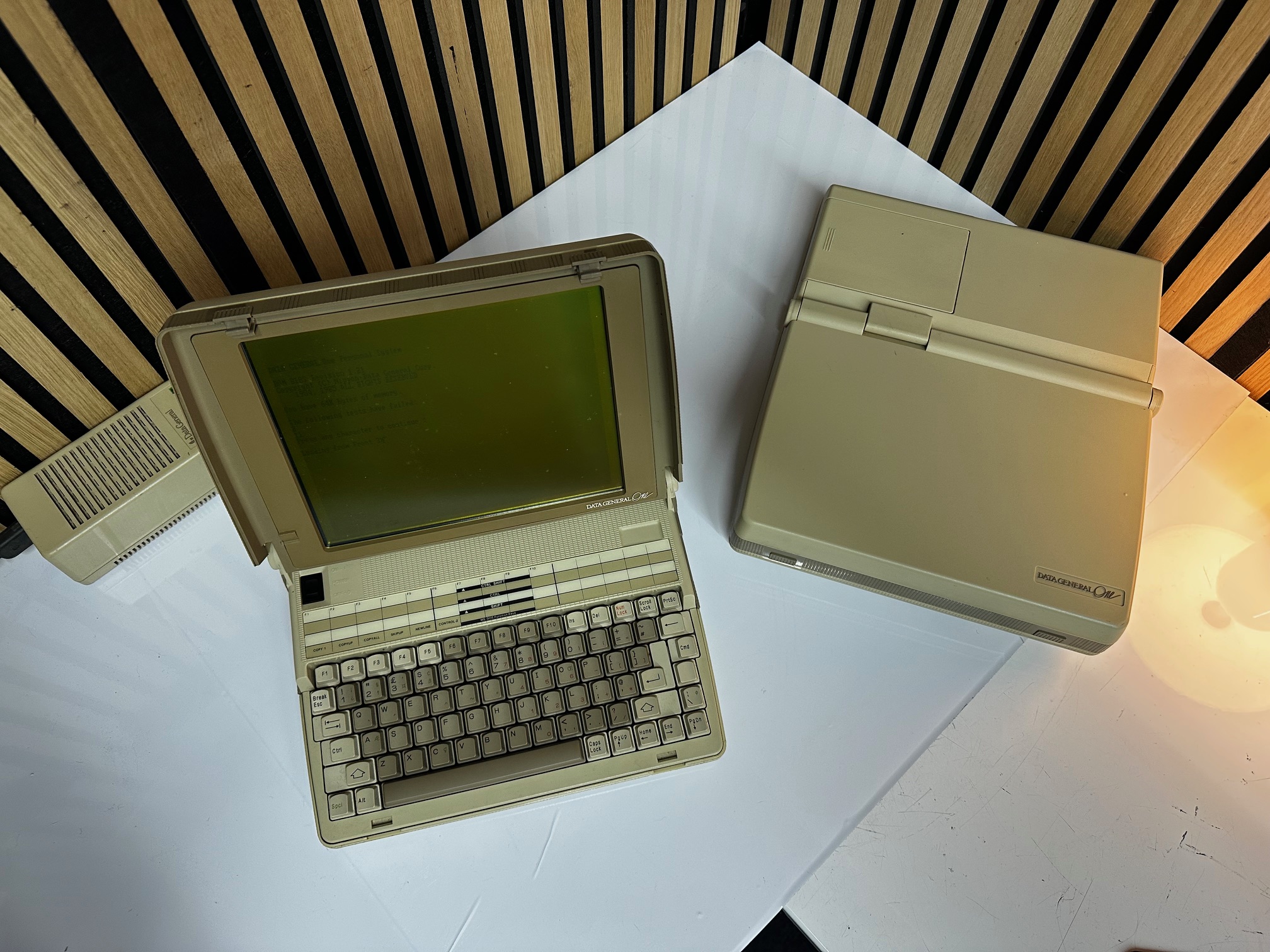
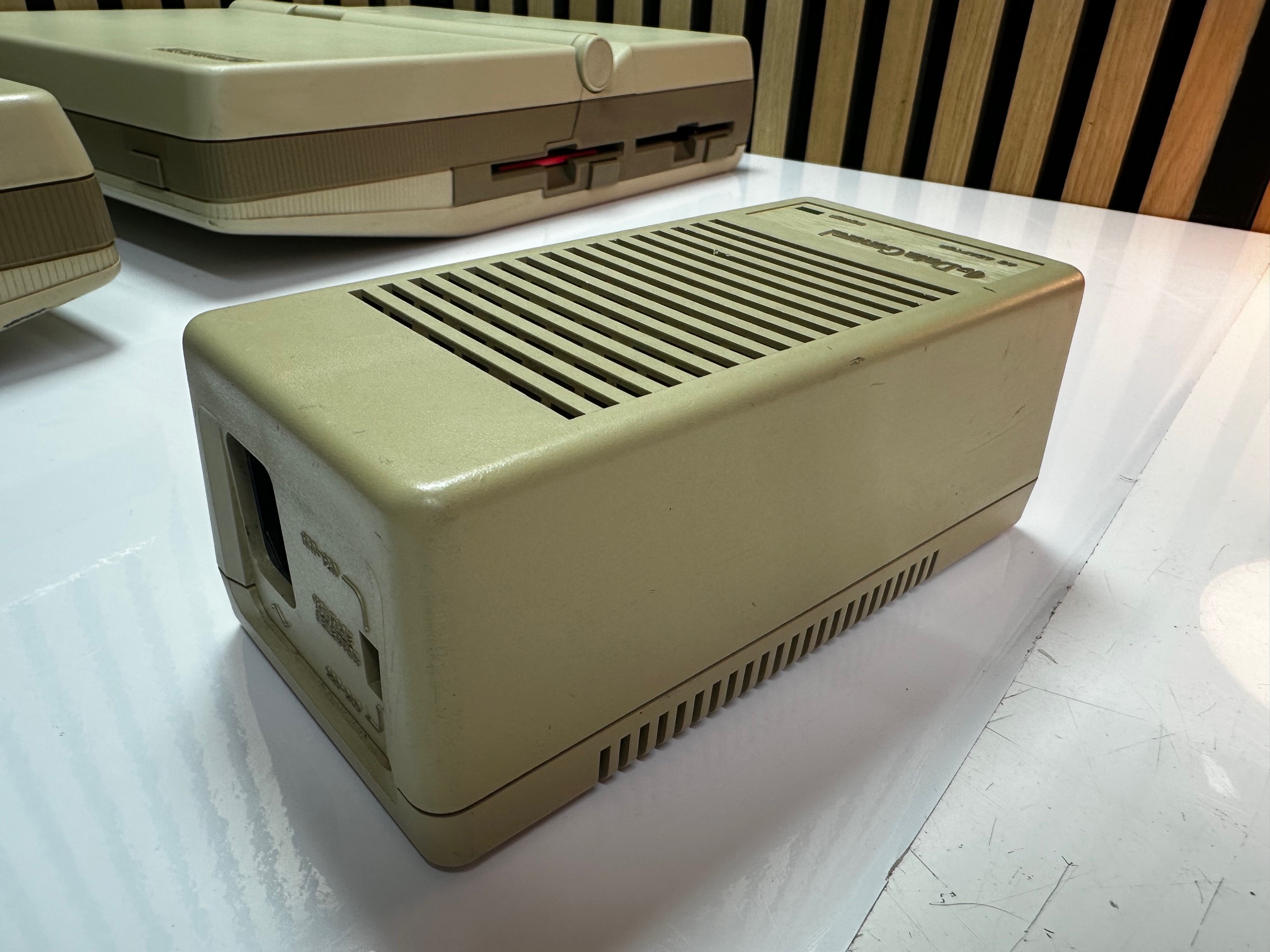
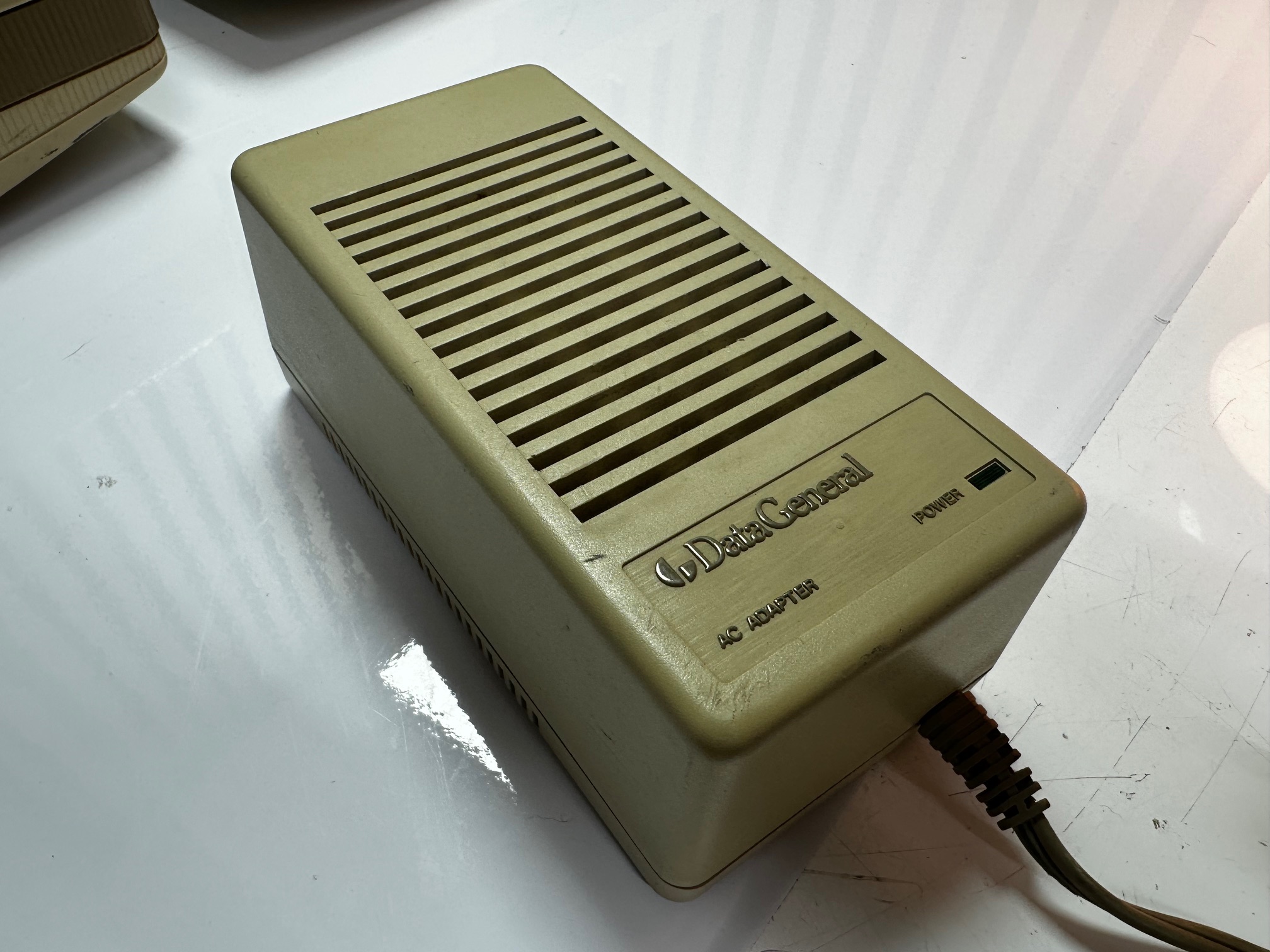
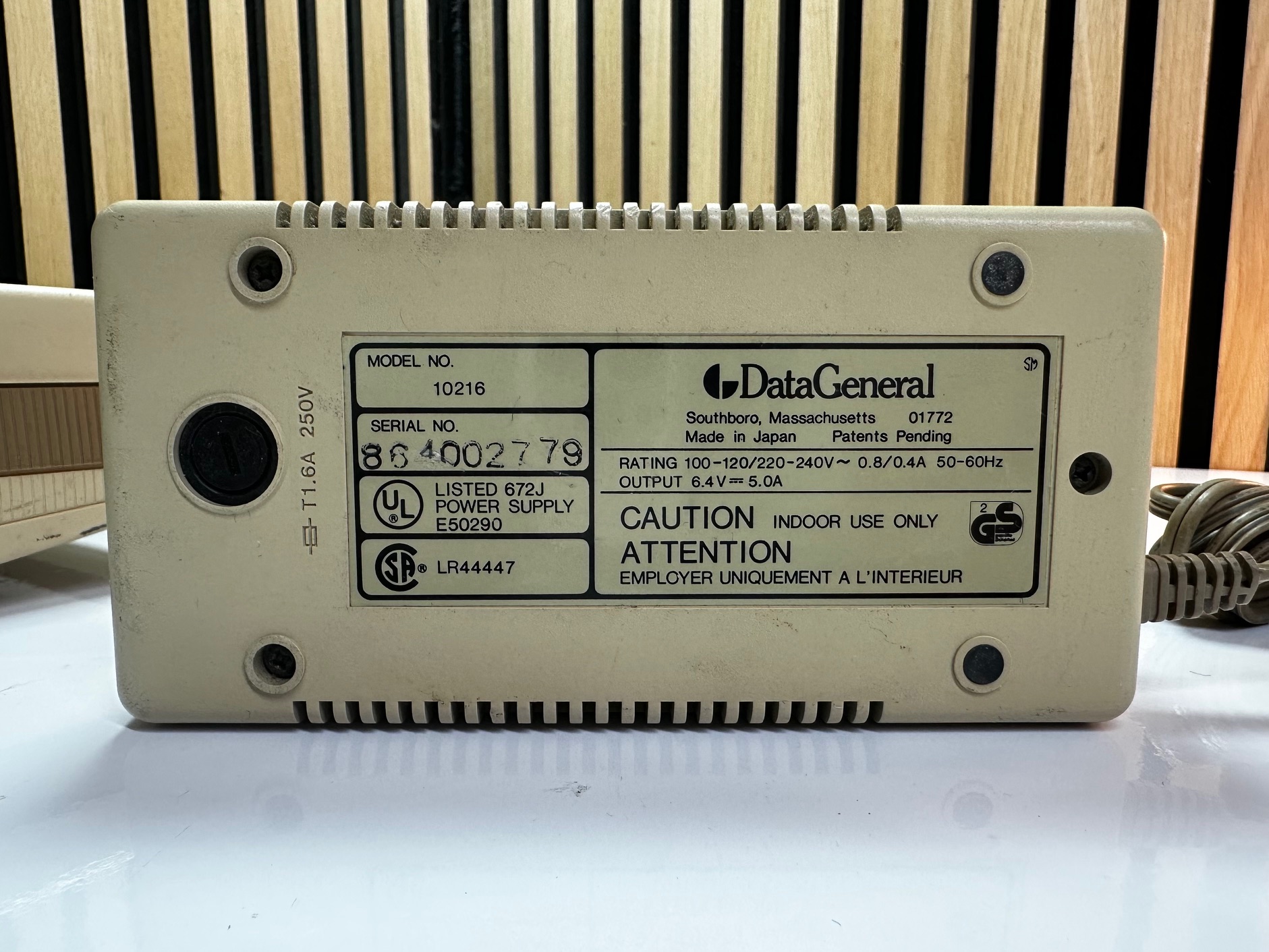
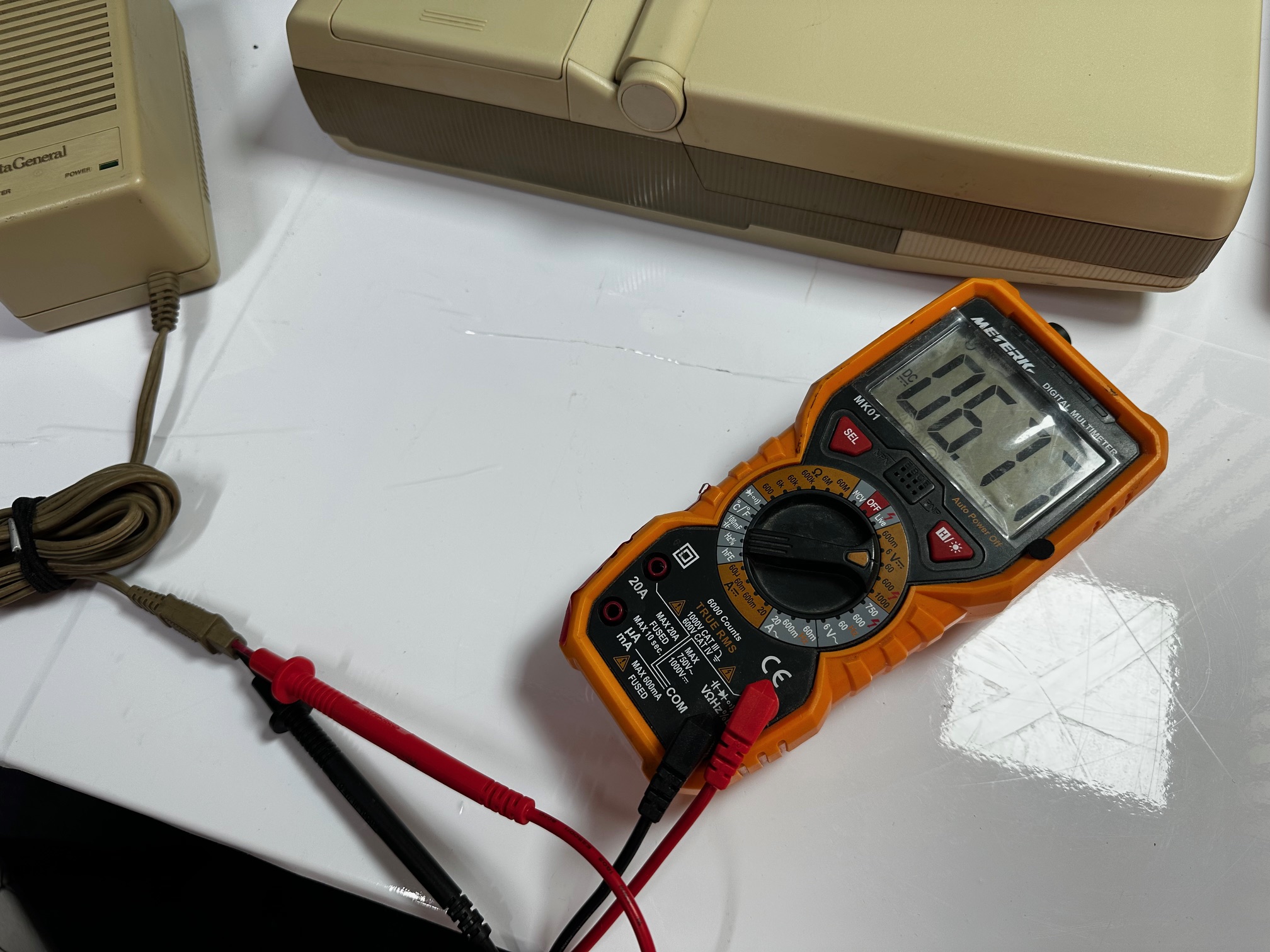
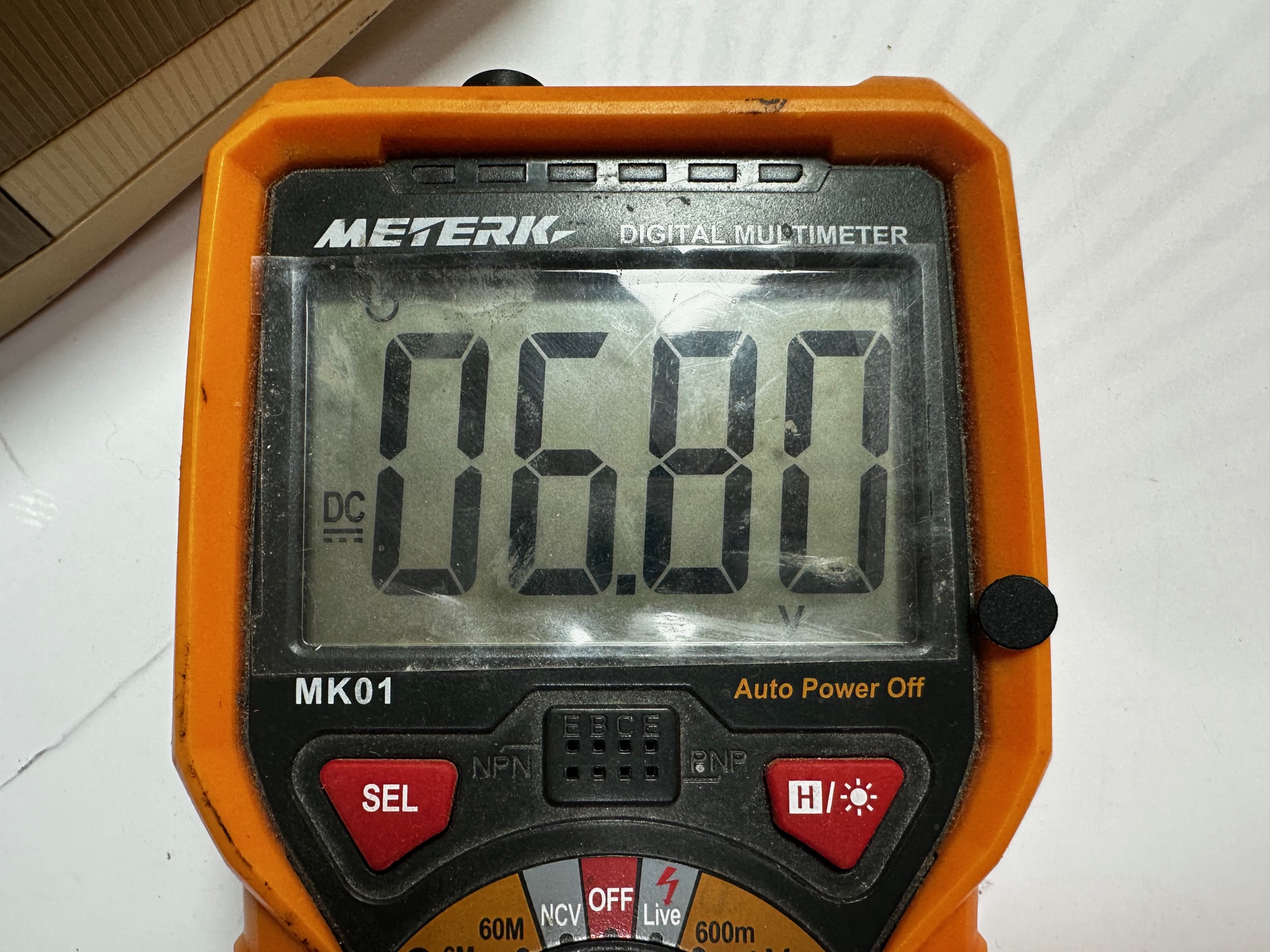
Here are some close ups of the external power supply:

Boxed Data General One 2T
This boxed example in my collection is a later "2T" model which came with a slight case redesigned and an Electro Luminecent backlit display, round buttons and a built-in hard drive, visible on the right-hand side.
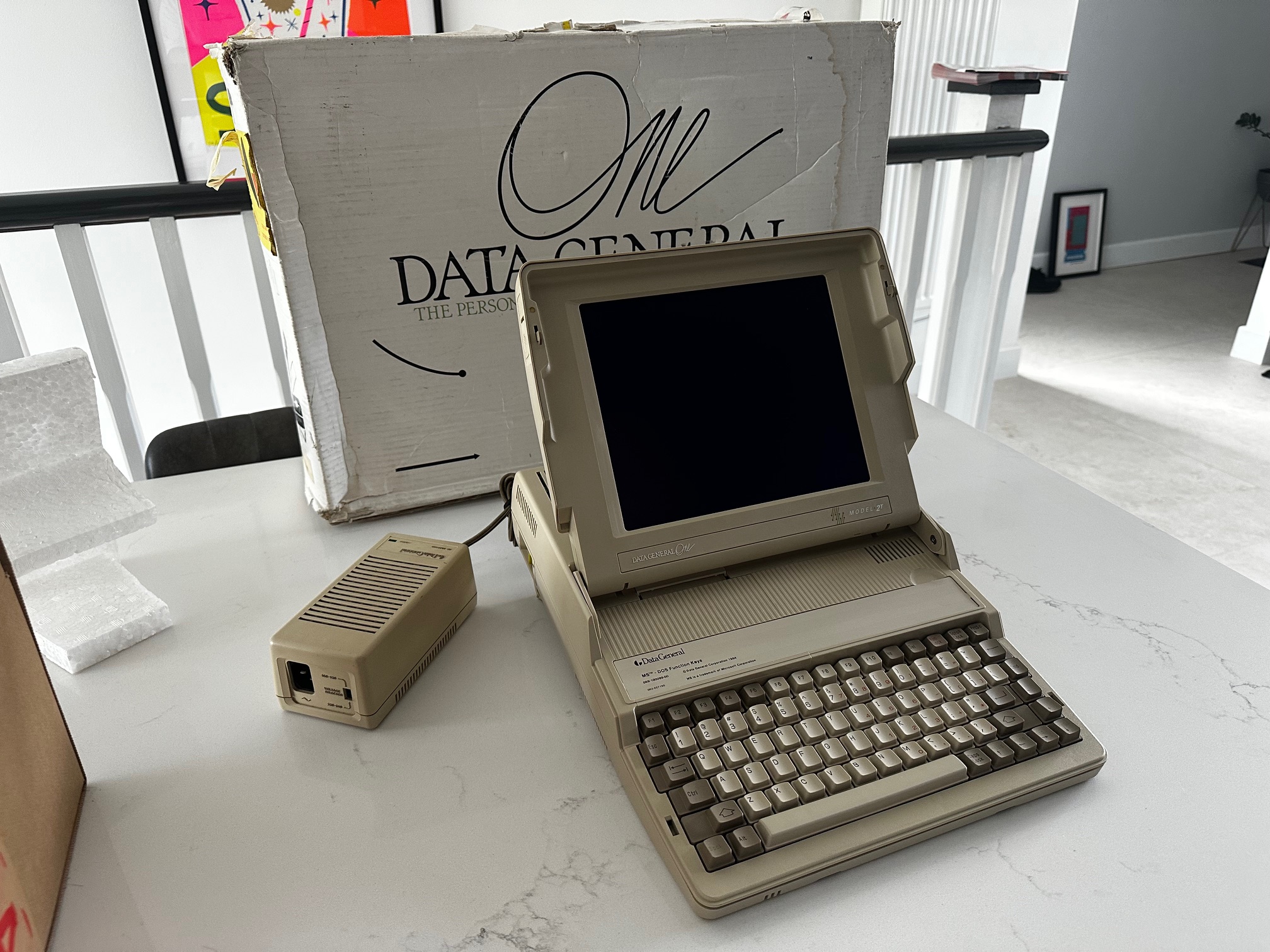
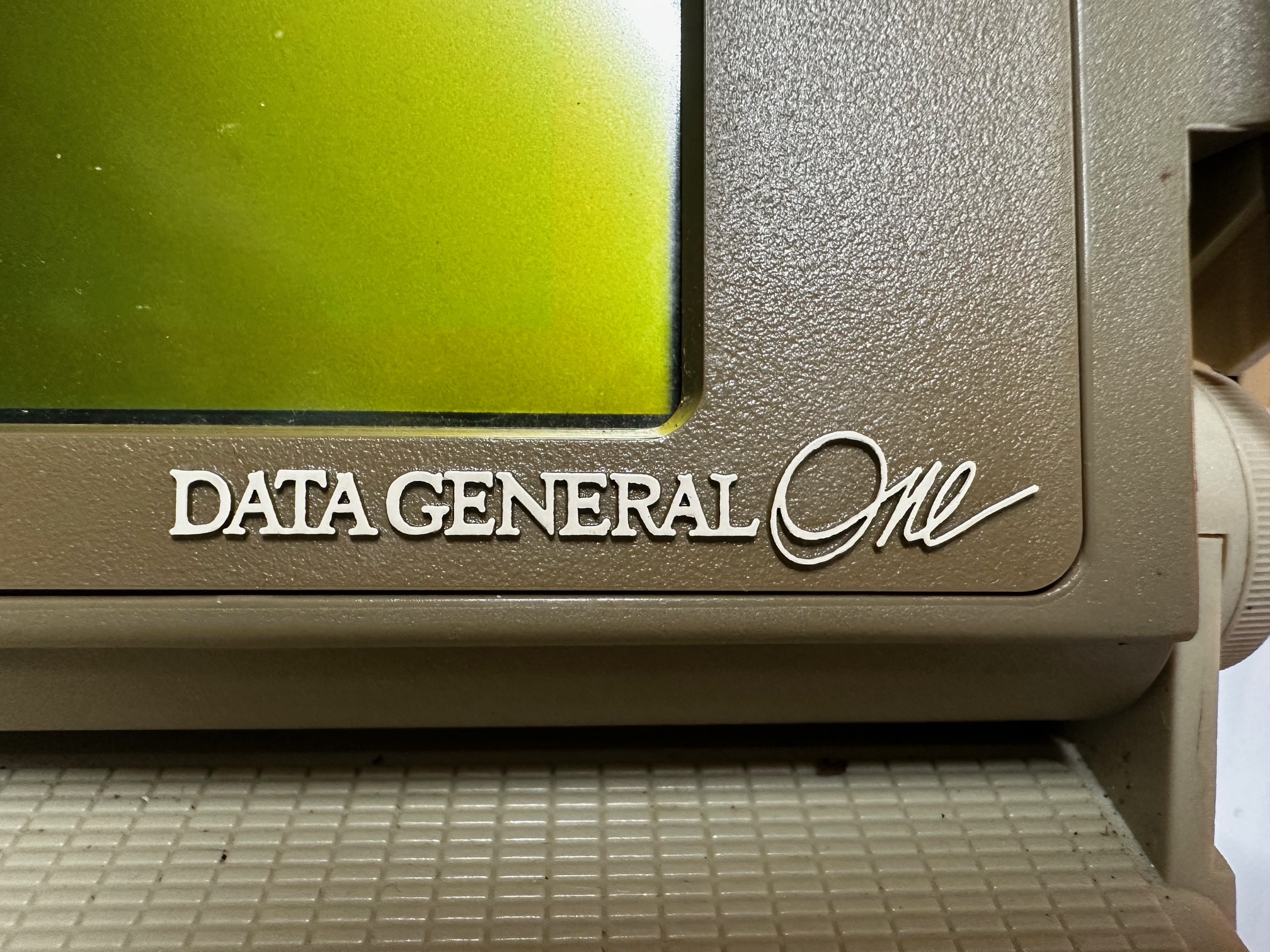
This Data General One seems to have lost the forward slash (/) from the branding. As you can see it's in absolutely mint condition - and judging by the labelling on the box has had a very sheltered life in Milan, Italy, which, perhaps not-coincedentally is where the Data General Italian office was.


This later example does seem to also have inherited a lot of internal design changes, including two expansion slots on the rear.
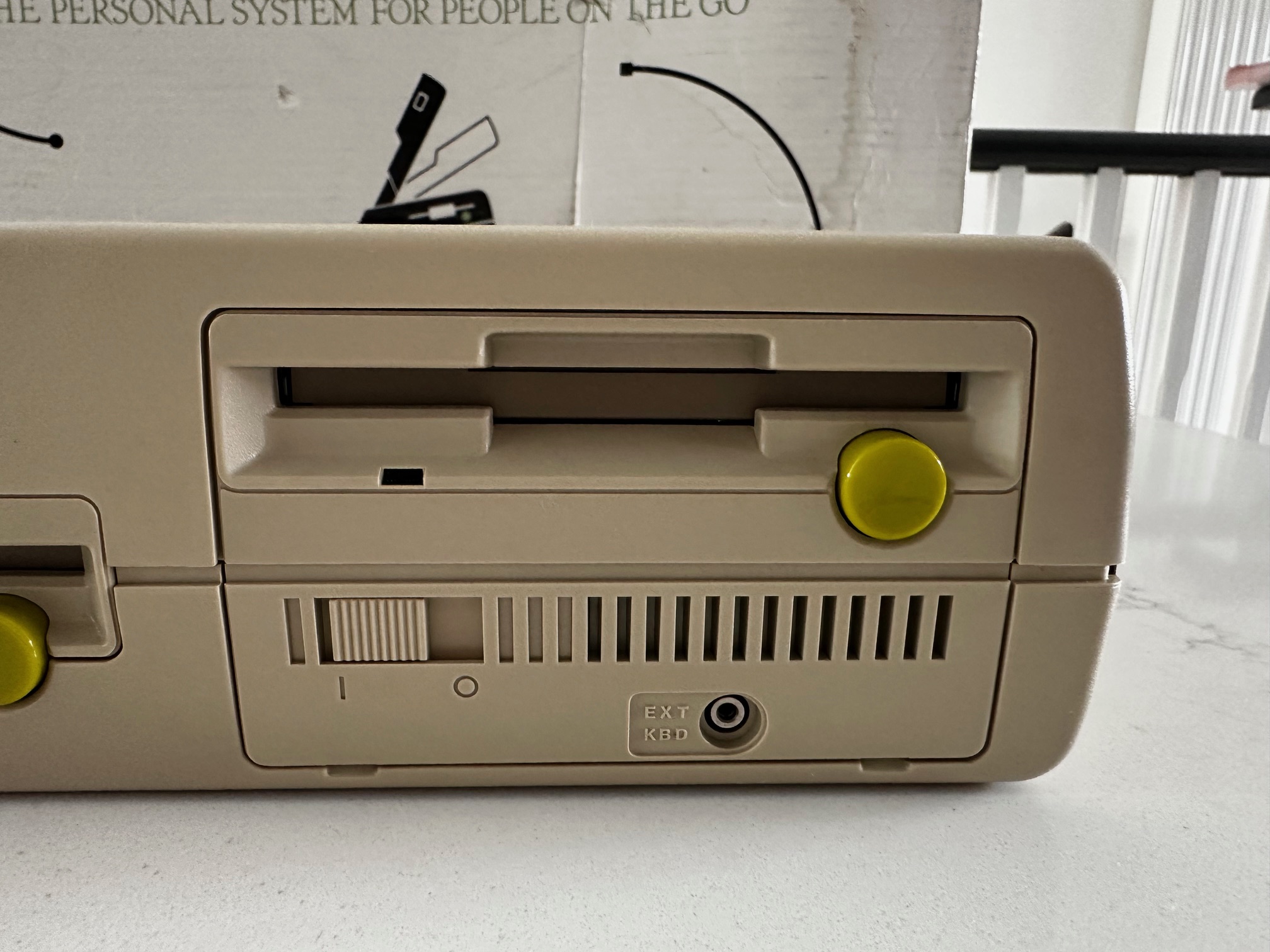

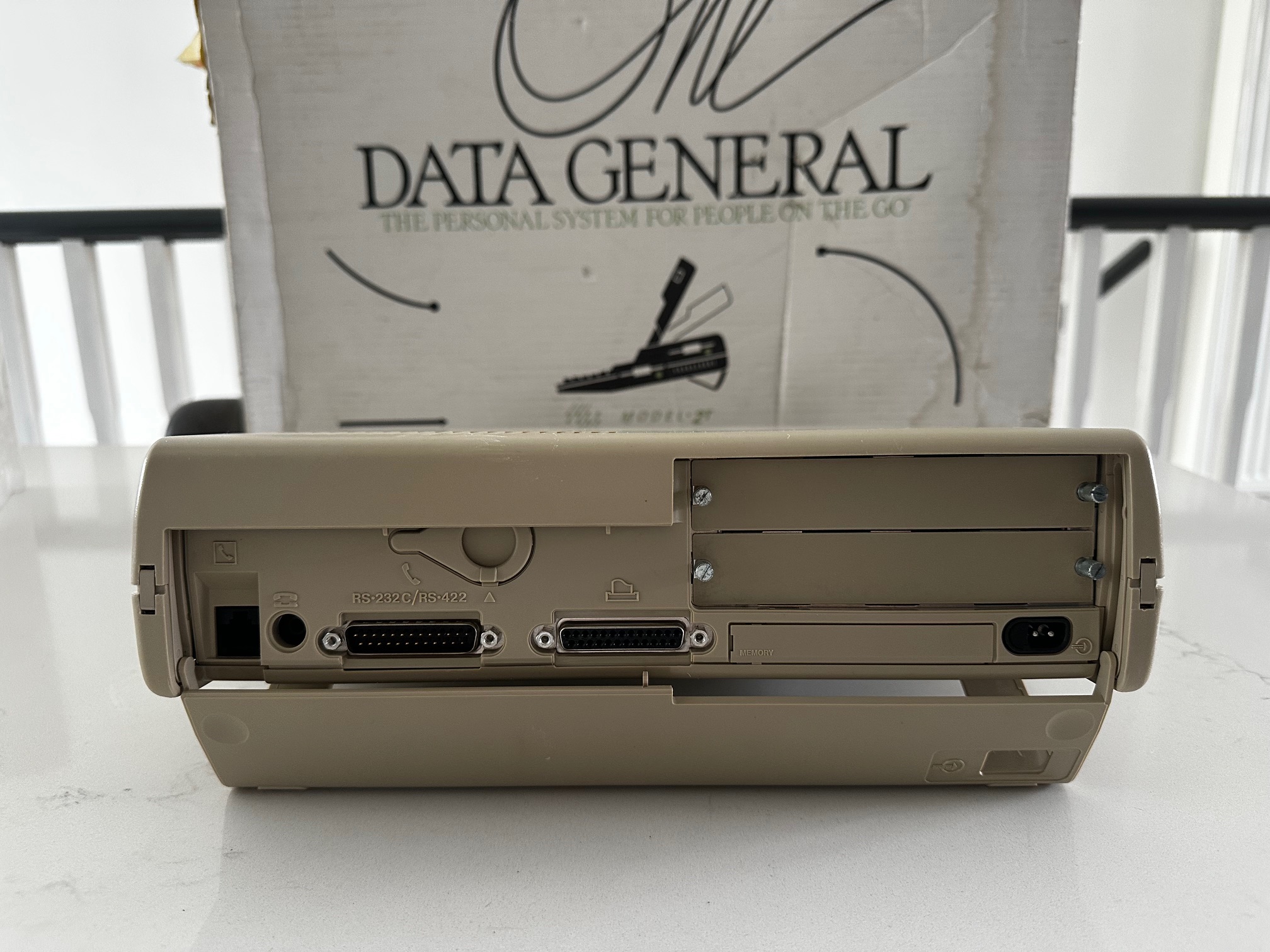
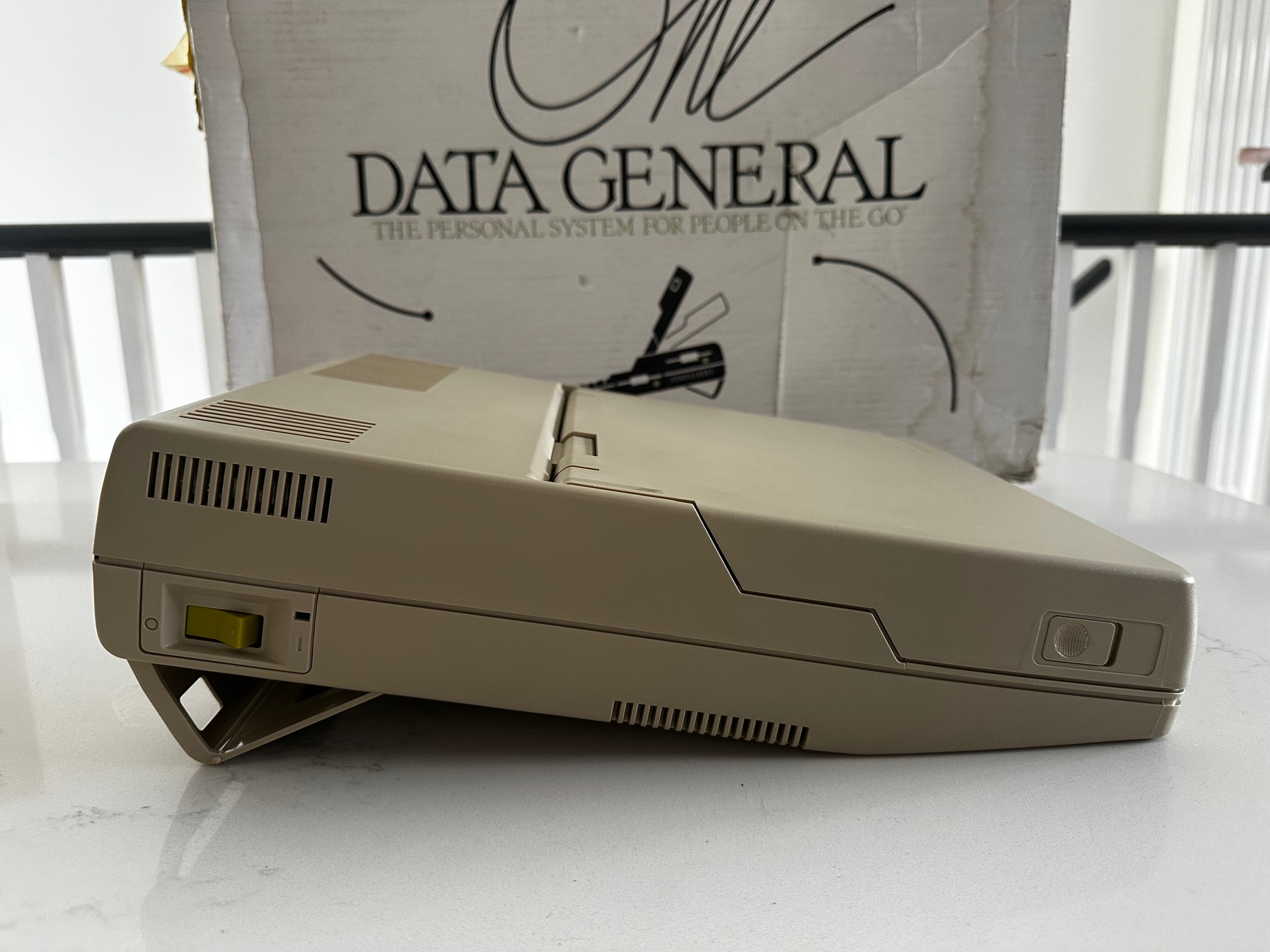
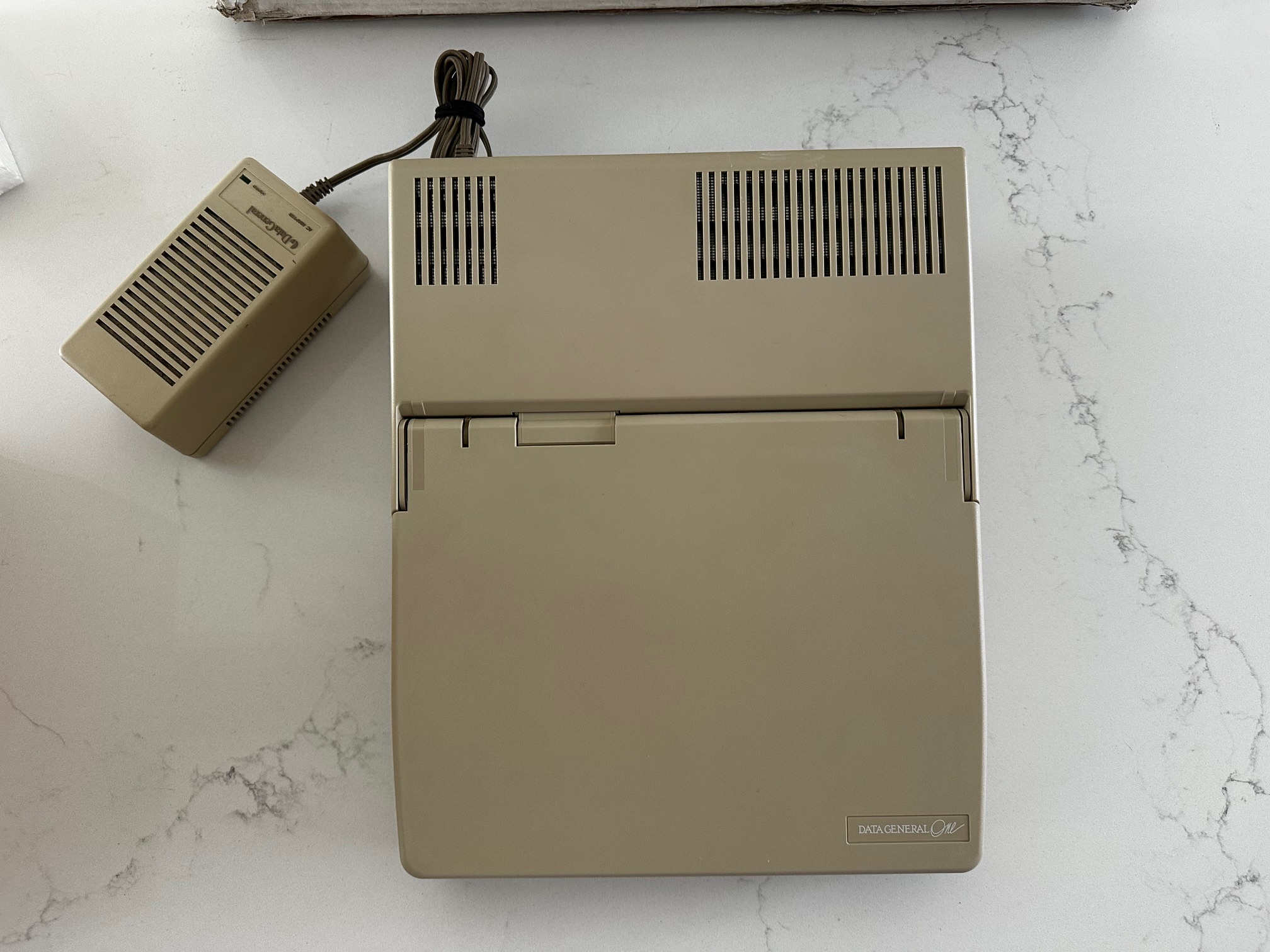
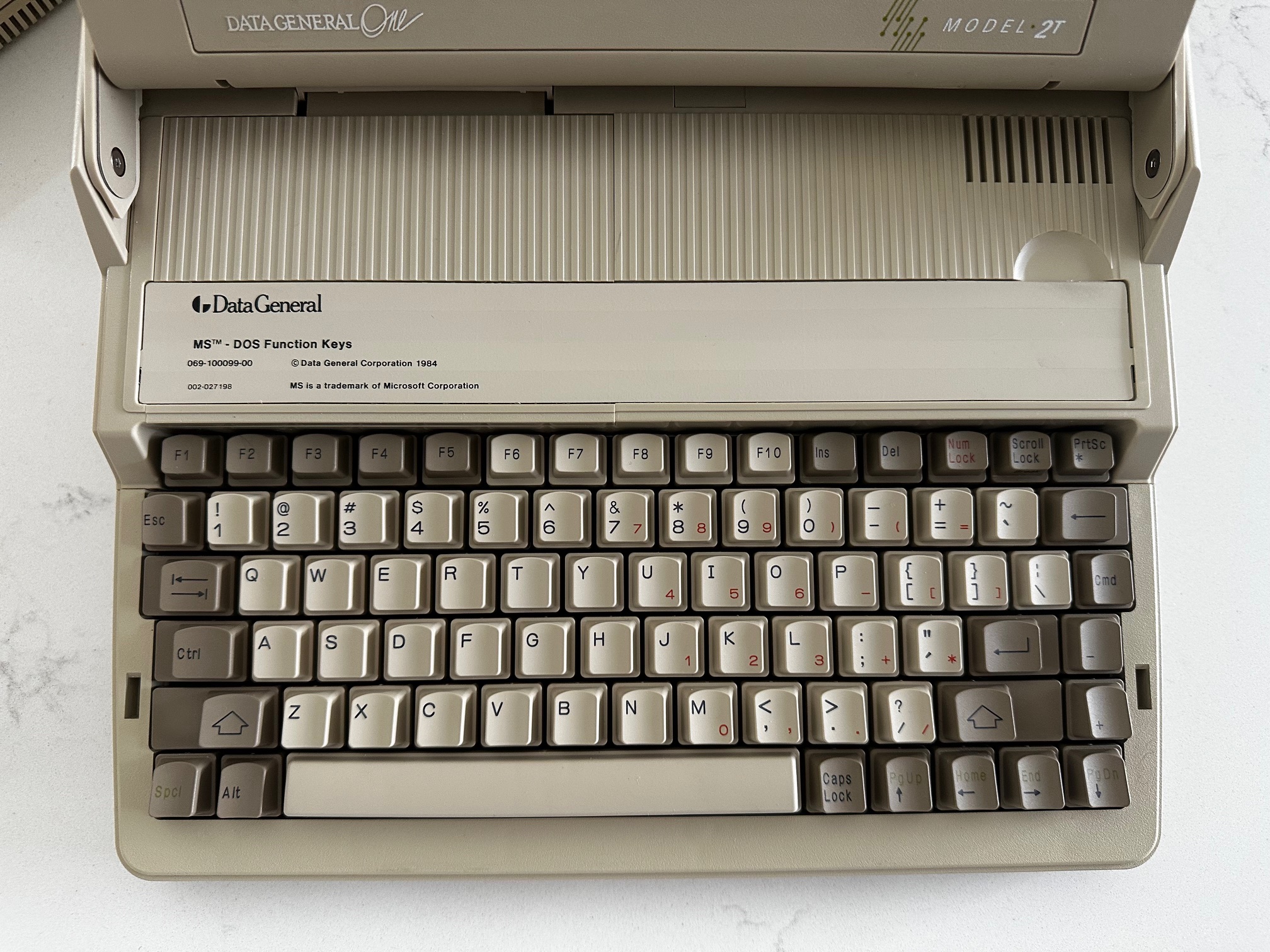
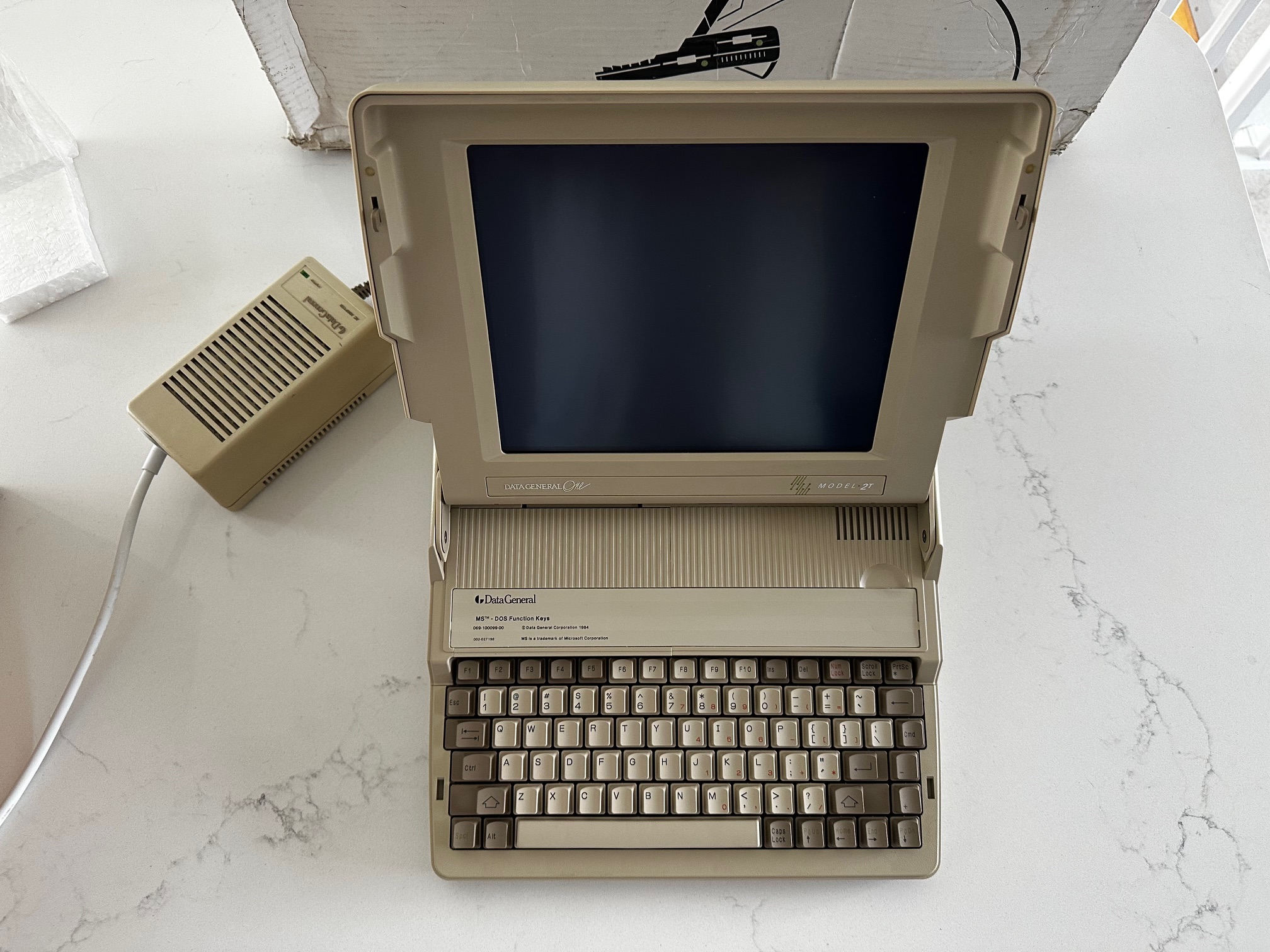
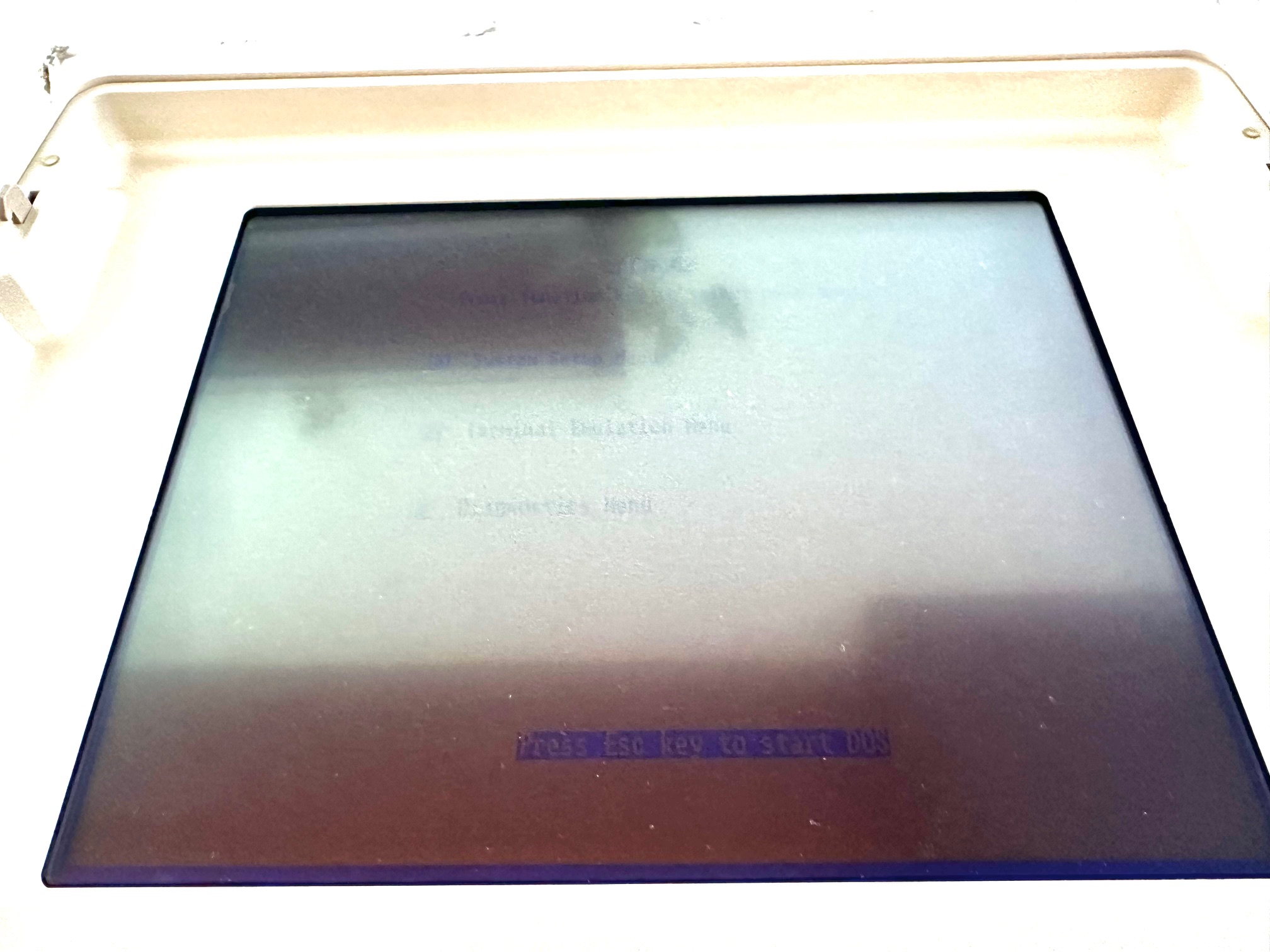
However, whilst the machine is operational, the backlight doesn't light. I can see the machine is working with lots of menu options on the display, but the backlight isn't making it very easy to see!